Have you ever used the word “say” too many times in one paragraph? You may write, “She said,” “He said,” and “They said” again and again. The meaning is correct, but your writing can sound dull.
For example, instead of writing, “Ali said he was tired,” you could write, “Ali explained that he was tired.” The second sentence gives the reader more detail.
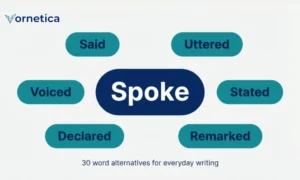
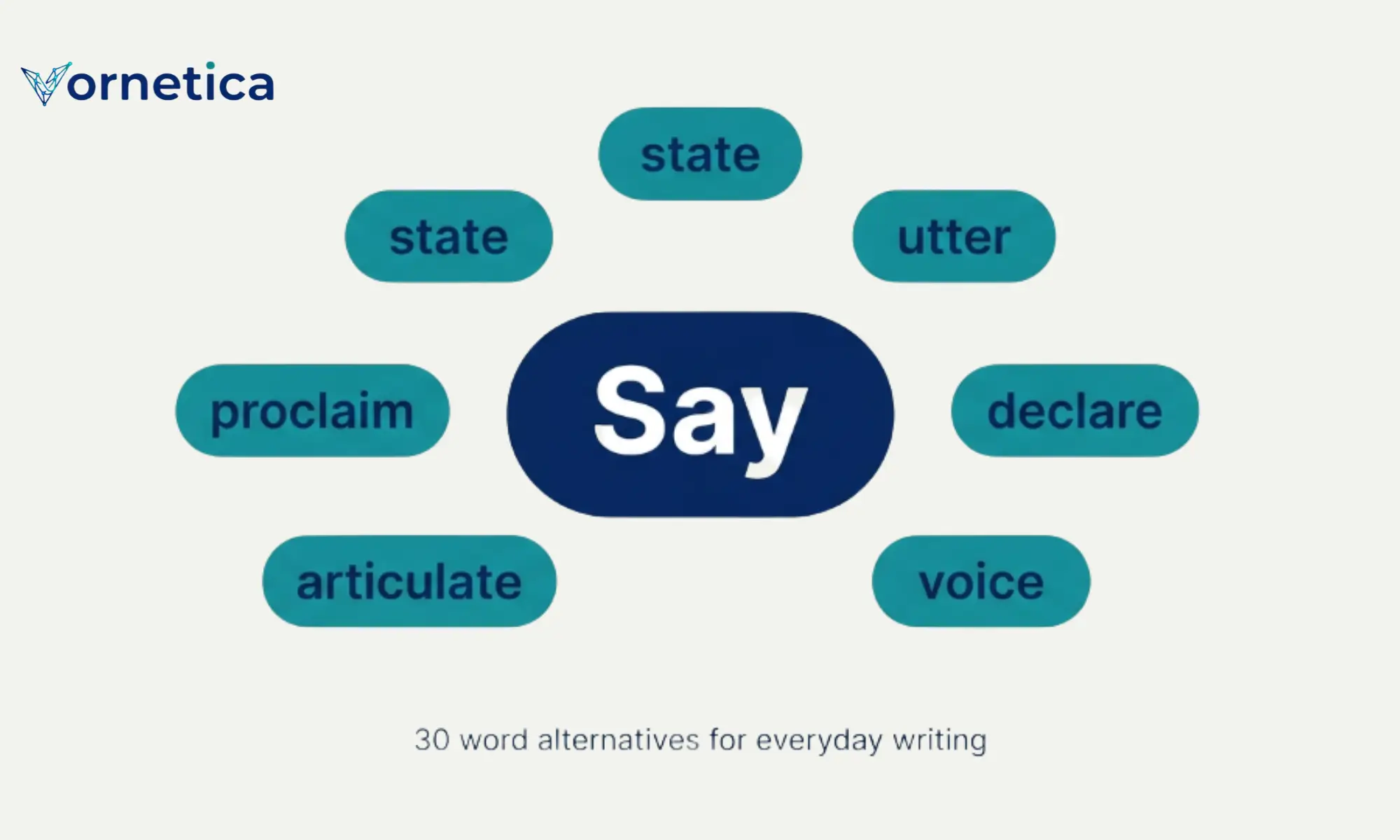
The phrase synonyms for say means other words that can replace “say” in different situations.
Some words sound formal, while others work better in casual speech.
Learning synonyms for say helps students write better essays, bloggers create smoother content, and content writers avoid repeated words.
Daily English users can also use these words to speak more clearly. A good synonym list for say gives you more choices when you write or talk.
Quick Answer: Another word for “say” can be tell, state, speak, mention, or express. The best choice depends on the meaning, tone, and situation.
1. Tell
Meaning: To give someone information using words.
Examples:
- Please tell me what happened.
- I told my friend the good news.
Best Used When: Use it in casual speech and everyday conversations.
2. State
Meaning: To say something clearly and directly.
Examples:
- She stated her opinion calmly.
- The report stated the main facts.
Best Used When: Use it in formal writing, reports, and official speech.
3. Speak
Meaning: To use your voice to say words.
Examples:
- Can I speak with you?
- She spoke about her new project.
Best Used When: Use it for conversations, speeches, and general communication.
4. Mention
Meaning: To say something briefly.
Examples:
- He mentioned your name yesterday.
- She mentioned the meeting during lunch.
Best Used When: Use it when adding a small piece of information.
5. Express
Meaning: To show a thought or feeling with words.
Examples:
- She expressed her happiness.
- He expressed concern about the plan.
Best Used When: Use it for feelings, opinions, and ideas.
6. Remark
Meaning: To make a short comment about something.
Examples:
- “That was a long day,” she remarked.
- He remarked that the room was cold.
Best Used When: Use it when describing a short spoken comment.
7. Declare
Meaning: To say something firmly and clearly.
Examples:
- The winner declared his thanks.
- She declared that she was ready.
Best Used When: Use it for strong or official statements.
8. Announce
Meaning: To tell people some news or information.
Examples:
- The teacher announced the test date.
- They announced their wedding plans.
Best Used When: Use it for public news, events, and important information.
9. Reply
Meaning: To say something back after someone speaks.
Examples:
- “I agree,” she replied.
- He replied to my question with a smile.
Best Used When: Use it when responding to another person.
10. Answer
Meaning: To give a response to a question.
Examples:
- She answered my question.
- Tom answered the teacher politely.
Best Used When: Use it for questions, interviews, and conversations.
11. Explain
Meaning: To make something clear by giving more information.
Examples:
- Can you explain this problem?
- She explained why she was late.
Best Used When: Use it when someone needs more details or understanding.
12. Report
Meaning: To give information about something that happened.
Examples:
- He reported the problem to his manager.
- The student reported what he saw.
Best Used When: Use it in news, work, school, and formal situations.
13. Claim
Meaning: To say that something is true.
Examples:
- He claimed that he was innocent.
- The company claimed the product was safe.
Best Used When: Use it when someone makes a statement that may need proof.
14. Assert
Meaning: To say something strongly and confidently.
Examples:
- She asserted her right to speak.
- He asserted that the story was true.
Best Used When: Use it in formal writing and strong arguments.
15. Suggest
Meaning: To give an idea for someone to think about.
Examples:
- I suggest taking the bus.
- She suggested a different plan.
Best Used When: Use it for ideas, advice, and possible solutions.
A writer can also use precise words such as suggest when discussing ideas that have been proven through research or testing.
16. Note
Meaning: To point out or say something important.
Examples:
- She noted that the store was closed.
- The teacher noted his progress.
Best Used When: Use it in formal writing, reports, and careful observations.
17. Comment
Meaning: To give an opinion or short statement.
Examples:
- He commented on the new design.
- She commented that the food was good.
Best Used When: Use it for opinions and short observations.
18. Utter
Meaning: To speak or make a sound with your mouth.
Examples:
- He did not utter a word.
- She uttered a quiet “sorry.”
Best Used When: Use it in formal or descriptive writing.
19. Voice
Meaning: To express an idea or feeling openly.
Examples:
- She voiced her concerns.
- He voiced his support for the team.
Best Used When: Use it for opinions, concerns, support, and feelings.
20. Articulate
Meaning: To express an idea clearly in words.
Examples:
- She articulated her thoughts well.
- He articulated the problem clearly.
Best Used When: Use it in formal, academic, and professional writing.
21. Communicate
Meaning: To share information or ideas with someone.
Examples:
- We communicate by email.
- She communicated her needs clearly.
Best Used When: Use it for general communication, work, education, and technical contexts.
22. Convey
Meaning: To communicate an idea or feeling.
Examples:
- His smile conveyed his happiness.
- She conveyed her message clearly.
Best Used When: Use it in formal writing when focusing on meaning or feelings.
23. Describe
Meaning: To say what someone or something is like.
Examples:
- Can you describe the man?
- She described her trip to us.
Best Used When: Use it when giving details about a person, place, event, or thing.
24. Reveal
Meaning: To say information that was not known before.
Examples:
- He revealed the secret to me.
- She revealed what really happened.
Best Used When: Use it for secrets, hidden facts, and new information.
25. Disclose
Meaning: To give information that was previously private or unknown.
Examples:
- The company disclosed its plans.
- He refused to disclose his address.
Best Used When: Use it in formal, legal, business, and official contexts.
This word is especially useful when writing about information that has been questioned or carefully examined.
26. Pronounce
Meaning: To say a word or sound aloud.
Examples:
- How do you pronounce this word?
- She pronounced his name correctly.
Best Used When: Use it for spoken words, names, and language learning.
27. Recite
Meaning: To say something aloud from memory.
Examples:
- The child recited a short poem.
- She recited the school pledge.
Best Used When: Use it for poems, speeches, prayers, lists, and memorized text.
28. Whisper
Meaning: To speak very quietly.
Examples:
- She whispered the answer to me.
- He whispered, “Be careful.”
Best Used When: Use it for quiet speech or private conversations.
29. Shout
Meaning: To speak very loudly.
Examples:
- Please do not shout at me.
- He shouted for help.
Best Used When: Use it when someone speaks loudly because of distance, danger, or strong emotion.
30. Murmur
Meaning: To speak in a very quiet and unclear way.
Examples:
- She murmured a quick apology.
- He murmured something under his breath.
Best Used When: Use it in descriptive or creative writing for soft, unclear speech.
COMPARISON TABLE
| Synonym | Tone | Best Used In |
| Tell | Casual | Speech |
| State | Formal | Writing |
| Speak | Neutral | Speech |
| Mention | Neutral | Writing/Speech |
| Express | Neutral | Writing/Speech |
| Remark | Neutral | Writing/Speech |
| Declare | Formal | Writing/Speech |
| Announce | Formal | Writing/Speech |
| Reply | Neutral | Speech |
| Answer | Neutral | Speech |
| Explain | Neutral | Writing/Speech |
| Report | Formal | Writing |
| Claim | Neutral | Writing/Speech |
| Assert | Formal | Writing |
| Suggest | Neutral | Writing/Speech |
| Note | Formal | Writing |
| Comment | Neutral | Writing/Speech |
| Utter | Formal | Writing |
| Voice | Neutral | Writing/Speech |
| Articulate | Formal | Writing |
| Communicate | Neutral | Writing/Speech |
| Convey | Formal | Writing |
| Describe | Neutral | Writing/Speech |
| Reveal | Neutral | Writing/Speech |
| Disclose | Formal | Writing |
| Pronounce | Neutral | Speech |
| Recite | Formal | Speech |
| Whisper | Neutral | Speech |
| Shout | Neutral | Speech |
| Murmur | Neutral | Writing/Speech |
Frequently Asked Questions
What is another word for say?
Another word for say can be tell, state, speak, mention, or express. The right word depends on the sentence.
What is a formal synonym for say?
State, declare, assert, disclose, and articulate can work as formal synonyms for say. They are common in professional and academic writing.
What is a casual word for say?
Tell and speak are common choices in casual English. They are easy to use in daily conversations.
What is another word for say in an essay?
Words such as state, explain, note, assert, and suggest can work well in essays. Choose the word that matches your exact meaning.
How can I avoid repeating the word say?
Use a more exact synonym when it fits the meaning. For example, use whisper for quiet speech and shout for loud speech.
Practice Exercise
Fill in each blank with the best synonym from the list.
- Maria _______ that she needed more time to finish the project.
- The teacher _______ the students to stay quiet during the test.
- He _______ his concerns about the new plan.
- Sarah _______ the answer softly so nobody else could hear.
- The company will _______ its new plans next week.
Answer Key
- explained
- told
- voiced
- whispered
- announce
KEY TAKEAWAYS
Key Takeaways
- Tell and speak are useful for everyday conversations.
- State and declare work well in formal situations.
- Explain helps you give more details and make ideas clear.
- Mention is useful when adding a small piece of information.
- Whisper and shout describe how someone speaks.
- Choose a synonym based on the meaning and situation, not just the word.
Good communication also depends on choosing the right word for the message. If you write about information that people have already received, you may find received useful when building a sentence with more variety.
Similarly, descriptive writing can become more natural when you choose exact words instead of using “say” for every type of speech. Vocabulary practice can even help you write about changes, such as something that has been rejuvenated or made fresh again.
CONCLUSION
Learning synonyms for say gives you more ways to communicate your ideas.
It can make essays clearer, blog posts smoother, and daily conversations more natural.
You do not need to replace “say” every time. Instead, choose a better word when it gives your sentence a clearer meaning.
Practice these words in emails, essays, stories, and daily conversations.
Keep building your vocabulary, and search for another word on the site whenever you want to learn something new.