You wipe the table. The cloth turns brown. “Wow, that is a lot of dirt,” you say.
But is “dirt” always the best word? Maybe it is mud, grime, or soil. Each word paints a different picture.
Dirt means loose earth, or any unclean stuff on a surface. These synonyms for dirt help you say it better.
Students use them to sound clear in essays. Bloggers and content writers use them to avoid repeating words.
Everyday English users use them to speak with more color. Need more word ideas? Try our list of synonyms for books.
Quick Answer Box
What is another word for dirt?
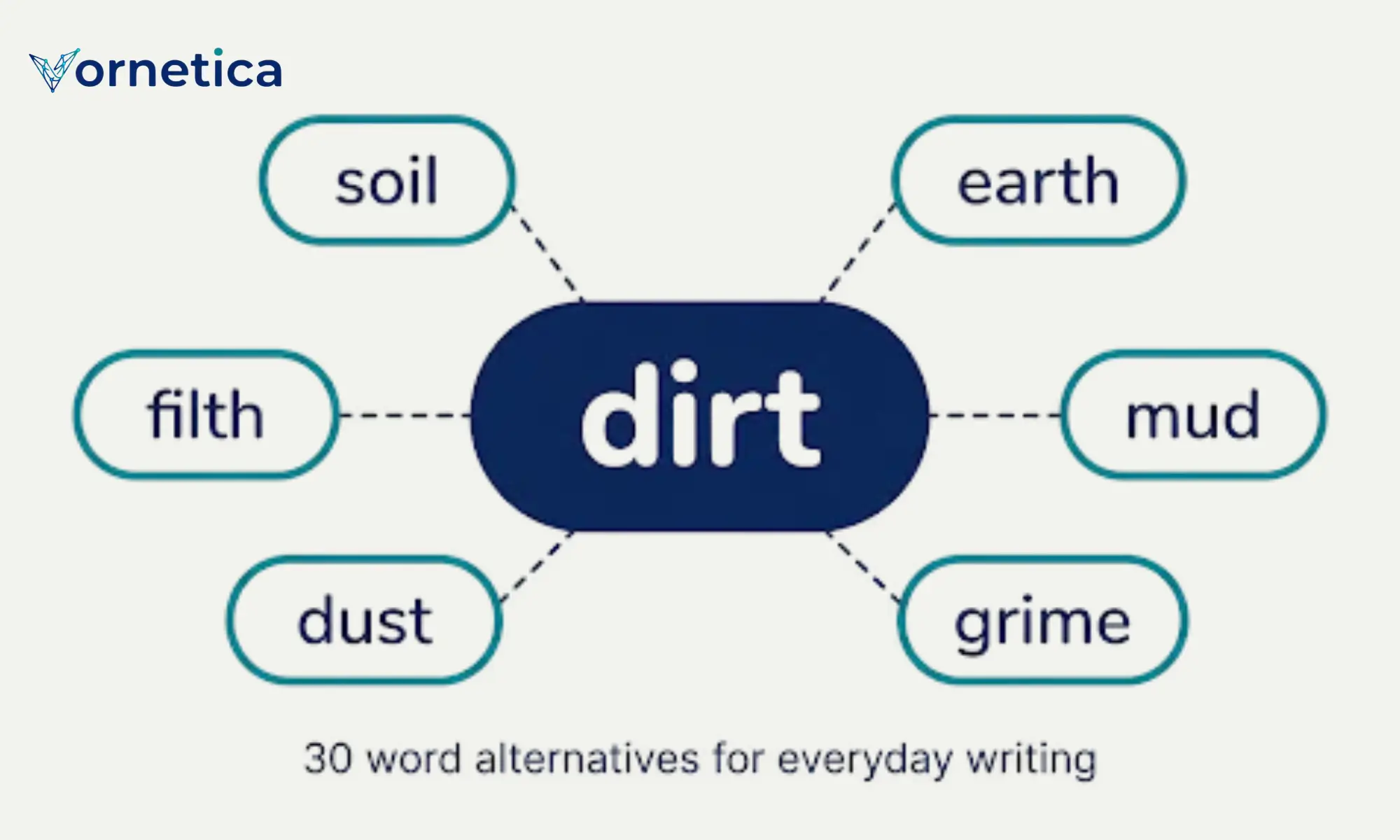
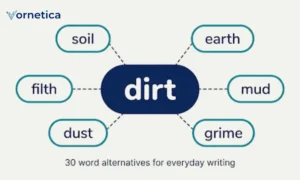
Another word for dirt is soil, mud, grime, dust, or filth. Pick soil for gardens, grime for sticky buildup, and filth for something very unclean.
Top 5 synonyms for dirt: soil, mud, grime, dust, filth
Soil
Meaning: Soil is the top layer of earth where plants grow.
Examples:
- The farmer checked the soil before planting corn.
- Rich soil helps flowers grow tall.
Best Used When: Writing about gardening, farming, or science.
Earth
Meaning: Earth here means the ground or the dirt under your feet.
Examples:
- The kids dug into the damp earth with spoons.
- A pile of earth sat by the new fence.
Best Used When: Writing in a calm, natural, or poetic style.
Ground
Meaning: Ground is the solid surface you walk on.
Examples:
- The ground was hard after the dry summer.
- She sat on the ground to tie her shoes.
Best Used When: Everyday speech about outdoor surfaces.
Mud
Meaning: Mud is wet, soft dirt.
Examples:
- My boots were full of mud after the rain.
- The puppy ran through the mud and smiled.
Best Used When: Casual talk about rain, play, or messy walks.
Grime
Meaning: Grime is thick, sticky dirt that builds up over time.
Examples:
- He scrubbed the grime off the kitchen stove.
- Years of grime covered the old window.
Best Used When: Describing cleaning jobs or dirty city scenes.
Dust
Meaning: Dust is fine, dry dirt that floats in the air or sits on things.
Examples:
- Dust covered the shelf in the attic.
- She blew the dust off the old photo.
Best Used When: Talking about rooms, furniture, or dry roads.
Filth
Meaning: Filth is very bad, disgusting dirt.
Examples:
- The room was full of filth when we moved in.
- Nobody wanted to touch the filth in the sink.
Best Used When: Strong writing that shows disgust. It sounds harsh.
Muck
Meaning: Muck is wet, dirty, and often smelly mess.
Examples:
- The farmer cleaned the muck from the barn floor.
- We walked through the muck by the pond.
Best Used When: Casual or farm-style writing about wet mess.
Mire
Meaning: Mire is deep, soft mud that is hard to walk through.
Examples:
- The truck got stuck in the mire.
- They crossed the mire with slow, careful steps.
Best Used When: Creative writing, or when you mean a tough situation.
Sludge
Meaning: Sludge is thick, slow, dirty liquid.
Examples:
- Black sludge came out of the old pipe.
- The workers cleaned the sludge from the tank.
Best Used When: Technical or industrial writing about pipes and tanks.
Clay
Meaning: Clay is heavy, sticky earth that holds water.
Examples:
- The potter shaped the clay into a bowl.
- Clay soil gets sticky after the rain.
Best Used When: Writing about art, building, or garden soil types.
Loam
Meaning: Loam is dark, rich soil that is great for plants.
Examples:
- Tomatoes love loam.
- Dad mixed loam into the garden bed.
Best Used When: Gardening posts and farming guides.
Sod
Meaning: Sod is a layer of grass with dirt under it.
Examples:
- They laid fresh sod in the front yard.
- He lifted a piece of sod to find worms.
Best Used When: Talking about lawns and yard work.
Silt
Meaning: Silt is fine dirt that water carries and leaves behind.
Examples:
- The river left silt on the field after the flood.
- Silt made the pond water cloudy.
Best Used When: Science, geography, or river topics.
Gunk
Meaning: Gunk is gross, sticky dirt.
Examples:
- I found gunk under the bathroom sink.
- Gunk clogged the bike chain.
Best Used When: Casual speech and fun blog posts. For dangerous mess, see our synonyms for biohazard.
Crud
Meaning: Crud is dirty, crusty buildup.
Examples:
- There was crud on the old pan.
- She scraped the crud off the shoe.
Best Used When: Very informal talk with friends.
Soot
Meaning: Soot is black powder left by smoke or fire.
Examples:
- Soot covered the walls near the fireplace.
- His face was black with soot.
Best Used When: Writing about fires, chimneys, or old factories.
Smudge
Meaning: A smudge is a small dirty mark.
Examples:
- There was a smudge on my glasses.
- She wiped the smudge from the page.
Best Used When: Talking about tiny marks on screens, paper, or glass.
Grit
Meaning: Grit is tiny, hard bits of dirt or sand.
Examples:
- I felt grit between my teeth at the beach.
- Grit got into the door lock.
Best Used When: Describing rough texture or dusty roads.
Sand
Meaning: Sand is loose, tiny pieces of rock, often found at beaches.
Examples:
- The children built a castle from wet sand.
- Sand blew across the desert road.
Best Used When: Beach, desert, or building topics.
Topsoil
Meaning: Topsoil is the top layer of soil, full of plant food.
Examples:
- Farmers need good topsoil for strong crops.
- Heavy rain washed away the topsoil.
Best Used When: Farming, science, and environment writing.
Impurity
Meaning: An impurity is something unwanted mixed into another thing.
Examples:
- The test found an impurity in the water.
- Gold with impurity is not worth as much.
Best Used When: Formal, science, or technical writing.
Contamination
Meaning: Contamination is when something clean becomes dirty or unsafe.
Examples:
- Contamination closed the beach for a week.
- Wash your hands to stop contamination.
Best Used When: Health, food safety, and news reports.
Slime
Meaning: Slime is wet, slippery, and sticky dirt.
Examples:
- Green slime covered the pond rocks.
- The snail left slime on the leaf.
Best Used When: Playful or gross descriptions.
Scum
Meaning: Scum is a dirty layer on top of water.
Examples:
- Scum floated on the old pond.
- He cleaned the scum from the bathtub.
Best Used When: Describing water or tubs. Avoid it for people, because it is rude.
Residue
Meaning: Residue is what stays behind after something is gone.
Examples:
- The tape left sticky residue on the wall.
- Soap residue stayed on the dishes.
Best Used When: Cleaning guides and product reviews.
Squalor
Meaning: Squalor is a very dirty and poor living space.
Examples:
- The story showed a family living in squalor.
- The old building fell into squalor.
Best Used When: Serious, formal, or story-style writing.
Stain
Meaning: A stain is a dirty mark that is hard to remove.
Examples:
- Juice left a stain on my shirt.
- The stain on the carpet would not come out.
Best Used When: Talking about clothes, floors, and fabric.
Turf
Meaning: Turf is grass and the dirt just below it.
Examples:
- Players tore up the turf during the match.
- He dug up a square of turf.
Best Used When: Sports, lawns, and landscaping. See also our synonyms for championship for sports words.
Pollution
Meaning: Pollution is harmful dirt in air, water, or land.
Examples:
- Pollution made the river unsafe.
- Cities work hard to cut air pollution.
Best Used When: News, school essays, and environment topics.
Comparison Table: Synonyms for Dirt
Use this table to pick the right word fast. Looking at city scenes? Our list of synonyms for buildings pairs well with grime and soot.
| Synonym | Tone | Best Used In |
| Soil | Neutral | Writing, technical |
| Earth | Neutral | Writing |
| Ground | Neutral | Speech |
| Mud | Casual | Speech |
| Grime | Neutral | Writing |
| Dust | Neutral | Speech, writing |
| Filth | Neutral | Writing |
| Muck | Casual | Speech |
| Mire | Formal | Writing |
| Sludge | Neutral | Technical |
| Clay | Neutral | Technical |
| Loam | Formal | Technical |
| Sod | Neutral | Speech |
| Silt | Formal | Technical |
| Gunk | Casual | Speech |
| Crud | Casual | Speech |
| Soot | Neutral | Writing |
| Smudge | Neutral | Speech |
| Grit | Neutral | Writing |
| Sand | Neutral | Speech |
| Topsoil | Formal | Technical |
| Impurity | Formal | Technical |
| Contamination | Formal | Technical |
| Slime | Casual | Speech |
| Scum | Casual | Speech |
| Residue | Formal | Technical |
| Squalor | Formal | Writing |
| Stain | Neutral | Speech |
| Turf | Neutral | Speech |
| Pollution | Formal | Writing, technical |
Frequently Asked Questions
What is another word for dirt?
Another word for dirt is soil, mud, grime, or dust. The best choice depends on where the dirt is.
What is a formal synonym for dirt?
Formal synonyms for dirt include contamination, impurity, residue, and squalor. They fit reports and school essays.
What is the difference between dirt and soil?
Soil is the earth where plants grow. Dirt is loose earth, or any unclean stuff on a surface.
What is another word for dirty stuff on a surface?
You can say grime, gunk, crud, or residue. Grime is the most common choice for sticky buildup.
What is a casual word for dirt?
Casual words for dirt are mud, muck, gunk, and crud. People use them in daily talk.
Practice Exercise
Fill in each blank with the best synonym from the list.
- After the storm, my boots were covered in wet ______.
- The farmer planted seeds in rich, dark ______.
- She cleaned the ______ off the old kitchen stove.
- Fire left black ______ on the chimney walls.
- The tape left sticky ______ on the glass.
Answer Key
- Mud
- Soil (or Loam)
- Grime
- Soot
- Residue
Want more practice with word lists? Try our synonyms for barley page, a good fit if you like farm words.
Key Takeaways
- Soil, mud, grime, dust, and filth are the top five synonyms for dirt.
- Use soil, loam, and topsoil for plants and farming.
- Use grime, gunk, and crud for sticky buildup.
- Use contamination and impurity in formal or science writing.
- Use soot, smudge, and stain for marks on surfaces.
- Tip: Picture where the dirt is, then pick the word that fits.
Conclusion
Learning synonyms makes your writing fresh and your speech clear. You stop repeating the same word, and your readers stay interested.
Try these words in your emails, essays, and daily chats. Say “grime” for the stove and “soil” for the garden. Small changes build strong skills.
Keep going! Search another word on our site and grow your vocabulary a little more each day.





2 thoughts on “Synonyms for Dirt: 30 Better Words to Use Instead of “Dirt””