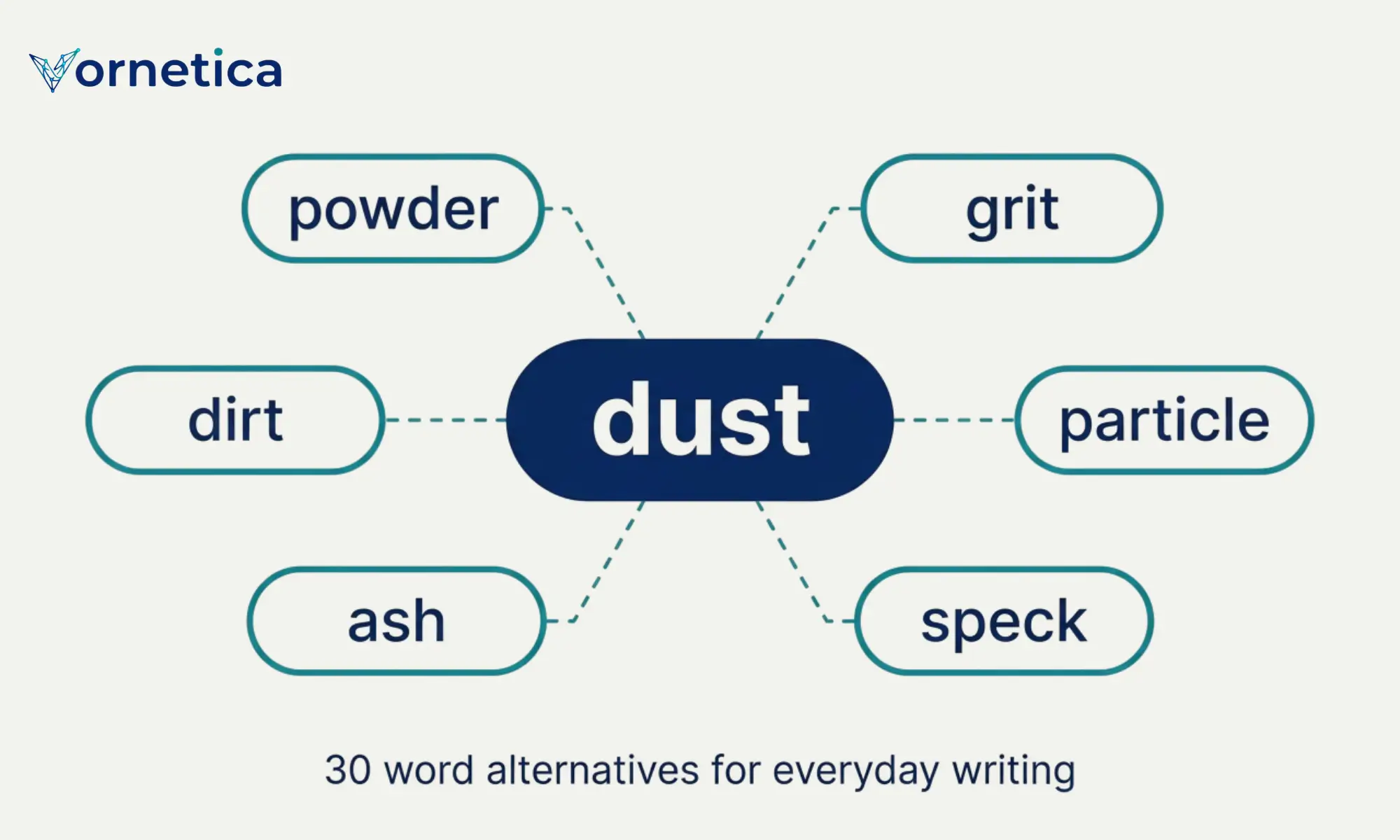
You wipe your desk in the morning. By evening, a thin gray layer is back. You write “dust” again in your notes, and it feels dull.
Dust means tiny dry bits of dirt or earth that float in the air and settle on things.
Think of an old attic full of books, where every shelf wears a soft gray coat.
Learning synonyms for dust helps students write better essays. Bloggers and content writers can stop repeating one word.
Daily English users can sound clear and sure. This dust synonym list shows which word fits which moment.
Quick Answer: What is another word for dust?
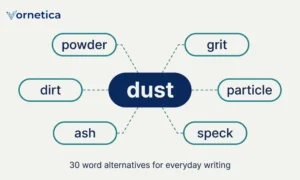
Another word for dust is dirt, grime, soot, powder, or grit. These words name tiny dry bits that settle on surfaces or float in the air. Pick soot for smoke, powder for fine dry material, and grit for rough bits.
1. Dirt
Meaning: Dirt is any unclean stuff that covers a thing.
Examples:
- The dirt on the window made the room look sad.
- Wash your hands to remove the dirt.
Best Used When: You want a simple, everyday word for casual speech.
2. Grime
Meaning: Grime is thick, sticky dirt that builds up over time.
Examples:
- Years of grime covered the old stove.
- He scrubbed the grime off his boots.
Best Used When: You describe heavy, stuck-on dirt in casual or descriptive writing.
3. Soot
Meaning: Soot is black powder that comes from burning wood or coal.
Examples:
- Soot filled the chimney after winter.
- Her face was black with soot from the campfire.
Best Used When: You talk about smoke or fire, like soot on old buildings in a city.
4. Powder
Meaning: Powder is a dry material made of very tiny bits.
Examples:
- A white powder covered the baker’s apron.
- The old brick turned to powder in his hand.
Best Used When: You describe fine, dry material, such as barley ground into flour.
5. Grit
Meaning: Grit is tiny, rough bits of stone or sand.
Examples:
- I felt grit between my teeth after the windy walk.
- The wind blew grit into my eyes.
Best Used When: You stress the rough, scratchy feel of the bits.
6. Lint
Meaning: Lint is soft little threads that come off cloth.
Examples:
- There was lint all over my black coat.
- Clean the lint from the dryer after each wash.
Best Used When: You talk about clothes, laundry, or cloth.
7. Fluff
Meaning: Fluff is light, soft bits that gather in corners.
Examples:
- Fluff gathered under the sofa.
- The kitten was covered in white fluff.
Best Used When: You want a soft, friendly word for casual or children’s writing.
8. Ash
Meaning: Ash is the gray powder left after something burns.
Examples:
- Gray ash covered the ground after the fire.
- He swept the ash out of the fireplace.
Best Used When: You describe burned things, from campfires to volcanoes.
9. Particles
Meaning: Particles are very small pieces of something.
Examples:
- Tiny particles danced in the sunlight.
- Air filters catch particles before you breathe them in.
Best Used When: You write in a technical or science tone, such as in a biohazard safety report.
10. Debris
Meaning: Debris is broken bits left after something falls apart.
Examples:
- Workers cleared the debris after the storm.
- Dust and debris filled the empty house.
Best Used When: You describe a mess left by damage or building work.
11. Sand
Meaning: Sand is tiny grains of rock found on beaches and in deserts.
Examples:
- Sand blew across the empty road.
- We found sand in our shoes after the picnic.
Best Used When: You talk about deserts, beaches, or dry outdoor places.
12. Silt
Meaning: Silt is very fine soil carried by water.
Examples:
- The river left a layer of silt on the fields.
- Silt made the pond water look brown.
Best Used When: You write about rivers, floods, or farming.
13. Filth
Meaning: Filth is very dirty, nasty stuff.
Examples:
- The room was full of filth when we arrived.
- She cleaned the filth from the old pots.
Best Used When: You want a strong, negative word for very dirty places.
14. Residue
Meaning: Residue is a small amount left behind after something is gone.
Examples:
- A white residue stayed on the dark table.
- Wipe off any residue with a damp cloth.
Best Used When: You use a formal or neutral tone, such as in cleaning guides.
15. Specks
Meaning: Specks are very small spots or tiny bits.
Examples:
- Specks of dust floated near the lamp.
- I saw specks on my glasses.
Best Used When: You describe tiny bits you can barely see.
16. Cinders
Meaning: Cinders are small pieces of burned coal or wood.
Examples:
- Cinders glowed in the dying fire.
- He swept the cinders into a pan.
Best Used When: You write creative or old-style scenes about fires.
17. Pollen
Meaning: Pollen is fine yellow powder made by flowers.
Examples:
- Pollen made my nose itch in spring.
- Bees carried pollen from flower to flower.
Best Used When: You describe plants, seasons, or allergies.
18. Soil
Meaning: Soil is the top layer of the ground where plants grow.
Examples:
- Dry soil turned to dust in the summer heat.
- The farmer checked the soil each morning.
Best Used When: You write about farms, gardens, or nature.
19. Earth
Meaning: Earth here means the loose ground under your feet.
Examples:
- The truck threw up clouds of dry earth.
- Rain turned the dusty earth into mud.
Best Used When: You want a poetic or story-like feel.
20. Motes
Meaning: Motes are tiny bits of dust that float in light.
Examples:
- Motes drifted through the beam of the lamp.
- The old library was full of golden motes.
Best Used When: You write poetry or creative scenes.
21. Flecks
Meaning: Flecks are small marks or bits of something.
Examples:
- Flecks of gray covered the black piano.
- He brushed flecks of paint from his shirt.
Best Used When: You describe tiny bits that stand out against a color.
22. Grains
Meaning: Grains are small, hard bits of something like sand or salt.
Examples:
- Grains of dry dirt slid through her fingers.
- The wind carried grains across the dunes.
Best Used When: You want a clear picture of tiny, hard pieces.
23. Dander
Meaning: Dander is tiny flakes of skin or hair from pets and people.
Examples:
- Pet dander makes my sister sneeze.
- A good vacuum picks up dander from the rug.
Best Used When: You talk about allergies or home cleaning.
24. Crumbs
Meaning: Crumbs are tiny pieces that fall from bread or cake.
Examples:
- Crumbs covered the kitchen counter.
- The birds ate the crumbs on the step.
Best Used When: You talk about food bits, in a light and casual tone.
25. Haze
Meaning: Haze is a thin cloud of dust or smoke in the air.
Examples:
- A haze hung over the road at sunset.
- The city looked gray in the afternoon haze.
Best Used When: You write descriptive scenes about the sky or air.
26. Smudge
Meaning: A smudge is a small dirty mark.
Examples:
- There was a smudge on the mirror.
- He left a smudge on his sleeve.
Best Used When: You describe a mark left by touching something dusty.
27. Chalk
Meaning: Chalk is soft white powder used for writing or drawing.
Examples:
- Chalk covered his hands after class.
- Players rub chalk on their palms before a championship match.
Best Used When: You talk about schools, sports, or white dry powder.
28. Dross
Meaning: Dross is waste bits left over from making something.
Examples:
- The worker skimmed the dross from the hot metal.
- Dross piled up near the old furnace.
Best Used When: You write in a technical or old-style tone about waste material.
29. Spores
Meaning: Spores are tiny seeds from mold, mushrooms, and ferns.
Examples:
- Spores floated out of the old mushroom.
- Damp walls can fill a room with spores.
Best Used When: You write about plants, mold, or science.
30. Sediment
Meaning: Sediment is tiny bits that settle at the bottom of water or a bottle.
Examples:
- Sediment settled at the bottom of the glass.
- The lake held years of sediment.
Best Used When: You use a formal or science tone.
Comparison Table: Dust Synonyms at a Glance
| Synonym | Tone | Best Used In |
| Dirt | Casual | Speech |
| Grime | Casual | Writing |
| Soot | Neutral | Writing |
| Powder | Neutral | Technical |
| Grit | Casual | Speech |
| Lint | Casual | Speech |
| Fluff | Casual | Speech |
| Ash | Neutral | Writing |
| Particles | Formal | Technical |
| Debris | Neutral | Writing |
| Sand | Neutral | Speech |
| Silt | Formal | Technical |
| Filth | Casual | Speech |
| Residue | Formal | Technical |
| Specks | Casual | Speech |
| Cinders | Neutral | Writing |
| Pollen | Neutral | Technical |
| Soil | Neutral | Technical |
| Earth | Neutral | Writing |
| Motes | Neutral | Writing |
| Flecks | Neutral | Writing |
| Grains | Neutral | Speech |
| Dander | Neutral | Technical |
| Crumbs | Casual | Speech |
| Haze | Neutral | Writing |
| Smudge | Casual | Speech |
| Chalk | Neutral | Speech |
| Dross | Formal | Technical |
| Spores | Neutral | Technical |
| Sediment | Formal | Technical |
Frequently Asked Questions
What is another word for dust?
Another word for dust is dirt, grime, soot, powder, or grit. Pick the one that fits your sentence best.
What is a formal synonym for dust?
Particles, residue, and sediment are good formal words for dust. They fit reports and school work.
What is the difference between dust and dirt?
Dust is dry, fine, and light. Dirt is a bigger word for anything unclean, including mud.
What is a poetic word for dust?
Motes, haze, and ash sound poetic. Writers use them in stories and poems.
What do you call dust in the air?
Dust in the air is often called particles, haze, or motes. Each word shows a different look or feel.
Practice Exercise
Fill in each blank with a word from the list above.
- The campfire left gray ______ on the ground.
- Remove the ______ from the dryer after every wash.
- The farmer checked the ______ in his field.
- A thin ______ hung over the road at sunset.
- Pet ______ makes my sister sneeze.
Answer Key
- Ash
- Lint
- Soil
- Haze
- Dander
Key Takeaways
- Dirt, grime, soot, powder, and grit are the most common synonyms for dust.
- Use particles, residue, and sediment for formal or technical writing.
- Use motes, haze, and ash for creative, story-like writing.
- Use lint, dander, and pollen when you name the exact kind of dust.
- Always check the context before you swap one word for another.
- Learn three new words each week to make them stick.
Conclusion
Learning synonyms makes your writing fresh and your speaking clear. A rich word list helps bloggers avoid repeats and helps students earn better marks.
Try these words in your next email, essay, or chat with a friend. Start with one or two, then add more.
Want to grow your word power further? Search for another word on our site and keep learning.





2 thoughts on “Synonyms for Dust: 30 Fresh Words to Use Instead”