Have you ever watched a funny movie after a long day and thought, “I needed that”? That feeling is called entertainment.
A movie, game, concert, book, or fun activity can give us entertainment and help us relax.
The phrase synonyms for entertainment means different words that can be used instead of “entertainment.”
Some words have almost the same meaning, while others fit better in certain situations.
Learning synonyms for entertainment can make your English more interesting. Students can use them in essays and school work.
Bloggers and content writers can avoid using the same word again and again.
Daily English users can also choose better words when talking about movies, games, events, or free-time activities.
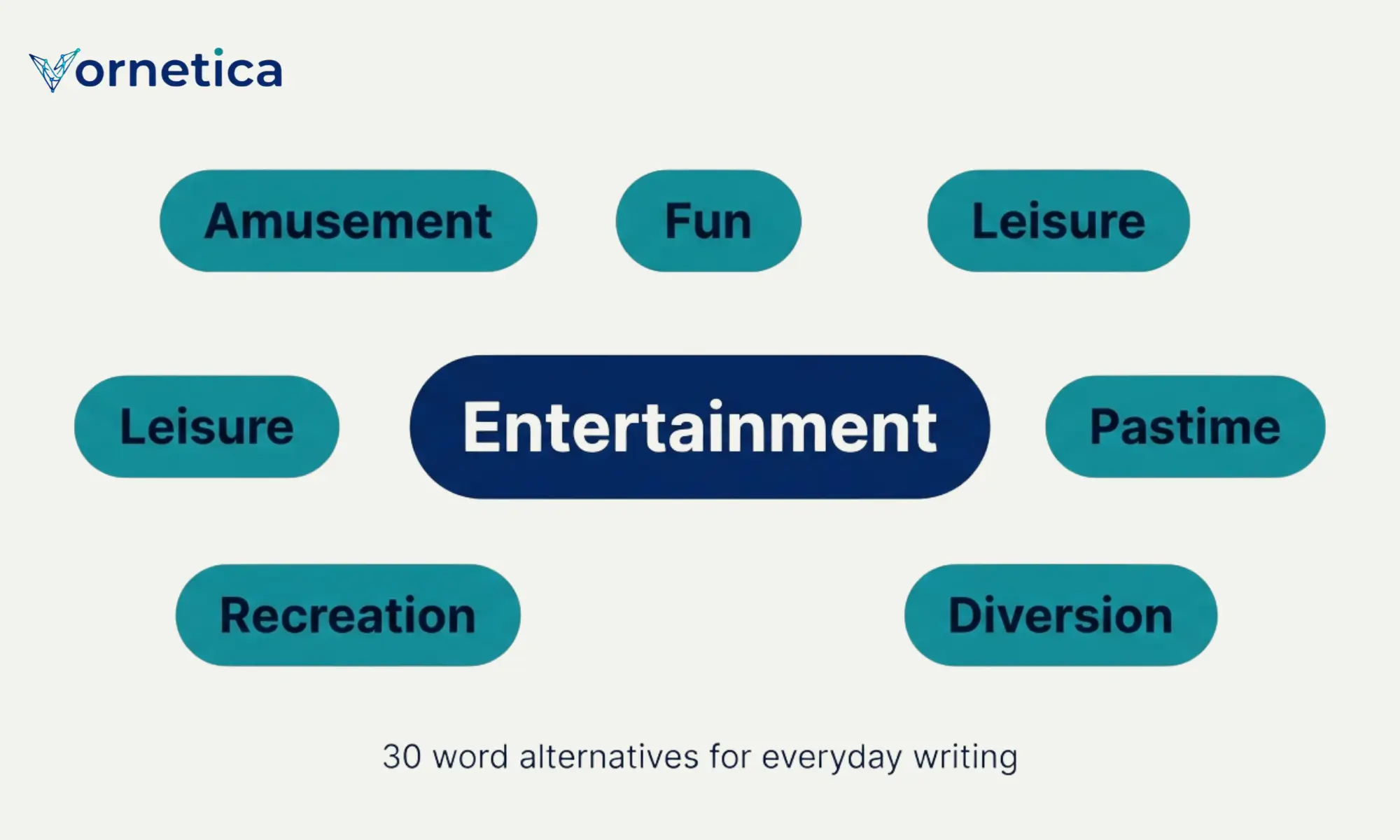
This synonyms for entertainment list gives you 30 simple choices with meanings and examples.
Quick Answer: Another word for entertainment is amusement, recreation, fun, enjoyment, or leisure. The best synonym depends on the situation and the type of activity you are describing.
Amusement
Meaning: Amusement is something that makes you feel happy or helps you have fun.
Examples:
- The funny show gave us great amusement.
- The children found amusement in the silly game.
Best Used When: Use it for fun activities, jokes, shows, and light enjoyment.
Recreation
Meaning: Recreation is an activity you do for fun when you are not working.
Examples:
- Swimming is my favorite form of recreation.
- The park has many options for recreation.
Best Used When: Use it in formal or neutral writing about free-time activities.
People often choose recreation activities when they need a break from work or study. If you need a useful word for help during group activities, visit synonyms for assistance.
Fun
Meaning: Fun is something that gives you pleasure and makes you happy.
Examples:
- We had fun at the beach.
- The party was full of fun.
Best Used When: Use it in casual speech and everyday writing.
Enjoyment
Meaning: Enjoyment is the good feeling you get from something you like.
Examples:
- She gets great enjoyment from reading.
- The concert brought us hours of enjoyment.
Best Used When: Use it when talking about personal pleasure or positive feelings.
Leisure
Meaning: Leisure is free time when you do not have work to do.
Examples:
- I read books during my leisure time.
- He enjoys sports in his leisure hours.
Best Used When: Use it in formal, academic, or professional writing.
Diversion
Meaning: A diversion is something that takes your mind away from work or worry.
Examples:
- The card game was a nice diversion.
- Music can be a useful diversion after work.
Best Used When: Use it for an activity that gives you a short break.
Pastime
Meaning: A pastime is an activity you enjoy doing in your free time.
Examples:
- Gardening is her favorite pastime.
- Reading became his favorite pastime.
Best Used When: Use it for hobbies and regular free-time activities.
Pleasure
Meaning: Pleasure is a happy or good feeling that comes from something you enjoy.
Examples:
- The music gave me great pleasure.
- It was a pleasure to watch the performance.
Best Used When: Use it in neutral or slightly formal speech and writing.
Relaxation
Meaning: Relaxation is the feeling of becoming calm after stress or work.
Examples:
- I listen to music for relaxation.
- The spa offers time for rest and relaxation.
Best Used When: Use it when entertainment helps someone rest or feel calm.
Play
Meaning: Play is an activity done for fun rather than work.
Examples:
- The children went outside to play.
- The puppy enjoys playing with a ball.
Best Used When: Use it for children, games, sports, and casual activities.
Delight
Meaning: Delight is a strong feeling of happiness or pleasure.
Examples:
- The magician’s tricks delighted the children.
- The surprise brought great delight.
Best Used When: Use it in creative writing or when describing strong happiness.
Merriment
Meaning: Merriment means happy fun, laughter, and enjoyment.
Examples:
- The room was filled with laughter and merriment.
- The wedding brought plenty of merriment.
Best Used When: Use it for celebrations, parties, and cheerful events.
Gratification
Meaning: Gratification is the pleasure you get when something satisfies you.
Examples:
- Winning the game gave him great gratification.
- She felt gratification after finishing the project.
Best Used When: Use it in formal or academic writing about satisfaction.
Festivity
Meaning: Festivity means a happy activity or celebration for a special event.
Examples:
- The city was ready for the holiday festivities.
- Music added to the festivity of the evening.
Best Used When: Use it for holidays, festivals, parties, and public celebrations.
Celebration
Meaning: A celebration is a special event held to show happiness about something.
Examples:
- We had a small celebration after the exam.
- The birthday celebration lasted all evening.
Best Used When: Use it for birthdays, weddings, achievements, and special occasions.
When people gather for a celebration, their presence can be important to the event. You can learn more related vocabulary with synonyms for attendance.
Spectacle
Meaning: A spectacle is a large or impressive show that people enjoy watching.
Examples:
- The fireworks were a wonderful spectacle.
- The parade became a colorful spectacle.
Best Used When: Use it for large visual events and impressive public shows.
Show
Meaning: A show is an event or performance made for people to watch.
Examples:
- We watched a comedy show last night.
- The children loved the puppet show.
Best Used When: Use it in everyday speech about television, theater, or live events.
Performance
Meaning: A performance is an act or show presented for an audience.
Examples:
- Her dance performance was excellent.
- We enjoyed the band’s live performance.
Best Used When: Use it for music, theater, dance, speeches, and live events.
Theater
Meaning: Theater is entertainment where actors perform stories for an audience.
Examples:
- We went to the theater on Friday.
- She loves watching live theater.
Best Used When: Use it when discussing stage plays and live dramatic performances.
Comedy
Meaning: Comedy is entertainment that is made to make people laugh.
Examples:
- We watched a comedy after dinner.
- His comedy made everyone laugh.
Best Used When: Use it for funny movies, shows, performances, and jokes.
Game
Meaning: A game is an activity played for fun, often with rules.
Examples:
- We played a board game after dinner.
- The children started a new game outside.
Best Used When: Use it for sports, board games, video games, and playful activities.
Sport
Meaning: Sport is a physical activity that people do for fun or competition.
Examples:
- Football is a popular sport in many countries.
- He watches sport for entertainment.
Best Used When: Use it when entertainment comes from physical activity or competition.
Hobby
Meaning: A hobby is an activity you enjoy doing regularly in your free time.
Examples:
- Painting is my favorite hobby.
- Her hobby helps her relax after work.
Best Used When: Use it for personal interests and regular free-time activities.
Activity
Meaning: An activity is something a person does, often for a purpose or for fun.
Examples:
- The museum offers a fun activity for children.
- Reading is a relaxing activity.
Best Used When: Use it as a broad and neutral word for things people do.
Attraction
Meaning: An attraction is a place or event that people visit because it is interesting or fun.
Examples:
- The water park is a popular attraction.
- The new museum became a major attraction.
Best Used When: Use it for tourist sites, parks, museums, and public entertainment.
Media
Meaning: Media includes forms of communication and entertainment such as TV, movies, and online content.
Examples:
- Social media is a common source of entertainment.
- Young people spend time with digital media.
Best Used When: Use it in technical, academic, or digital-content discussions.
Online entertainment can also bring people together to create and share ideas. For vocabulary about working together, see synonyms for collaboration.
Amusement Park
Meaning: An amusement park is a place with rides, games, and shows for fun.
Examples:
- We visited the amusement park on Saturday.
- The children loved every ride at the amusement park.
Best Used When: Use it for places that offer rides, games, and family entertainment.
Recreation Center
Meaning: A recreation center is a place where people go for sports and fun activities.
Examples:
- The children play basketball at the recreation center.
- Our town opened a new recreation center.
Best Used When: Use it in community, school, and public-service writing.
Entertainment
Meaning: Entertainment is something people watch, do, or enjoy for fun.
Examples:
- The hotel provides evening entertainment.
- Music is a common form of entertainment.
Best Used When: Use it as the broad general term for fun activities and shows.
Entertainment can sometimes involve rules about what people can watch, publish, or share. For related vocabulary, explore synonyms for censorship.
Recreation Activity
Meaning: A recreation activity is something you do during free time for fun.
Examples:
- Cycling is a healthy recreation activity.
- The school offers several recreation activities.
Best Used When: Use it in formal, educational, or community writing.
Distraction
Meaning: A distraction is something that takes your attention away from work or worry.
Examples:
- A funny video was a welcome distraction.
- Music can be a good distraction after a busy day.
Best Used When: Use it when entertainment gives someone a short mental break.
Large entertainment events can also become confusing when many people and activities happen at once. For a useful word that describes disorder, explore synonyms for chaos.
Comparison Table
| Synonym | Tone (Formal/Neutral/Casual) | Best Used In (writing/speech/technical) |
| Amusement | Neutral | Writing / Speech |
| Recreation | Formal | Writing / Technical |
| Fun | Casual | Speech / Writing |
| Enjoyment | Neutral | Writing / Speech |
| Leisure | Formal | Writing |
| Diversion | Formal | Writing |
| Pastime | Neutral | Writing / Speech |
| Pleasure | Neutral | Writing / Speech |
| Relaxation | Neutral | Writing / Speech |
| Play | Casual | Speech / Writing |
| Delight | Formal | Writing |
| Merriment | Formal | Creative Writing |
| Gratification | Formal | Technical / Academic |
| Festivity | Formal | Writing |
| Celebration | Neutral | Writing / Speech |
| Spectacle | Neutral | Writing |
| Show | Casual | Speech / Writing |
| Performance | Neutral | Writing / Speech |
| Theater | Neutral | Writing / Speech |
| Comedy | Neutral | Writing / Speech |
| Game | Casual | Speech / Writing |
| Sport | Neutral | Speech / Writing |
| Hobby | Neutral | Speech / Writing |
| Activity | Neutral | Writing / Technical |
| Attraction | Neutral | Writing / Speech |
| Media | Neutral | Technical / Writing |
| Amusement Park | Neutral | Speech / Writing |
| Recreation Center | Neutral | Writing / Speech |
| Entertainment | Neutral | Writing / Speech |
| Distraction | Neutral | Writing / Speech |
Frequently Asked Questions
What is another word for entertainment?
Common alternatives include amusement, recreation, fun, enjoyment, and leisure. The best choice depends on the sentence.
What is a simple synonym for entertainment?
Fun is one of the simplest synonyms for entertainment. It works well in casual English.
What is a formal word for entertainment?
Recreation and leisure can work well in formal writing. They are common in academic and professional contexts.
What is a synonym for entertainment in writing?
Words such as amusement, recreation, enjoyment, pastime, and diversion can make writing more varied.
What is the difference between entertainment and recreation?
Entertainment usually means something that gives people fun or enjoyment. Recreation often means an activity people do during free time.
Practice Exercise
Fill in each blank with the best synonym from the list.
- Reading novels is a relaxing form of __________ after work.
- We watched a funny __________ at the theater last night.
- Swimming is a popular form of outdoor __________.
- Gardening is her favorite __________ during the weekend.
- The fireworks were an amazing __________ for the crowd.
Answer Key
- relaxation
- comedy
- recreation
- hobby
- spectacle
Key Takeaways
- Fun is best for casual, everyday English.
- Recreation works well in formal writing.
- Pastime is useful for hobbies and free-time activities.
- Amusement often describes light or funny entertainment.
- Performance is best for live music, dance, and theater.
- Choose a synonym based on the context, not only the meaning.
Conclusion
Learning synonyms for entertainment can make your writing, blogging, speaking, and daily communication more natural.
Instead of repeating “entertainment,” you can choose words like fun, amusement, recreation, pastime, enjoyment, or performance based on the situation.
Try using these words in emails, essays, blog posts, and daily conversations. Small vocabulary changes can make your English clearer and more interesting.
If you want to improve your vocabulary further, search for another word on the site and learn its useful synonyms.