Have you ever walked into a room after a big party and found chairs everywhere, cups on the floor, and people talking at the same time?
It can be hard to know where to begin. That is a simple example of chaos.
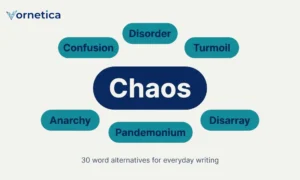
Chaos means a state of complete disorder, confusion, or lack of control. It can describe a messy room, a noisy crowd, a confusing plan, or a difficult situation.
Learning synonyms for chaos helps you describe each situation more clearly.
Students can use these words in essays and assignments. Bloggers and content writers can avoid repeating the same word.
Daily English users can also speak and write with more variety. When you know different synonyms for chaos, you can choose a word that gives your sentence the exact meaning you want.
Quick Answer Box
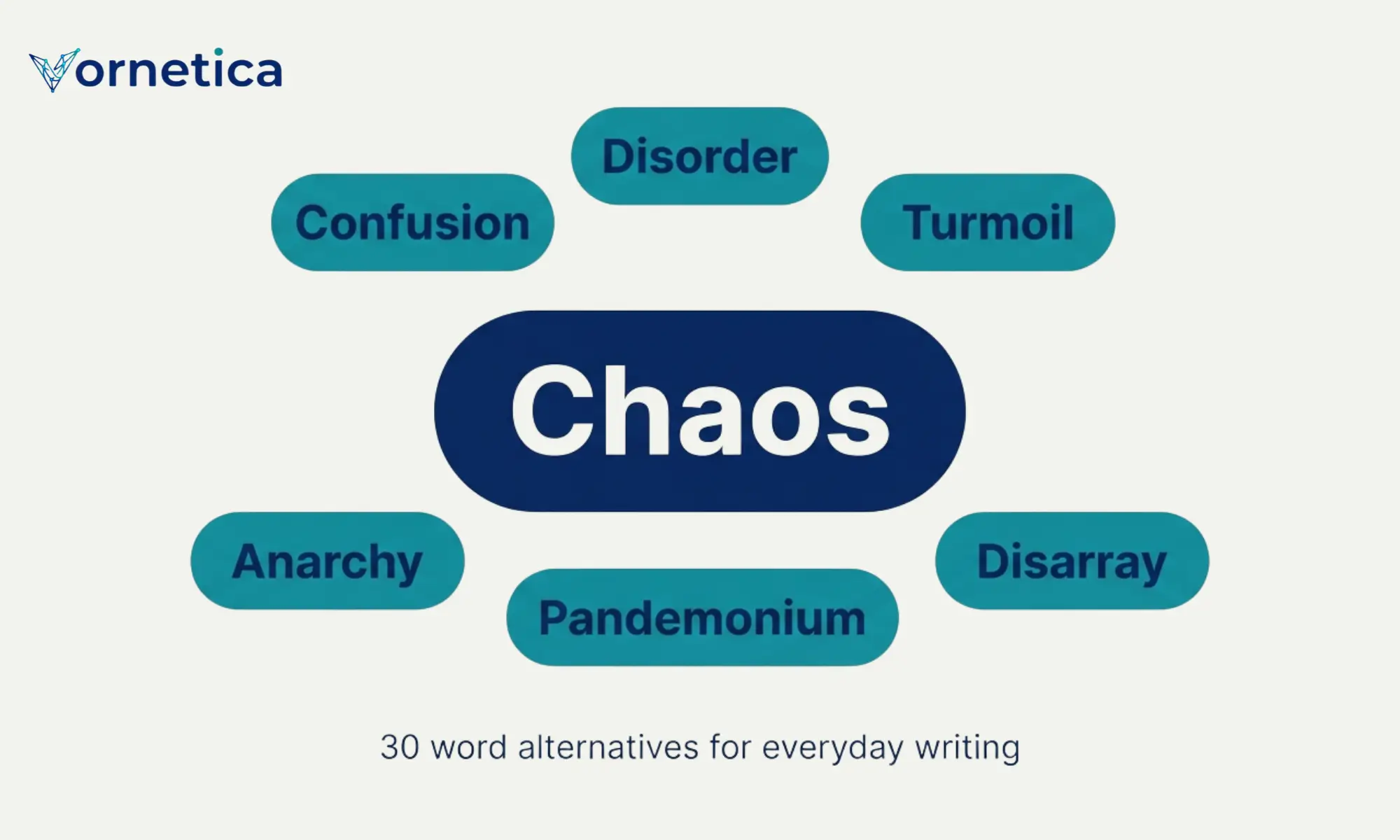
Another word for chaos is disorder, confusion, turmoil, pandemonium, or mayhem. The best synonym depends on whether you mean a messy place, unclear situation, serious trouble, or loud and uncontrolled activity.
Top 5 synonyms: disorder, confusion, turmoil, pandemonium, mayhem.
Main Content – Synonyms List
1. Disorder
Meaning: Disorder means a state where things are not organized or under control.
Examples:
- The office was in complete disorder after the meeting.
- My desk was in disorder after a busy day.
Best Used When: Use it as a general synonym for chaos.
2. Confusion
Meaning: Confusion means a state where people do not understand what is happening.
Examples:
- The new rules caused confusion among students.
- There was confusion about the meeting time.
Best Used When: Use it when the main problem is a lack of understanding.
Sometimes a confusing idea needs a simple comparison. An analogy can make a difficult point easier for readers to understand.
3. Turmoil
Meaning: Turmoil means a state of serious trouble, confusion, or change.
Examples:
- The company went through months of turmoil.
- Her mind was full of turmoil after the news.
Best Used When: Use it for serious personal, social, business, or emotional problems.
4. Pandemonium
Meaning: Pandemonium means a situation filled with extreme noise and confusion.
Examples:
- Pandemonium broke out when the doors opened.
- The school hall became pandemonium after the announcement.
Best Used When: Use it for loud, crowded, and uncontrolled situations.
5. Mayhem
Meaning: Mayhem means extreme disorder, trouble, or uncontrolled activity.
Examples:
- The storm caused mayhem across the city.
- There was mayhem outside the stadium.
Best Used When: Use it when chaos is intense and may involve trouble or damage.
6. Havoc
Meaning: Havoc means great damage, trouble, or disruption.
Examples:
- The flood caused havoc on the roads.
- The computer failure created havoc at work.
Best Used When: Use it when something causes serious disruption or damage.
7. Commotion
Meaning: Commotion means a lot of noise, movement, and activity.
Examples:
- We heard a loud commotion outside.
- The children caused a commotion in the hallway.
Best Used When: Use it for sudden noise and activity in a place.
8. Uproar
Meaning: Uproar means loud noise or a strong public reaction.
Examples:
- The new rule caused an uproar.
- An uproar started after the decision was announced.
Best Used When: Use it for loud complaints, reactions, or disagreements.
A heated disagreement can quickly make a situation difficult to control. If you need more vocabulary for disagreements, these synonyms for argument can help you describe different types of disputes.
9. Bedlam
Meaning: Bedlam means a place or situation full of extreme noise and confusion.
Examples:
- The kitchen was bedlam before dinner.
- The store became bedlam during the sale.
Best Used When: Use it in casual or colorful descriptions of extreme disorder.
10. Disarray
Meaning: Disarray means a condition where things are messy or poorly organized.
Examples:
- The books were left in disarray.
- Her room was in complete disarray.
Best Used When: Use it for rooms, objects, documents, plans, or systems.
11. Mess
Meaning: A mess is a dirty, untidy, or confused situation.
Examples:
- Your bedroom is a complete mess.
- Our travel plans became a mess.
Best Used When: Use it in casual everyday English.
12. Muddle
Meaning: A muddle is a confused or badly organized situation.
Examples:
- The instructions created a muddle.
- I got into a muddle with the paperwork.
Best Used When: Use it for smaller problems caused by confusion or poor organization.
13. Jumble
Meaning: A jumble is a confused mixture of different things.
Examples:
- The drawer was a jumble of old papers.
- His notes were a jumble of words and numbers.
Best Used When: Use it for mixed objects, ideas, words, or information.
14. Unrest
Meaning: Unrest means a period when people are upset and there is trouble in a place.
Examples:
- The city experienced unrest after the announcement.
- The protest led to unrest in the area.
Best Used When: Use it for social, public, or community problems.
When groups face conflict or unrest, loyalty can become an important topic. The word allegiance is useful when describing loyalty to a person, group, or cause.
15. Upheaval
Meaning: Upheaval means a major change that causes trouble or confusion.
Examples:
- The new system caused upheaval at work.
- Moving to a new city brought a lot of upheaval.
Best Used When: Use it for major changes in life, business, or society.
16. Disturbance
Meaning: A disturbance is something that interrupts peace or normal activity.
Examples:
- The loud music caused a disturbance.
- Police arrived after the disturbance outside.
Best Used When: Use it in formal reports or everyday descriptions of disruption.
17. Anarchy
Meaning: Anarchy means a situation with little or no control or authority.
Examples:
- Without rules, the meeting turned into anarchy.
- The story describes a city falling into anarchy.
Best Used When: Use it when there is a serious breakdown of order or authority.
18. Frenzy
Meaning: Frenzy means a state of wild excitement or uncontrolled activity.
Examples:
- The announcement caused a buying frenzy.
- Fans went into a frenzy after the final goal.
Best Used When: Use it for extreme excitement, activity, or emotion.
Competition can sometimes create a frenzy when everyone wants the same result. Vocabulary such as synonyms for win can help when writing about success, competition, and achievement.
19. Shambles
Meaning: Shambles means a state of complete mess or disorder.
Examples:
- The kitchen was in shambles after the party.
- Our plans were in shambles after the delay.
Best Used When: Use it for badly disorganized places, plans, or situations.
20. Disorganization
Meaning: Disorganization means a lack of order or a clear system.
Examples:
- Disorganization caused delays in the project.
- The team’s disorganization made the task harder.
Best Used When: Use it for school, work, teams, systems, and projects.
21. Disorderliness
Meaning: Disorderliness means a condition where things are untidy or not properly arranged.
Examples:
- The teacher complained about the disorderliness of the room.
- The disorderliness of the files slowed the work.
Best Used When: Use it in formal descriptions of untidy or poorly arranged things.
22. Turbulence
Meaning: Turbulence means a state of sudden trouble, change, or instability.
Examples:
- The business faced months of turbulence.
- Their friendship went through some turbulence.
Best Used When: Use it for unstable situations, relationships, or periods of change.
23. Ferment
Meaning: Ferment means a state of excitement, change, or unrest.
Examples:
- The new idea created ferment in the company.
- The community was in a period of social ferment.
Best Used When: Use it in formal or literary writing about change and new ideas.
24. Wildness
Meaning: Wildness means a lack of calm, order, or control.
Examples:
- The wildness of the crowd surprised everyone.
- The party had a feeling of wildness.
Best Used When: Use it in casual or creative writing.
25. Madness
Meaning: Madness can describe a situation that feels extremely busy, confusing, or uncontrolled.
Examples:
- The morning rush was complete madness.
- Shopping before the holiday was pure madness.
Best Used When: Use it casually for overwhelming activity or confusion.
26. Riot
Meaning: A riot is a violent and uncontrolled public disturbance.
Examples:
- The gathering turned into a riot.
- Police arrived to control the riot.
Best Used When: Use it only when describing serious public disorder involving violence.
27. Bustle
Meaning: Bustle means a lot of busy movement and activity.
Examples:
- We enjoyed the bustle of the busy market.
- The station was full of bustle in the morning.
Best Used When: Use it for busy places where activity is not always negative.
28. Cacophony
Meaning: Cacophony means a mixture of loud and unpleasant sounds.
Examples:
- A cacophony of horns filled the street.
- The construction site created a loud cacophony.
Best Used When: Use it when noise is the main type of chaos.
When many people talk at once, the noise can become hard to manage. For informal vocabulary about excessive talking, these synonyms for yapping can help you choose a more suitable word.
29. Topsy-Turvy
Meaning: Topsy-Turvy means confused, disorganized, or turned upside down.
Examples:
- My schedule became topsy-turvy during the holidays.
- The house felt topsy-turvy after the move.
Best Used When: Use it in informal, playful, or creative writing.
30. Free-for-All
Meaning: A free-for-all is a situation where people act without much control or order.
Examples:
- The ticket sale became a free-for-all.
- The discussion turned into a free-for-all.
Best Used When: Use it for uncontrolled competition, activity, or arguments.
Comparison Table
| Synonym | Tone | Best Used In |
| Disorder | Neutral | Writing, speech |
| Confusion | Neutral | Writing, speech |
| Turmoil | Formal | Writing, speech |
| Pandemonium | Neutral | Writing, speech |
| Mayhem | Neutral | Writing, speech |
| Havoc | Neutral | Writing, speech |
| Commotion | Neutral | Writing, speech |
| Uproar | Neutral | Writing, speech |
| Bedlam | Casual | Writing, speech |
| Disarray | Formal | Writing |
| Mess | Casual | Speech, writing |
| Muddle | Neutral | Writing, speech |
| Jumble | Neutral | Writing, speech |
| Unrest | Formal | Writing |
| Upheaval | Formal | Writing |
| Disturbance | Formal | Writing, speech |
| Anarchy | Formal | Writing |
| Frenzy | Neutral | Writing, speech |
| Shambles | Casual | Writing, speech |
| Disorganization | Formal | Writing |
| Disorderliness | Formal | Writing |
| Turbulence | Formal | Writing |
| Ferment | Formal | Writing |
| Wildness | Casual | Creative writing |
| Madness | Casual | Speech, writing |
| Riot | Neutral | Writing, speech |
| Bustle | Neutral | Writing, speech |
| Cacophony | Formal | Writing |
| Topsy-Turvy | Casual | Speech, creative writing |
| Free-for-All | Casual | Speech, writing |
Frequently Asked Questions
What is another word for chaos?
Another word for chaos is disorder, confusion, turmoil, pandemonium, or mayhem. The best choice depends on the situation.
What is a simple word for chaos?
Mess is a simple casual word for chaos. Disorder is also easy and works in many situations.
What is a formal word for chaos?
Disorder, turmoil, disarray, upheaval, and disorganization can work well in formal writing.
What is a strong synonym for chaos?
Mayhem, pandemonium, turmoil, havoc, and bedlam can describe intense disorder.
Is confusion the same as chaos?
No. Confusion mainly means a lack of understanding, while chaos means a broader lack of order or control.
Practice Exercise
Fill in each blank with the correct synonym from the list above.
- The heavy rain caused ________ on the roads.
- The papers on my desk were in complete ________.
- The crowd created a loud ________ outside the stadium.
- The sudden changes caused great ________ in the company.
- The morning rush at the station was pure ________.
Answer Key
- Havoc
- Disarray
- Commotion
- Upheaval
- Madness
Key Takeaways
- Disorder is a useful general synonym for chaos.
- Confusion is best when people do not understand something.
- Pandemonium describes loud and extreme confusion.
- Mayhem suggests intense and uncontrolled disorder.
- Disarray works well for messy things, places, and plans.
- Choose a synonym based on the exact situation.
Conclusion
Learning synonyms for chaos gives you more ways to describe confusing, messy, noisy, and uncontrolled situations.
Words such as disorder, confusion, turmoil, mayhem, and disarray each have their own useful context.
Practice these words in emails, essays, blog posts, and daily conversations.
Using different words will make your English clearer and more natural. Keep building your vocabulary by searching for another word on the site.