Have you ever needed a better word than teenager for a school essay, blog post, or everyday conversation?
A student may be called a teen, while a formal report may use adolescent or juvenile. The best choice depends on the setting and the meaning you want.
The word teenager means a young person who is between 13 and 19 years old. Knowing synonyms for teenager helps you avoid using the same word again and again. It also helps your writing sound more natural.
Students can use these words in essays and schoolwork. Bloggers and content writers can make their text more varied. Daily English users can choose the right word for casual or formal speech. Learning synonyms for teenager is a simple way to build a stronger vocabulary.
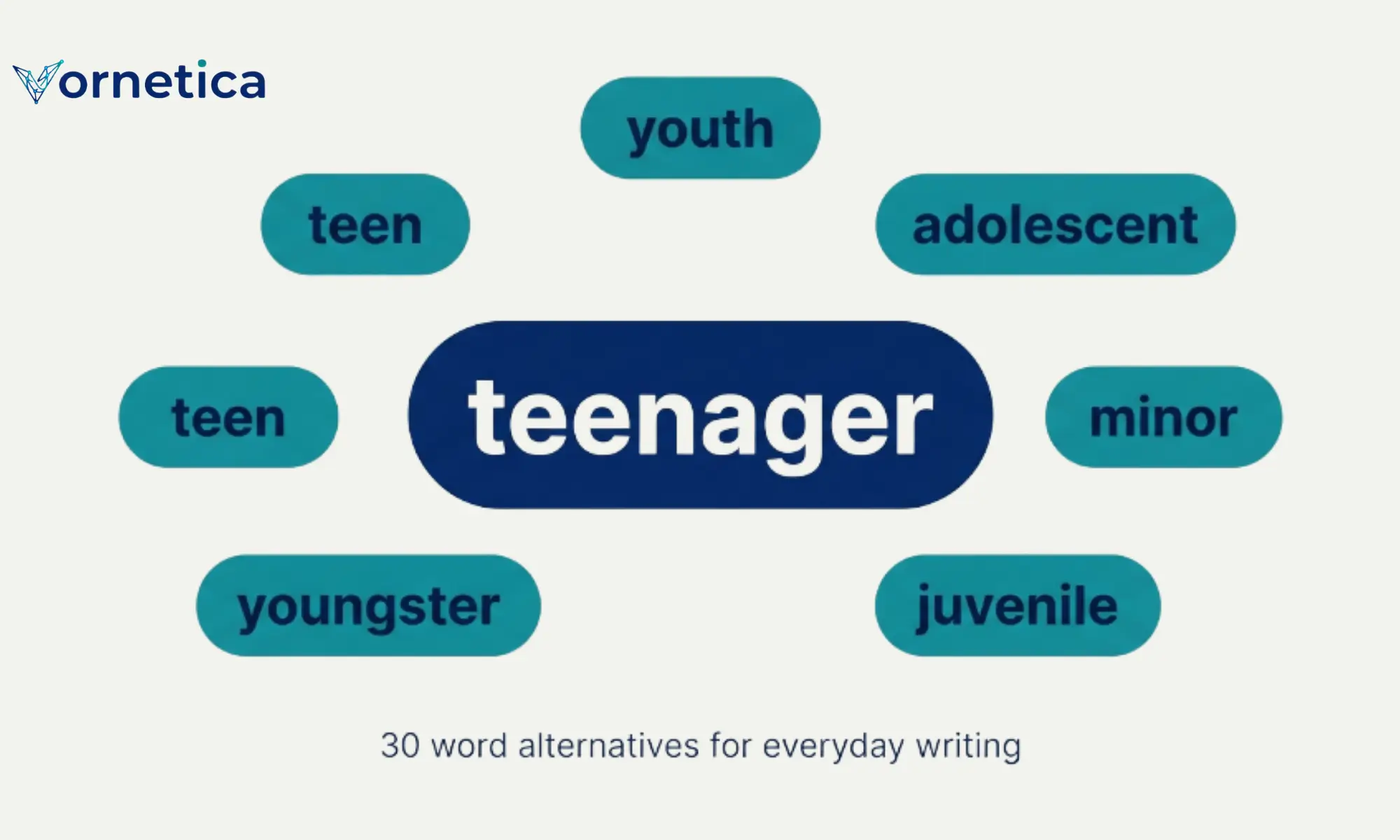
Quick Answer Box: Another word for teenager is teen, adolescent, youth, juvenile, or young person. The best choice depends on whether the context is casual, formal, legal, or general.
1. Teen
Meaning: A teen is a young person aged 13 to 19.
Examples:
- My teen loves playing basketball after school.
- The teen joined a music club.
Best Used When: Use it in casual and everyday speech.
2. Adolescent
Meaning: An adolescent is a young person who is growing from a child into an adult.
Examples:
- The adolescent is learning to make her own choices.
- Parents often guide adolescents through school years.
Best Used When: Use it in formal, educational, or academic writing.
3. Youth
Meaning: Youth means a young person or young people.
Examples:
- The youth joined the community event.
- Local youth helped clean the park.
Best Used When: Use it in general, social, and formal contexts.
4. Young Person
Meaning: A young person is someone who is not yet fully grown.
Examples:
- Every young person needs support and guidance.
- The young person asked a thoughtful question.
Best Used When: Use it as a neutral and polite alternative.
5. Juvenile
Meaning: A juvenile is a young person who is not legally an adult.
Examples:
- The program helps juvenile students learn new skills.
- The center provides support for juveniles.
Best Used When: Use it in legal, official, or formal contexts.
6. Minor
Meaning: A minor is a person who is below the legal adult age.
Examples:
- The minor traveled with a parent.
- A minor may need an adult’s permission.
Best Used When: Use it for legal, official, or age-related situations.
7. Youngster
Meaning: A youngster is a young person, often a child or teen.
Examples:
- The youngster won the school race.
- That youngster is very good at drawing.
Best Used When: Use it in casual or friendly speech.
8. Young Adult
Meaning: A young adult is a person in the early stage of adult life.
Examples:
- The young adult started college last year.
- Many young adults move away for study or work.
Best Used When: Use it when the person is near or beyond the teenage years.
9. Pubescent
Meaning: Pubescent describes a young person who is going through puberty.
Examples:
- The pubescent child needed a new school uniform.
- Parents may notice many changes in a pubescent child.
Best Used When: Use it in medical, educational, or developmental contexts.
10. Schoolchild
Meaning: A schoolchild is a young person who goes to school.
Examples:
- The schoolchild carried a heavy backpack.
- Every schoolchild received a new book.
Best Used When: Use it when the person’s role as a student matters more than their exact age.
11. School Student
Meaning: A school student is a young person who attends school.
Examples:
- The school student finished her project early.
- Every school student must follow the class rules.
Best Used When: Use it in education-related writing and speech.
12. Pupil
Meaning: A pupil is a student who attends a school.
Examples:
- The pupil raised his hand in class.
- Each pupil received a worksheet.
Best Used When: Use it in British English and school-related contexts.
13. Learner
Meaning: A learner is someone who is learning a skill or subject.
Examples:
- The young learner practiced English every day.
- Each learner received helpful feedback.
Best Used When: Use it when focusing on education or skill development.
14. Youngster
Meaning: A youngster is a young person who is still growing up.
Examples:
- The youngster helped his mother at home.
- That youngster enjoys reading comic books.
Best Used When: Use it in friendly, informal, or conversational writing.
15. Young Individual
Meaning: A young individual is a young person viewed as one person.
Examples:
- Each young individual has different goals.
- The young individual showed great confidence.
Best Used When: Use it in formal or professional writing.
16. Young Member
Meaning: A young member is a young person who belongs to a group.
Examples:
- The young member joined the sports club.
- Our young members planned the event.
Best Used When: Use it when talking about a club, team, group, or organization.
17. Young Citizen
Meaning: A young citizen is a young person who belongs to a country.
Examples:
- The young citizen learned about voting.
- Schools can teach young citizens about civic duties.
Best Used When: Use it in civic, political, educational, or community contexts.
18. Emerging Adult
Meaning: An emerging adult is a young person moving toward full adult life.
Examples:
- The emerging adult was choosing a career path.
- Many emerging adults begin living on their own.
Best Used When: Use it in academic or social discussions about early adulthood.
19. Youthful Person
Meaning: A youthful person is someone who looks or acts young.
Examples:
- She has a youthful energy.
- The youthful person enjoyed the outdoor games.
Best Used When: Use it when describing a person’s appearance, behavior, or energy.
20. Youngster at School
Meaning: A youngster at school is a young student who attends school.
Examples:
- The youngster at school made a science project.
- A teacher helped the youngster at school.
Best Used When: Use it in simple descriptions involving young students.
21. Young Scholar
Meaning: A young scholar is a young person who studies seriously.
Examples:
- The young scholar won a writing prize.
- A young scholar presented the research to her class.
Best Used When: Use it in academic, educational, or creative writing.
22. Young Student
Meaning: A young student is a young person who is studying.
Examples:
- The young student asked for extra help.
- A young student wrote the winning essay.
Best Used When: Use it when education is the main focus.
23. Teenager
Meaning: A teenager is a person between 13 and 19 years old.
Examples:
- The teenager finished his homework.
- Every teenager needs time to relax.
Best Used When: Use it as the standard neutral word for this age group.
When describing a person’s role rather than age, a different synonym may work better. For example, synonyms for senior can help when you need a word connected to higher rank, experience, or age.
24. Young Resident
Meaning: A young resident is a young person who lives in a certain place.
Examples:
- Young residents joined the town meeting.
- The city built a park for young residents.
Best Used When: Use it in community, city, housing, or local news writing.
25. Young Community Member
Meaning: A young community member is a young person who belongs to a local community.
Examples:
- Young community members planted trees.
- The event gave young community members a chance to speak.
Best Used When: Use it in community projects and social writing.
26. Young Participant
Meaning: A young participant is a young person taking part in an activity.
Examples:
- Every young participant received a certificate.
- The young participant answered the quiz question.
Best Used When: Use it in events, competitions, studies, and reports.
27. Young Volunteer
Meaning: A young volunteer is a young person who freely helps with a task or cause.
Examples:
- The young volunteer helped serve meals.
- Each young volunteer cleaned part of the park.
Best Used When: Use it when the young person is helping without pay.
28. Young Athlete
Meaning: A young athlete is a young person who takes part in sports.
Examples:
- The young athlete trained every morning.
- A young athlete won the school competition.
Best Used When: Use it when the person’s sports role is important.
For writing about a person who represents a group, organization, or idea, you may also find synonyms for representative useful.
29. Young Rebel
Meaning: A young rebel is a young person who strongly resists rules or authority.
Examples:
- The young rebel refused to follow the unfair rule.
- The story follows a young rebel who wants change.
Best Used When: Use it in stories, news, or descriptions of rebellious behavior.
If the person actively fights against rules or authority, synonyms for rebel can give you more precise word choices.
30. Young Secretary
Meaning: A young secretary is a young person who works as a secretary.
Examples:
- The young secretary answered the phone.
- A young secretary organized the meeting notes.
Best Used When: Use it only when the person’s job is important to the meaning.
For more vocabulary about office roles and job titles, see synonyms for secretary.
Comparison Table
| Synonym | Tone (Formal/Neutral/Casual) | Best Used In (writing/speech/technical) |
| Teen | Casual | Speech, casual writing |
| Adolescent | Formal | Academic, technical writing |
| Youth | Neutral | Writing, speech |
| Young Person | Neutral | Writing, speech |
| Juvenile | Formal | Legal, technical writing |
| Minor | Formal | Legal, official writing |
| Youngster | Casual | Speech, casual writing |
| Young Adult | Neutral | Writing, speech |
| Pubescent | Formal | Technical, medical writing |
| Schoolchild | Neutral | Writing, education |
| School Student | Neutral | Writing, speech |
| Pupil | Neutral | School writing, speech |
| Learner | Neutral | Education, writing |
| Young Individual | Formal | Professional writing |
| Young Member | Neutral | Writing, speech |
| Young Citizen | Formal | Civic writing |
| Emerging Adult | Formal | Academic writing |
| Youthful Person | Neutral | Creative writing |
| Young Scholar | Formal | Academic writing |
| Young Student | Neutral | Writing, speech |
| Teenager | Neutral | General writing, speech |
| Young Resident | Neutral | Community writing |
| Young Community Member | Neutral | Community writing |
| Young Participant | Neutral | Reports, events |
| Young Volunteer | Neutral | Reports, speech |
| Young Athlete | Neutral | Sports writing |
| Young Rebel | Casual | Creative writing |
| Young Secretary | Neutral | Workplace writing |
| Young Person | Neutral | General communication |
| Juvenile | Formal | Legal writing |
Frequently Asked Questions
What is another word for teenager?
Common alternatives include teen, adolescent, youth, juvenile, and young person. The right word depends on the context.
What is a formal synonym for teenager?
Adolescent is one of the most common formal synonyms for teenager. Juvenile and minor can also work in specific legal or official contexts.
What is a casual word for teenager?
Teen is the most common casual alternative to teenager. Youngster can also be used in friendly speech.
Is adolescent the same as teenager?
Not always. Adolescent refers to a person going through the stage between childhood and adulthood, while teenager specifically means someone aged 13 to 19.
What is the difference between a teen and a minor?
A teen is a person aged 13 to 19. A minor is someone who is below the legal adult age, so the exact age range can vary by country.
Practice Exercise
Fill in each blank with the best synonym from the list.
- The ________ joined the school basketball team after class.
- The doctor explained the changes that can happen during the ________ years.
- The event gave every young ________ a certificate.
- The police report referred to the person as a ________.
- The ________ helped clean the park on Saturday.
Answer Key
- teen
- adolescent
- participant
- juvenile
- volunteer
Key Takeaways
- Teen is a simple and casual word for teenager.
- Adolescent is useful in formal and academic writing.
- Youth and young person are neutral choices.
- Juvenile and minor are common in legal or official contexts.
- Youngster works well in friendly, casual speech.
- Choose a synonym based on the person’s age, role, and situation, not just the basic meaning.
Conclusion
Learning synonyms for teenager can make your writing clearer and more natural.
Words such as teen, adolescent, youth, youngster, and young person give you more choices in essays, blogs, emails, and daily conversations.
The key is to choose the word that fits the situation. Practice one new synonym at a time, then use it in a sentence.
When you want to improve your vocabulary, search for another word on the site and keep learning.