You write a story. Then you see it: “He spoke. She spoke. They spoke.” Your text feels flat. Sound familiar?
“Spoke” is the past form of “speak.” It means to say words out loud. For example, “The teacher spoke to the class.” Simple, right? But using it again and again gets boring.
That is why synonyms for spoke help so much. Students use them to write better essays.
Bloggers and content writers use them to keep readers hooked. Daily English users sound more natural with them.
Good word choice can make a voice come alive, much like synonyms for sing bring music to life.
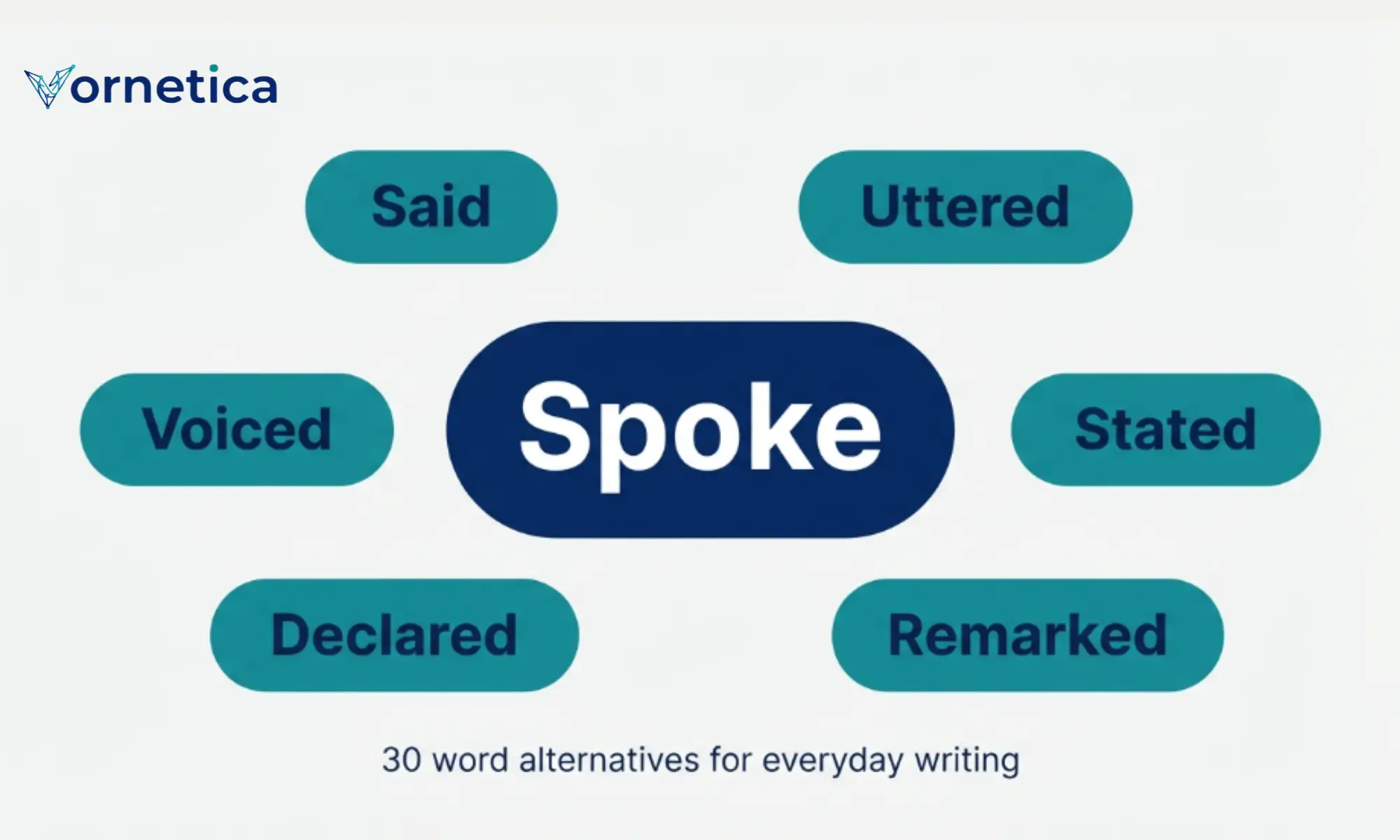
Below, you will find a simple spoke synonym list with clear examples.
Quick Answer: What Is Another Word for Spoke?
Another word for spoke is talked. Use “talked” for casual chats, “stated” for formal writing, and “replied” when you answer someone.
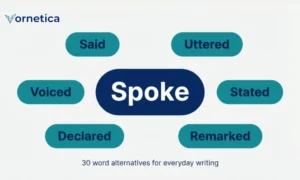
Top 5 synonyms for spoke: talked, said, told, stated, replied
30 Synonyms for Spoke (With Meanings and Examples)
Each word below has a simple meaning, two examples, and a tip on where it fits best. Some words are formal. Some are casual. Pick the one that matches your message.
Talked
Meaning: To speak with someone in a friendly way.
Examples:
- We talked for an hour after class.
- My mom talked to the doctor on the phone.
Best Used When: You want everyday, casual speech or simple writing.
Said
Meaning: To put words into speech.
Examples:
- She said hello with a big smile.
- Dad said we could go to the park.
Best Used When: You need a neutral word, especially in stories and dialogue.
Told
Meaning: To give news or a story to someone.
Examples:
- He told me a funny joke.
- The guide told us about the old castle.
Best Used When: Someone shares news or a story with another person.
Stated
Meaning: To say something clearly and with care.
Examples:
- The report stated that sales went up.
- She stated her name at the door.
Best Used When: You are writing news, reports, or formal notes.
Replied
Meaning: To say something back after a question.
Examples:
- I replied to her email in the morning.
- He replied that he was busy.
Best Used When: You answer a question or message in speech or email.
Addressed
Meaning: To speak to a group of people.
Examples:
- The principal addressed the students at the morning meeting.
- The captain addressed his team before the match.
Best Used When: You describe a formal talk to a group, like a leader who spearheaded a project and now speaks to the team.
Uttered
Meaning: To say a sound or word out loud.
Examples:
- She never uttered a word during the test.
- He uttered a soft “thanks” and left.
Best Used When: You write in a formal or literary style, often with strong feeling.
Voiced
Meaning: To say your thoughts or feelings out loud.
Examples:
- Many parents voiced their worries at the meeting.
- She voiced her idea in class.
Best Used When: Someone shares an opinion or concern in a neutral or formal tone.
Expressed
Meaning: To show what you think or feel in words.
Examples:
- He expressed thanks to his teacher.
- Ali expressed his joy with a loud cheer.
Best Used When: You talk about feelings or opinions in essays and speeches.
Declared
Meaning: To say something in a strong, clear way.
Examples:
- The mayor declared the fair open.
- She declared that pizza was the best food.
Best Used When: You need a bold or official statement.
Announced
Meaning: To tell many people something new.
Examples:
- The teacher announced the test date.
- The airline announced a late flight.
Best Used When: You share news, events, or public messages.
Mentioned
Meaning: To say something in a short, quick way.
Examples:
- He mentioned that he liked tea.
- Did she mention the new shop?
Best Used When: You describe a quick note in casual or neutral talk.
Remarked
Meaning: To say what you notice or think.
Examples:
- Tom remarked that the soup smelled great.
- She remarked on the cold weather.
Best Used When: You show a light, polite comment in stories or talks.
Commented
Meaning: To give a short opinion or note.
Examples:
- Many readers commented on my blog post.
- The coach commented on the team’s effort.
Best Used When: You write about blogs, social media, or reviews.
Whispered
Meaning: To speak in a very soft voice.
Examples:
- She whispered a secret in my ear.
- The kids whispered in the library.
Best Used When: You write creative scenes that are quiet or secret.
Murmured
Meaning: To speak in a low voice that is hard to hear.
Examples:
- He murmured a prayer before the meal.
- She murmured “good night” and closed her eyes.
Best Used When: You describe calm, sleepy, or gentle moments in a story.
Shouted
Meaning: To speak in a very loud voice.
Examples:
- The fans shouted with joy.
- Mom shouted from the kitchen that dinner was ready.
Best Used When: You show strong emotion, danger, or excitement.
Chatted
Meaning: To talk in a light and friendly way.
Examples:
- We chatted over tea.
- The two neighbors chatted at the gate.
Best Used When: You describe casual talks with friends, often with a smile or a laugh.
Explained
Meaning: To speak so that others can understand.
Examples:
- The teacher explained the math rule again.
- He explained why he was late.
Best Used When: You write about teaching, guides, or clear how-to steps.
Responded
Meaning: To answer a question or message.
Examples:
- The company responded within a day.
- She responded to the survey online.
Best Used When: You write formal emails, customer service notes, or business text.
Discussed
Meaning: To talk about a topic with other people.
Examples:
- We discussed our trip plan at dinner.
- The class discussed the story’s ending.
Best Used When: You describe meetings, classes, or group talks.
Conversed
Meaning: To have a talk with someone.
Examples:
- The old friends conversed for hours.
- She conversed with the visitors in English.
Best Used When: You want a formal or polished tone, since it sounds old-fashioned in daily speech.
Pronounced
Meaning: To say a word out loud in a certain way.
Examples:
- She pronounced every word with care.
- He pronounced the hard name correctly.
Best Used When: You talk about language learning or speech practice.
Asserted
Meaning: To say something with strong belief.
Examples:
- He asserted that he was right.
- The writer asserted that reading builds skill.
Best Used When: You write debates, essays, or formal arguments.
Narrated
Meaning: To tell a story out loud.
Examples:
- Grandpa narrated the tale of the lost boat.
- An actor narrated the film.
Best Used When: You describe stories, videos, or documentaries.
Lectured
Meaning: To give a long, serious talk to a class or group.
Examples:
- The professor lectured on ancient Egypt.
- Dad lectured me about being late.
Best Used When: You write about school talks, or use it in a playful way for a long speech.
Articulated
Meaning: To say your ideas in a clear way.
Examples:
- She articulated her plan very well.
- He articulated his goals during the interview.
Best Used When: You write formal text, interviews, or professional profiles.
Retorted
Meaning: To reply quickly, often in a sharp way.
Examples:
- “That is not fair,” he retorted.
- She retorted that it was his turn to wash the dishes.
Best Used When: You show a sharp reply after the mood has suddenly shifted.
Muttered
Meaning: To speak in a low voice, often when unhappy.
Examples:
- He muttered under his breath about the traffic.
- She muttered “not again” at the broken printer.
Best Used When: You write fiction and want to show a person is annoyed.
Proclaimed
Meaning: To say something loudly and in public.
Examples:
- The king proclaimed a day of rest.
- The winner proclaimed her joy to the crowd.
Best Used When: You need a grand, formal, or dramatic tone.
Comparison Table: Synonyms for Spoke
Use this table to separate formal words from casual ones at a glance.
| Synonym | Tone | Best Used In |
| Talked | Casual | Speech |
| Said | Neutral | Both |
| Told | Neutral | Both |
| Stated | Formal | Technical |
| Replied | Neutral | Both |
| Addressed | Formal | Speech |
| Uttered | Formal | Writing |
| Voiced | Neutral | Both |
| Expressed | Neutral | Both |
| Declared | Formal | Speech |
| Announced | Neutral | Speech |
| Mentioned | Casual | Both |
| Remarked | Neutral | Writing |
| Commented | Neutral | Writing |
| Whispered | Casual | Writing |
| Murmured | Neutral | Writing |
| Shouted | Casual | Speech |
| Chatted | Casual | Speech |
| Explained | Neutral | Both |
| Responded | Formal | Writing |
| Discussed | Neutral | Both |
| Conversed | Formal | Writing |
| Pronounced | Neutral | Speech |
| Asserted | Formal | Writing |
| Narrated | Neutral | Writing |
| Lectured | Formal | Speech |
| Articulated | Formal | Writing |
| Retorted | Casual | Writing |
| Muttered | Casual | Writing |
| Proclaimed | Formal | Speech |
Frequently Asked Questions
What is another word for spoke?
Another word for spoke is talked. You can also use said, told, stated, or replied.
What is the past tense of speak?
The past tense of speak is spoke. The past participle is spoken.
What does spoke mean?
Spoke means said words out loud. It can also mean a thin bar that joins the center of a wheel to its rim.
What is a formal synonym for spoke?
Stated, addressed, and articulated are formal words. Use them in essays, reports, and speeches.
What is a better word for spoke in an essay?
Try explained, stated, or asserted. Pick the word that fits your tone.
Practice Exercise
Fill in each blank with a word from the list above.
- The principal ______ the whole school at the morning meeting. (spoke to a group)
- The kids ______ so the baby would not wake up. (spoke very softly)
- My friend and I ______ about movies for an hour. (had a friendly talk)
- The teacher ______ the rule again so we could understand. (made it clear)
- “Stop right there!” the coach ______ across the field. (spoke very loudly)
Answer Key
- addressed
- whispered
- chatted
- explained
- shouted
Key Takeaways
- The top synonyms for spoke are talked, said, told, stated, and replied.
- Use stated, addressed, and articulated for formal writing.
- Use chatted and talked for friendly, casual moments.
- Use whispered, murmured, and muttered to show a soft or quiet voice.
- Use shouted and proclaimed to show a loud voice or strong feeling.
- Tip: Match the word to your tone. Check the table when you are not sure.
Conclusion
Good word choice makes your writing clear and fresh. When you know many synonyms for spoke, your blog posts read better, your speech sounds more natural, and your message reaches people more clearly.
Start small. Try one new word in an email today. Use another in your next essay. Then say a few out loud in daily chats. Practice makes these words yours.
Want more word ideas? Search for another word on our site and keep growing your English.