Have you ever met someone who wears bright socks, tells funny jokes, and does things in their own way? You might call that person quirky.
The word describes something that is unusual, different, or a little odd in a fun way. Knowing the right synonyms for quirky can help you explain people, ideas, styles, and habits more clearly.
For example, a friend may have an eccentric style, while a shop may have a whimsical design. Learning another word for quirky is useful for students, bloggers, content writers, and daily English users.
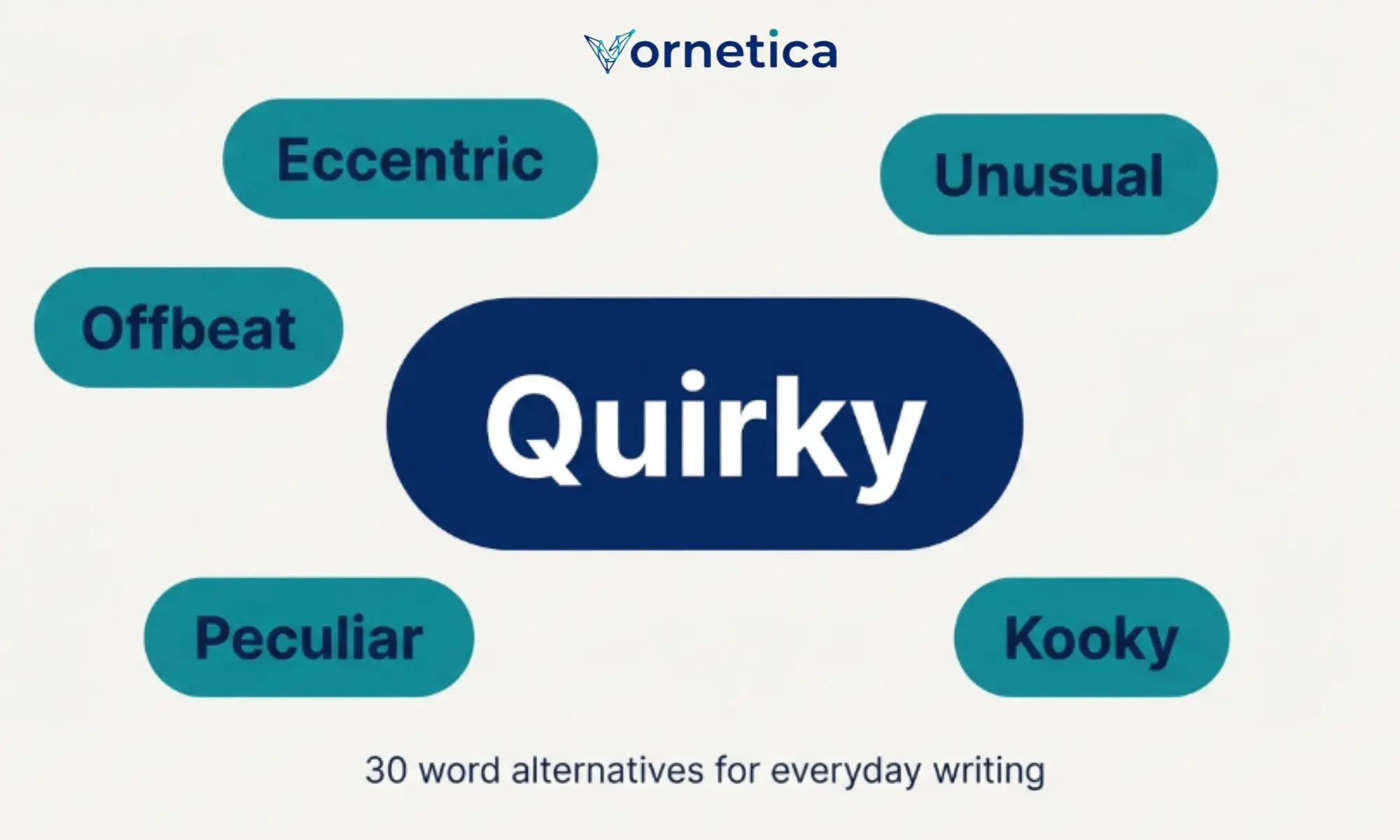
It helps you avoid using the same word again and again. This quirky synonym list gives you 30 useful choices with simple meanings and examples, so you can pick the word that best fits your meaning.
Quick Answer Box: Another word for quirky is unusual, eccentric, peculiar, unconventional, or offbeat. These words describe someone or something that is different from what people normally expect.
30 Synonyms for Quirky
1. Eccentric
Meaning: Someone or something eccentric is unusual and different from what most people expect.
Examples:
- My uncle has an eccentric sense of style.
- She is known for her eccentric ideas.
Best Used When: Use it for unusual people, habits, styles, or behavior.
2. Unusual
Meaning: Something unusual is not common or normal.
Examples:
- She chose an unusual color for her room.
- His unusual hobby is collecting old clocks.
Best Used When: Use it in everyday speech and neutral writing.
3. Peculiar
Meaning: Something peculiar is strange or different in a noticeable way.
Examples:
- There was a peculiar sound outside.
- He has a peculiar way of laughing.
Best Used When: Use it when something seems strange or odd.
4. Unconventional
Meaning: Something unconventional does not follow the usual way of doing things.
Examples:
- She has an unconventional teaching style.
- His unconventional plan worked well.
Best Used When: Use it in formal writing or when discussing creative choices.
5. Offbeat
Meaning: Something offbeat is unusual, unexpected, and often fun.
Examples:
- He enjoys offbeat comedy shows.
- The café has an offbeat design.
Best Used When: Use it in casual speech, reviews, and creative writing.
6. Whimsical
Meaning: Something whimsical is playful, imaginative, and a little unusual.
Examples:
- The artist created a whimsical garden.
- Her whimsical stories make children laugh.
Best Used When: Use it for art, stories, designs, places, or playful ideas.
7. Idiosyncratic
Meaning: Something idiosyncratic is special or unusual to one person.
Examples:
- His idiosyncratic writing style is easy to spot.
- She has an idiosyncratic way of solving problems.
Best Used When: Use it in formal or advanced writing about personal habits or styles.
8. Odd
Meaning: Something odd is strange or not usual.
Examples:
- That is an odd question.
- He wore an odd-looking hat.
Best Used When: Use it in simple, everyday English.
9. Strange
Meaning: Something strange is different from what feels normal or expected.
Examples:
- I heard a strange noise at night.
- Her strange idea actually worked.
Best Used When: Use it when you want a simple and common alternative.
10. Peculiar-minded
Meaning: A peculiar-minded person thinks in a very unusual way.
Examples:
- The peculiar-minded artist saw beauty in old objects.
- His peculiar-minded approach surprised the team.
Best Used When: Use it mainly in creative descriptions of unusual thinkers.
11. Nonconformist
Meaning: A nonconformist person does not like to follow common rules or trends.
Examples:
- She is a nonconformist who loves creating her own style.
- His nonconformist attitude made him stand out.
Best Used When: Use it for people who reject common habits, rules, or styles.
12. Individualistic
Meaning: An individualistic person likes to think and act in their own way.
Examples:
- He has an individualistic fashion style.
- Her individualistic approach made the project special.
Best Used When: Use it for people, choices, styles, and creative work.
13. Distinctive
Meaning: Something distinctive is easy to notice because it is different.
Examples:
- She has a distinctive laugh.
- The house has a distinctive design.
Best Used When: Use it when the difference is noticeable and often positive.
14. Unique
Meaning: Something unique is very different from other things.
Examples:
- This shop has a unique style.
- He has a unique way of telling stories.
Best Used When: Use it for positive descriptions of special people, ideas, or things.
15. Different
Meaning: Something different is not the same as what is usual or expected.
Examples:
- She has a different way of thinking.
- I want to try something different today.
Best Used When: Use it in simple everyday speech.
16. Curious
Meaning: Something curious is strange or unusual and makes you want to know more.
Examples:
- The old box had a curious shape.
- He gave me a curious look.
Best Used When: Use it for unusual things, looks, events, or behavior.
17. Fanciful
Meaning: Something fanciful is imaginative and not very realistic.
Examples:
- The child drew a fanciful castle.
- She came up with a fanciful story.
Best Used When: Use it for stories, art, ideas, and creative writing.
18. Playful
Meaning: Something playful is fun, light, and not serious.
Examples:
- The website has a playful design.
- His playful jokes made everyone smile.
Best Used When: Use it for humor, designs, behavior, and friendly communication.
19. Zany
Meaning: Someone or something zany is very funny, silly, and unusual.
Examples:
- The comedian has a zany sense of humor.
- We watched a zany cartoon after dinner.
Best Used When: Use it in casual speech for funny and silly behavior.
20. Kooky
Meaning: Someone or something kooky is strange in a funny or harmless way.
Examples:
- My neighbor has some kooky ideas.
- She wore a kooky costume to the party.
Best Used When: Use it in casual English for funny or harmless oddness.
21. Quizzical
Meaning: Something quizzical shows that a person is puzzled or curious.
Examples:
- He gave me a quizzical smile.
- She had a quizzical look on her face.
Best Used When: Use it mainly to describe facial expressions or reactions.
22. Bizarre
Meaning: Something bizarre is very strange and hard to understand.
Examples:
- We saw a bizarre sculpture in the park.
- His bizarre story shocked everyone.
Best Used When: Use it when something is much stranger than normal.
23. Absurd
Meaning: Something absurd is so strange or silly that it makes little sense.
Examples:
- He made an absurd suggestion.
- The movie has an absurd sense of humor.
Best Used When: Use it for ideas, situations, jokes, or behavior that seem unreasonable.
24. Eccentric-looking
Meaning: Someone eccentric-looking has an appearance that is unusual or striking.
Examples:
- The eccentric-looking man wore a purple coat.
- She arrived with an eccentric-looking hat.
Best Used When: Use it when describing unusual physical appearance or fashion.
25. Unorthodox
Meaning: Something unorthodox does not follow the usual method or practice.
Examples:
- The coach used an unorthodox training method.
- Her unorthodox idea solved the problem.
Best Used When: Use it in formal writing about methods, ideas, or decisions.
26. Antic
Meaning: An antic action is playful, silly, or strange.
Examples:
- His antics made the children laugh.
- The puppy’s antics were very funny.
Best Used When: Use it for funny actions, especially by people or animals.
27. Imaginative
Meaning: An imaginative person or idea shows a lot of creative thought.
Examples:
- She is an imaginative young writer.
- His imaginative design caught my eye.
Best Used When: Use it for creative people, ideas, stories, and designs.
28. Colorful
Meaning: A colorful person or style is lively, interesting, and full of character.
Examples:
- She has a colorful personality.
- The shop owner told us colorful stories.
Best Used When: Use it for lively personalities, stories, styles, and experiences.
29. Idiosyncratic
Meaning: Something idiosyncratic is unusual in a way that is special to one person or group.
Examples:
- His idiosyncratic habits became part of his charm.
- The writer has an idiosyncratic voice.
Best Used When: Use it in formal writing about personal habits, styles, or methods.
30. Novel
Meaning: Something novel is new, fresh, or different from what people usually see.
Examples:
- She suggested a novel way to teach the lesson.
- The designer created a novel product idea.
Best Used When: Use it for new ideas, methods, products, or approaches.
Comparison Table
| Synonym | Tone (Formal/Neutral/Casual) | Best Used In (writing/speech/technical) |
| Eccentric | Neutral | Writing/speech |
| Unusual | Neutral | Writing/speech |
| Peculiar | Neutral | Writing/speech |
| Unconventional | Formal | Writing |
| Offbeat | Casual | Speech/writing |
| Whimsical | Neutral | Creative writing |
| Idiosyncratic | Formal | Writing |
| Odd | Casual | Speech/writing |
| Strange | Neutral | Speech/writing |
| Peculiar-minded | Neutral | Creative writing |
| Nonconformist | Formal | Writing/speech |
| Individualistic | Formal | Writing |
| Distinctive | Neutral | Writing/speech |
| Unique | Neutral | Writing/speech |
| Different | Neutral | Speech/writing |
| Curious | Neutral | Writing/speech |
| Fanciful | Neutral | Creative writing |
| Playful | Casual | Speech/writing |
| Zany | Casual | Speech |
| Kooky | Casual | Speech/writing |
| Quizzical | Neutral | Writing |
| Bizarre | Neutral | Writing/speech |
| Absurd | Neutral | Writing/speech |
| Eccentric-looking | Neutral | Writing |
| Unorthodox | Formal | Writing/technical |
| Antic | Neutral | Writing/speech |
| Imaginative | Neutral | Writing/speech |
| Colorful | Neutral | Writing/speech |
| Idiosyncratic | Formal | Writing |
| Novel | Formal | Writing/technical |
Frequently Asked Questions
What is another word for quirky?
Another word for quirky is eccentric, unusual, peculiar, unconventional, or offbeat. The best choice depends on the situation.
What is the best synonym for quirky?
Eccentric is one of the closest synonyms for quirky when describing a person with unusual habits or behavior.
Is quirky a positive or negative word?
Quirky is usually positive or neutral. It often describes something unusual in a fun, charming, or interesting way.
What is a formal word for quirky?
Unconventional, idiosyncratic, and unorthodox can work well in formal writing. Choose the word that best matches your meaning.
What is a simple word for quirky?
Odd, different, or unusual are simple words that can replace quirky in many everyday sentences.
Practice Exercise
Fill in each blank with the best synonym from the list above.
- My sister has an ______ style that always gets attention.
- The teacher tried an ______ method to help the class learn math.
- We visited a café with a ______ and playful design.
- His ______ jokes made everyone at the party laugh.
- She suggested a ______ way to solve the problem.
Answer Key
- eccentric
- unorthodox
- whimsical
- zany
- novel
Key Takeaways
Quick Learning Tips
- Eccentric is great for unusual people and habits.
- Unusual is a simple, safe choice for everyday English.
- Whimsical works well for playful and imaginative things.
- Unconventional is useful in formal writing.
- Offbeat is a friendly word for unusual or unexpected ideas.
- Learn synonyms by using them in your own sentences instead of only memorizing them.
Conclusion
Learning synonyms for quirky gives you more ways to describe people, ideas, styles, and habits.
Words like eccentric, unusual, whimsical, unconventional, and offbeat can make your writing more clear and interesting.
They also help you sound more natural when speaking. Try using these words in emails, essays, blog posts, and daily conversations.
The more you practice, the easier they become. Want to build your vocabulary even more? Search the site for another word and explore its useful synonyms.