Have you ever worked hard on something but used the word effort again and again?
Maybe you studied for a test, helped a friend, or spent hours finishing a project. You may want a better word to describe what you did.
Effort means the work or energy you use to do something. For example, a student may put a lot of effort into an exam. A blogger may make a strong effort to write a useful post.
Learning synonyms for effort helps you make your English more clear and interesting. Students can use these words in essays and assignments.
Bloggers and content writers can avoid repeating the same word. Daily English users can also choose a word that fits each situation.
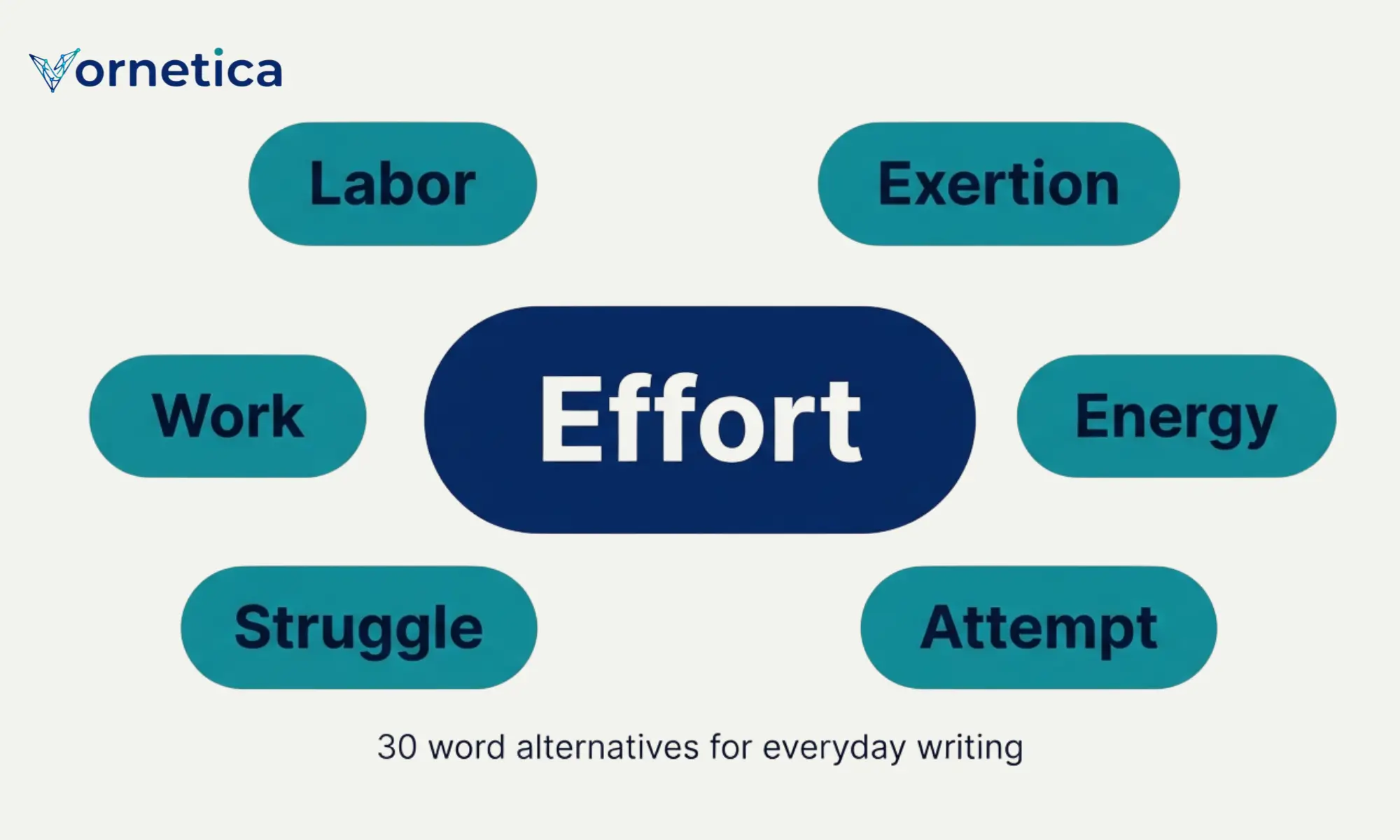
This synonyms for effort list gives you simple choices with meanings and examples.
QUICK ANSWER BOX
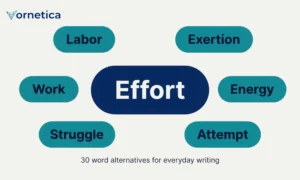
What is another word for effort? Common synonyms include attempt, endeavor, exertion, hard work, and diligence. The best choice depends on the situation, tone, and type of work.
MAIN CONTENT – SYNONYMS LIST
1. Attempt
Meaning: An attempt is an effort made to do or achieve something.
Examples:
- She made an attempt to fix the bike.
- His first attempt was not successful.
Best Used When: Use it when someone tries to do something.
2. Endeavor
Meaning: An endeavor is a serious effort to achieve a goal.
Examples:
- Her new business is a major endeavor.
- He worked hard in his academic endeavor.
Best Used When: Use it in formal writing for serious goals or projects.
3. Exertion
Meaning: Exertion means using physical or mental energy to do something.
Examples:
- The long walk required great exertion.
- He felt tired after the physical exertion.
Best Used When: Use it when talking about physical or mental energy.
4. Hard Work
Meaning: Hard work means putting a lot of time and energy into something.
Examples:
- Her hard work helped her pass the test.
- Success often comes from hard work.
Best Used When: Use it in casual and everyday English.
5. Diligence
Meaning: Diligence means careful and steady work.
Examples:
- His diligence helped him finish the report.
- She studies with great diligence.
Best Used When: Use it in formal, academic, or professional writing.
6. Labor
Meaning: Labor means physical or mental work that takes effort.
Examples:
- The workers put in hours of labor.
- Building the house required a lot of labor.
Best Used When: Use it when discussing demanding work or physical tasks.
7. Work
Meaning: Work is the activity and effort used to get something done.
Examples:
- Your work on this project is impressive.
- I need more work to finish the task.
Best Used When: Use it as a simple everyday replacement for effort.
8. Struggle
Meaning: A struggle is a difficult effort to do or achieve something.
Examples:
- Learning math was a struggle for him.
- She made a struggle to stay focused.
Best Used When: Use it when the task is difficult or challenging.
9. Application
Meaning: Application means putting effort and attention into a task.
Examples:
- Her application to the task was clear.
- Success requires careful application.
Best Used When: Use it in formal or academic contexts.
When a task needs help from other people, effort can also connect with ideas such as assistance. The two words are different, but both can appear when people work toward a goal.
10. Industry
Meaning: Industry means steady and hard work over time.
Examples:
- His industry impressed his teachers.
- She built her career through industry.
Best Used When: Use it in formal writing about steady work.
11. Pains
Meaning: Pains means special effort or care taken to do something well.
Examples:
- She took pains to check every detail.
- He took great pains to help his guests.
Best Used When: Use it when someone gives extra care to a task.
12. Striving
Meaning: Striving means trying hard to reach a goal.
Examples:
- She is striving to improve her writing.
- He kept striving for better results.
Best Used When: Use it when describing continued effort toward a goal.
13. Try
Meaning: A try is an attempt to do something.
Examples:
- Give the puzzle another try.
- I will give it a try tomorrow.
Best Used When: Use it in casual speech and friendly conversations.
14. Undertaking
Meaning: An undertaking is a task or project that needs serious effort.
Examples:
- Writing the book was a huge undertaking.
- The project became a difficult undertaking.
Best Used When: Use it for large or serious projects.
15. Energy
Meaning: Energy is the strength used to do an activity.
Examples:
- She put a lot of energy into her work.
- His energy helped the team finish early.
Best Used When: Use it when talking about strength, enthusiasm, or activity.
16. Drive
Meaning: Drive is the strong desire and effort to reach a goal.
Examples:
- Her drive helped her build a successful career.
- He has the drive to keep learning.
Best Used When: Use it in professional, motivational, or personal contexts.
17. Initiative
Meaning: Initiative means taking action without waiting for someone else.
Examples:
- She showed initiative at work.
- His initiative solved the problem quickly.
Best Used When: Use it when someone starts useful action on their own.
Good results can also depend on attendance, especially in school, training, or team settings. Regular attendance can support the effort a person puts into learning or work.
18. Commitment
Meaning: Commitment means giving time and effort to something you care about.
Examples:
- Her commitment to study was strong.
- The team showed commitment to the project.
Best Used When: Use it for long-term goals, duties, or relationships.
19. Dedication
Meaning: Dedication means giving a lot of time and effort to something.
Examples:
- His dedication to teaching helped many students.
- She showed dedication during the training.
Best Used When: Use it to praise steady effort toward an important goal.
20. Persistence
Meaning: Persistence means continuing to try even when something is hard.
Examples:
- Her persistence helped her learn English.
- Persistence paid off after many failed tries.
Best Used When: Use it when someone keeps going despite problems.
21. Perseverance
Meaning: Perseverance means continuing to work toward a goal despite difficulty.
Examples:
- His perseverance helped him complete the course.
- She reached her goal through perseverance.
Best Used When: Use it in formal, academic, or motivational writing.
22. Hard Work
Meaning: Hard work is strong and steady effort used to reach a result.
Examples:
- Their hard work improved the website.
- All that hard work finally helped the team.
Best Used When: Use it in everyday speech and motivational writing.
Note: “Hard work” appears twice in common synonym use because it is one of the most natural everyday expressions for effort. If you need variety in formal writing, choose diligence, dedication, or exertion instead.
23. Input
Meaning: Input is the time, work, or ideas a person gives to something.
Examples:
- Your input helped improve the plan.
- We need more input from the design team.
Best Used When: Use it in business, teamwork, and project discussions.
Team projects often need both individual effort and shared ideas. This is where collaboration can describe people working together toward the same result.
24. Contribution
Meaning: A contribution is something useful that a person gives to a task or group.
Examples:
- Her contribution made the project better.
- Everyone made a small contribution.
Best Used When: Use it when talking about someone’s useful part in a group effort.
25. Sacrifice
Meaning: Sacrifice means giving up something to reach an important goal.
Examples:
- He made a sacrifice to support his family.
- Success sometimes requires personal sacrifice.
Best Used When: Use it when effort involves giving up time, comfort, or something valuable.
26. Trouble
Meaning: Trouble can mean extra effort taken to do something.
Examples:
- She took the trouble to call me.
- He went to the trouble of checking every file.
Best Used When: Use it in casual English when someone makes extra effort.
27. Enterprise
Meaning: Enterprise means a planned activity that needs energy and effort.
Examples:
- Starting the company was a bold enterprise.
- The group began a new enterprise.
Best Used When: Use it in formal writing about business or major projects.
28. Strain
Meaning: Strain means a strong effort that can make someone tired.
Examples:
- The long climb put a strain on him.
- Writing all night caused mental strain.
Best Used When: Use it when effort causes pressure, tiredness, or stress.
29. Sweat
Meaning: Sweat can informally mean hard work or physical effort.
Examples:
- The team put in a lot of sweat to finish.
- The result came from months of sweat and practice.
Best Used When: Use it in casual or creative writing.
30. Application of Effort
Meaning: Application of effort means using your energy carefully toward a task.
Examples:
- The task needs careful application of effort.
- Her application of effort produced good results.
Best Used When: Use it in formal or technical writing when describing focused work.
COMPARISON TABLE
| Synonym | Tone | Best Used In |
| Attempt | Neutral | Speech, writing |
| Endeavor | Formal | Writing |
| Exertion | Formal | Writing, technical |
| Hard work | Neutral | Speech, writing |
| Diligence | Formal | Writing |
| Labor | Neutral | Speech, writing |
| Work | Neutral | Speech, writing |
| Struggle | Neutral | Speech, writing |
| Application | Formal | Writing, technical |
| Industry | Formal | Writing |
| Pains | Neutral | Speech, writing |
| Striving | Neutral | Writing, speech |
| Try | Casual | Speech |
| Undertaking | Formal | Writing |
| Energy | Neutral | Speech, writing |
| Drive | Neutral | Speech, writing |
| Initiative | Formal | Writing, work |
| Commitment | Neutral | Speech, writing |
| Dedication | Neutral | Speech, writing |
| Persistence | Neutral | Speech, writing |
| Perseverance | Formal | Writing |
| Hard work | Neutral | Speech, writing |
| Input | Neutral | Work, technical |
| Contribution | Neutral | Speech, writing |
| Sacrifice | Neutral | Speech, writing |
| Trouble | Casual | Speech |
| Enterprise | Formal | Writing, business |
| Strain | Neutral | Writing, technical |
| Sweat | Casual | Speech, creative |
| Application of effort | Formal | Technical writing |
When discussing difficult systems or social problems, the word effort may appear alongside very different ideas. For example, censorship is about limiting or controlling information, while effort describes the work someone puts into an action. Keeping meanings separate helps you choose the right synonym.
Frequently Asked Questions
What is another word for effort?
Another word for effort is attempt, endeavor, hard work, exertion, or diligence. The best word depends on the context.
What is a simple synonym for effort?
Try or hard work can be simple synonyms for effort. They are easy to use in everyday English.
What is a formal word for effort?
Endeavor, diligence, exertion, and perseverance can work well in formal writing.
What is the difference between effort and attempt?
Effort means the work or energy used to do something. An attempt means trying to do something.
How can I use effort synonyms in writing?
Choose a synonym that matches your meaning and tone. For example, use diligence in formal writing and try in casual speech.
PRACTICE EXERCISE
Fill in each blank with the best synonym from the list.
- Her ________ helped her finish the school project on time.
- Please give the new method another ________.
- His ________ to learning English was clear from his daily practice.
- The long hike required a lot of physical ________.
- She showed great ________ and did not give up after failing twice.
Answer Key
- dedication
- try
- commitment
- exertion
- persistence
KEY TAKEAWAYS
- Attempt is a simple word for trying to do something.
- Diligence means careful and steady work.
- Dedication shows strong and lasting effort.
- Persistence means continuing even when something is hard.
- Exertion is useful when effort involves physical or mental energy.
- Pick a synonym based on the meaning, tone, and situation, not just the word match.
CONCLUSION
Learning synonyms for effort can make your writing clearer and less repetitive. These words also help you speak with more confidence.
Students can use them in essays, while bloggers and content writers can use them to create smoother content.
Try using one new word in an email, essay, or daily conversation today. With regular practice, choosing the right synonym becomes easier.
If you want to build your vocabulary further, search for another useful word on the site.