Imagine you have three important tasks to finish before lunch. You need to answer emails, complete a report, and attend a meeting. Which one should you do first? You need to prioritize your tasks.
To prioritize means to decide what is most important and should be done first. For example, a student may prioritize studying for an exam instead of watching TV.
A blogger may prioritize writing a new post before checking social media.
Learning synonyms for prioritize gives you more ways to express this idea. These words can make your writing clearer and more natural.
Students can use them in essays and assignments. Bloggers and content writers can avoid repeating the same word.
Daily English users can also use these words in emails, talks, and messages. Knowing more than one prioritize synonym helps you choose the right word for each situation.
QUICK ANSWER BOX
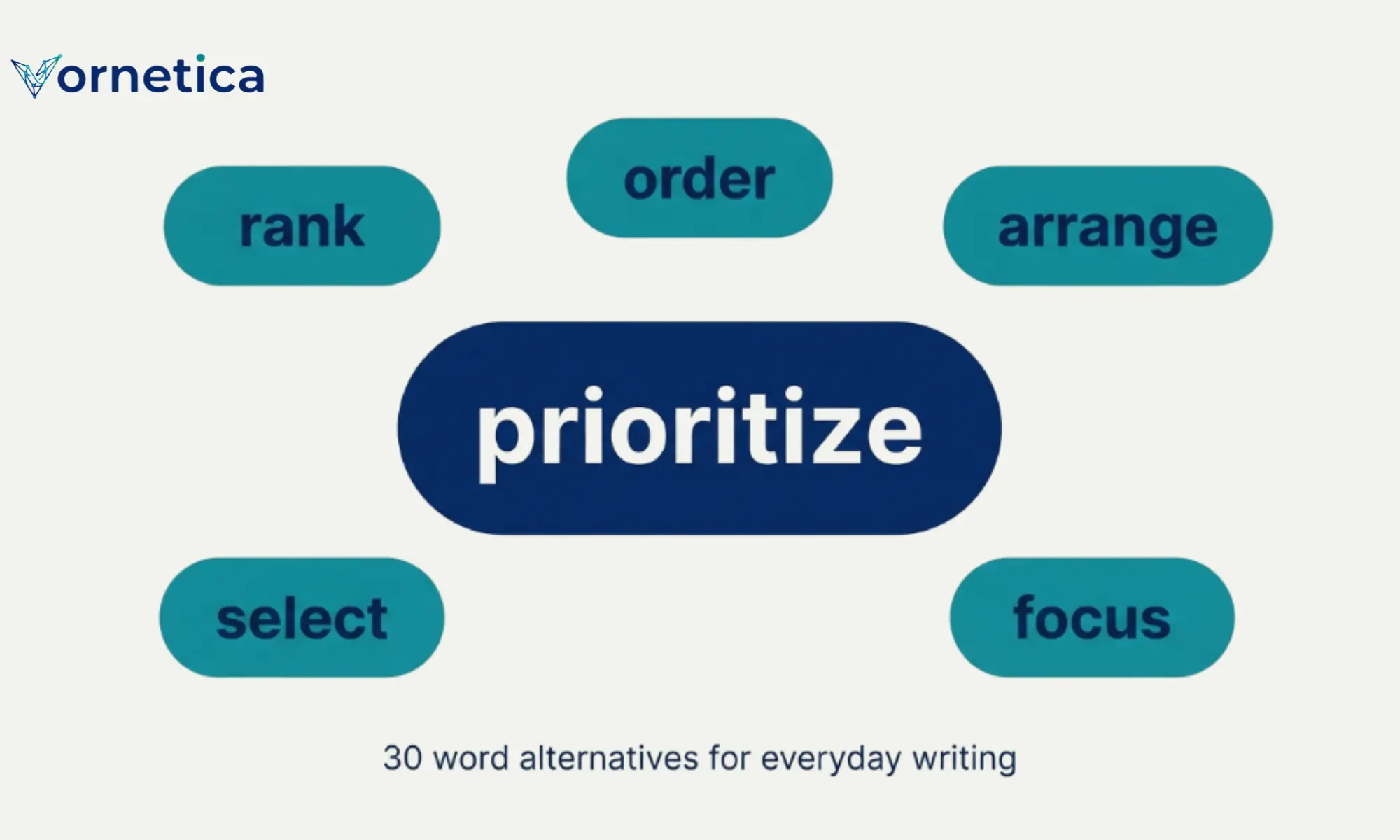
What is another word for prioritize? Common synonyms include rank, organize, arrange, focus, and emphasize. The best choice depends on whether you mean putting things in order, giving attention, or deciding what matters most.
1. Rank
Meaning: To rank means to put things in order of importance.
Examples:
- Please rank these tasks from most to least important.
- I ranked my homework before starting it.
Best Used When: Use it when comparing several things by importance.
2. Organize
Meaning: To organize means to arrange things in a clear and useful order.
Examples:
- I need to organize my tasks for today.
- She organized her work before the meeting.
Best Used When: Use it for tasks, plans, work, or information.
For example, good writers often organize their ideas before they begin writing. If you are also learning words related to creating content, you may find our guide to synonyms for generate useful.
3. Arrange
Meaning: To arrange means to put things in a particular order.
Examples:
- I arranged my tasks by importance.
- She arranged the meetings for next week.
Best Used When: Use it when talking about order, plans, or schedules.
4. Focus
Meaning: To focus means to give most of your attention to one thing.
Examples:
- I need to focus on my exam today.
- He focused on the most urgent task.
Best Used When: Use it when attention is more important than order.
5. Emphasize
Meaning: To emphasize means to give special importance to something.
Examples:
- The teacher emphasized the main lesson.
- Please emphasize the most important point.
Best Used When: Use it in formal writing, teaching, or professional communication.
6. Prioritize
Meaning: To prioritize means to decide what should be done or handled first.
Examples:
- I need to prioritize my work today.
- She prioritized her family after work.
Best Used When: Use it when directly talking about deciding what matters most.
7. Order
Meaning: To order means to put things into a planned sequence.
Examples:
- Order the tasks by importance.
- We ordered the steps before starting.
Best Used When: Use it for lists, steps, tasks, or processes.
8. Sort
Meaning: To sort means to separate or arrange things into a useful order.
Examples:
- I sorted my tasks by deadline.
- She sorted the files before the meeting.
Best Used When: Use it in casual speech and practical situations.
9. Sequence
Meaning: To sequence means to put things in the order they should happen.
Examples:
- We sequenced the steps for the project.
- The teacher sequenced the lessons carefully.
Best Used When: Use it in technical, academic, or process-based writing.
10. Schedule
Meaning: To schedule means to plan when something will happen.
Examples:
- I scheduled my hardest task for the morning.
- She scheduled time for writing.
Best Used When: Use it when importance is connected to time or planning.
11. Plan
Meaning: To plan means to decide what you will do before doing it.
Examples:
- I planned my work for the whole day.
- He planned which task to finish first.
Best Used When: Use it in everyday speech and general writing.
12. Highlight
Meaning: To highlight means to show that something is especially important.
Examples:
- The report highlights the main problems.
- She highlighted the most urgent issue.
Best Used When: Use it in writing, presentations, reports, and discussions.
13. Stress
Meaning: To stress means to say that something is very important.
Examples:
- The coach stressed the need for practice.
- My teacher stressed the first question.
Best Used When: Use it in formal or spoken communication.
14. Concentrate
Meaning: To concentrate means to give your full attention to something.
Examples:
- I need to concentrate on my homework.
- He concentrated on finishing the report.
Best Used When: Use it when talking about mental attention.
15. Attend to
Meaning: To attend to something means to give it your time and attention.
Examples:
- I must attend to this email first.
- She attended to the customer’s request.
Best Used When: Use it in professional or formal situations.
16. Address
Meaning: To address something means to deal with it or give it attention.
Examples:
- We need to address this problem today.
- The manager addressed the team’s main concern.
Best Used When: Use it for problems, concerns, needs, or important issues.
Good planning also helps you address tasks before they become bigger problems. If you want more vocabulary for handling work, see our useful guide on synonyms for manage.
17. Give Priority To
Meaning: To give priority to something means to treat it as more important than other things.
Examples:
- We give priority to urgent requests.
- She gave priority to her final exam.
Best Used When: Use it in formal, workplace, or academic writing.
18. Favor
Meaning: To favor something means to choose or support it over another option.
Examples:
- I favor quality over speed.
- The team favored the safer plan.
Best Used When: Use it when choosing one option over another.
19. Choose
Meaning: To choose means to pick one thing from several options.
Examples:
- I chose my most important task first.
- She chose study time over television.
Best Used When: Use it in simple, everyday English.
20. Select
Meaning: To select means to choose something carefully.
Examples:
- Select the most important tasks first.
- He selected three goals for the week.
Best Used When: Use it in formal, professional, or technical writing.
21. Decide
Meaning: To decide means to choose what you will do.
Examples:
- I decided to finish my report first.
- She decided which task needed attention.
Best Used When: Use it when making a clear choice.
Sometimes prioritizing also means making a decision about what needs action first. If you want more useful vocabulary for making choices, check our guide to synonyms for decide.
22. Value
Meaning: To value something means to think it is important or useful.
Examples:
- I value time with my family.
- She values her education highly.
Best Used When: Use it for people, goals, time, ideas, or personal choices.
23. Promote
Meaning: To promote something means to support or encourage it.
Examples:
- The school promotes healthy habits.
- The company promotes teamwork.
Best Used When: Use it when supporting an idea, goal, activity, or behavior.
24. Elevate
Meaning: To elevate something means to give it a higher level of importance.
Examples:
- The new plan elevates customer service.
- We should elevate safety in our decisions.
Best Used When: Use it in formal, business, or professional writing.
25. Put First
Meaning: To put something first means to treat it as the most important thing.
Examples:
- I put my family first.
- She puts her health first every morning.
Best Used When: Use it in casual and everyday English.
26. Single Out
Meaning: To single out something means to choose it from a group for special attention.
Examples:
- The teacher singled out the main issue.
- The report singled out safety as a concern.
Best Used When: Use it when one person, point, or issue receives special attention.
27. Give Attention To
Meaning: To give attention to something means to focus on it carefully.
Examples:
- Give attention to the first question.
- I gave more attention to my weak subjects.
Best Used When: Use it in general, academic, and everyday communication.
28. Put at the Top
Meaning: To put something at the top means to make it one of the most important tasks.
Examples:
- Put this task at the top of your list.
- I put the report at the top today.
Best Used When: Use it in casual speech about tasks and lists.
When you have many tasks, it helps to put the most important ones at the top and then work through them. This same skill is useful when you need to implement a plan, so you can also explore synonyms for implement for related vocabulary.
29. Make Important
Meaning: To make something important means to treat it as something that deserves attention.
Examples:
- We should make safety important.
- The team made customer needs important.
Best Used When: Use it in simple explanations and informal communication.
30. Set Priorities
Meaning: To set priorities means to decide which things are most important.
Examples:
- I set priorities before starting work.
- She sets priorities every Monday.
Best Used When: Use it for work, study, planning, and time management.
COMPARISON TABLE
| Synonym | Tone (Formal/Neutral/Casual) | Best Used In (writing/speech/technical) |
| Rank | Neutral | Writing/speech |
| Organize | Neutral | Writing/speech |
| Arrange | Neutral | Writing/speech |
| Focus | Neutral | Speech/writing |
| Emphasize | Formal | Writing/speech |
| Prioritize | Neutral | Writing/speech |
| Order | Neutral | Writing/technical |
| Sort | Casual | Speech/writing |
| Sequence | Formal | Technical/writing |
| Schedule | Neutral | Writing/speech |
| Plan | Neutral | Writing/speech |
| Highlight | Neutral | Writing |
| Stress | Formal | Writing/speech |
| Concentrate | Neutral | Speech/writing |
| Attend to | Formal | Writing/speech |
| Address | Formal | Writing/speech |
| Give Priority To | Formal | Writing |
| Favor | Neutral | Writing/speech |
| Choose | Casual | Speech/writing |
| Select | Formal | Writing/technical |
| Decide | Neutral | Speech/writing |
| Value | Neutral | Writing/speech |
| Promote | Formal | Writing |
| Elevate | Formal | Writing |
| Put First | Casual | Speech |
| Single Out | Neutral | Writing/speech |
| Give Attention To | Neutral | Writing/speech |
| Put at the Top | Casual | Speech/writing |
| Make Important | Casual | Speech/writing |
| Set Priorities | Neutral | Writing/speech |
Frequently Asked Questions
What is another word for prioritize?
Common synonyms for prioritize include rank, organize, arrange, focus, and emphasize. The best word depends on the meaning and situation.
What is a simple synonym for prioritize?
Put first is a simple synonym for prioritize. It means treating something as more important than other things.
What is a professional word for prioritize?
Rank, emphasize, address, and give priority to can work well in professional writing. The best choice depends on the sentence.
What is the opposite of prioritize?
An opposite can be neglect or ignore. These words mean giving something little or no attention.
How can I use prioritize in a sentence?
You can say, “I need to prioritize my most important tasks.” This means you will deal with the most important tasks first.
Practice Exercise
Fill in each blank with the best synonym from the list.
- I need to __________ my homework before playing games.
- Please __________ these tasks from most important to least important.
- We should __________ the main problem before the meeting ends.
- She decided to __________ her family first.
- The teacher told us to __________ on the most difficult question.
Answer Key
- prioritize
- rank
- address
- put first
- focus
KEY TAKEAWAYS BOX
- Prioritize means deciding what is most important and should come first.
- Rank is useful when putting several things in order.
- Focus works well when you mean giving attention to something.
- Emphasize is useful when showing that something is especially important.
- Organize and arrange are good choices for tasks, plans, and information.
- Practice one new synonym in an email, essay, or daily conversation to remember it better.
CONCLUSION
Learning synonyms for prioritize gives you more ways to express importance, attention, and order.
Words such as rank, focus, organize, emphasize, address, and set priorities can make your writing and speech more natural.
Try using these words in emails, essays, blogs, and daily conversations. Practice one new synonym at a time and notice how its meaning changes with the situation.
When you want to improve your vocabulary further, search for another word on the site.