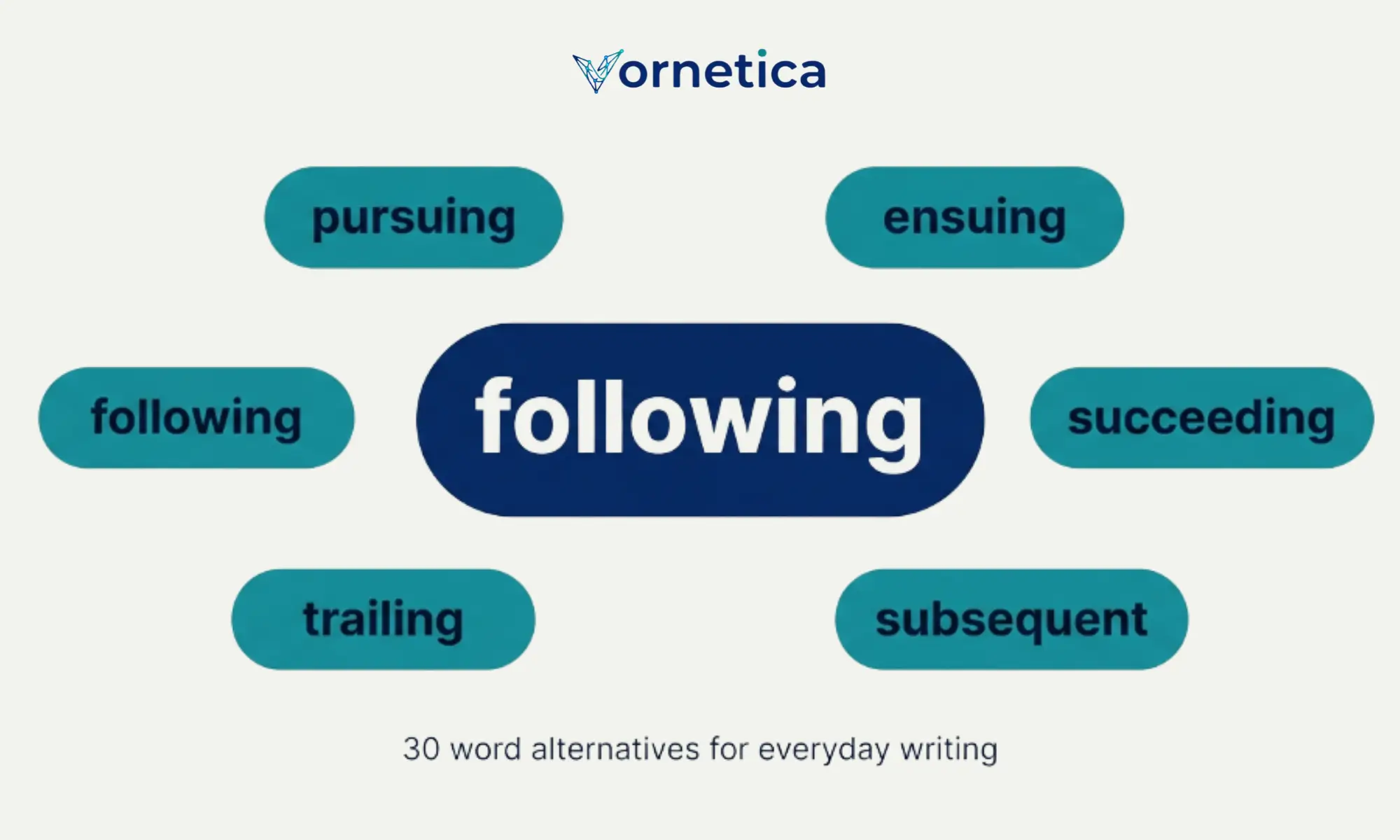
Have you ever used the word following many times in the same paragraph? It is a useful word, but repeating it can make your writing sound plain.
For example, you might say, “The following day, we went home,” or “Please follow the following steps.” A better synonym can make each sentence clearer.
The word following can mean different things. It can mean something that comes next, something that happens later, or the act of going after someone.
It can also mean obeying a rule or instruction. Learning synonyms for following helps students choose the right word for each meaning.
Bloggers and content writers can make their work more natural. Daily English users can also speak with more variety.
Knowing the right synonyms for following makes your English stronger and easier to understand.
Quick Answer Box: Another word for following can be next, subsequent, succeeding, ensuing, or later, depending on the sentence. For following someone, words like pursuing or tracking may fit better.
Next
Meaning: Next means coming right after something else.
Examples:
- We will meet next Monday.
- The next bus arrives in ten minutes.
Best Used When: Use it in casual and everyday speech or writing.
Subsequent
Meaning: Subsequent means coming after something that happened earlier.
Examples:
- Subsequent meetings were much shorter.
- The subsequent report showed better results.
Best Used When: Best for formal writing, reports, and academic work.
Succeeding
Meaning: Succeeding means coming after something else in time or order.
Examples:
- The succeeding chapter explains the plan.
- Succeeding tests gave similar results.
Best Used When: Use it in formal or academic writing.
Ensuing
Meaning: Ensuing means happening soon after something else.
Examples:
- The ensuing discussion lasted an hour.
- The ensuing days were very busy.
Best Used When: Best for formal writing and storytelling.
Later
Meaning: Later means happening after the present time or event.
Examples:
- I will call you later.
- We can discuss the problem later.
Best Used When: Use it in casual speech and everyday writing.
Afterwards
Meaning: Afterwards means after something has happened.
Examples:
- We had lunch and went shopping afterwards.
- She felt tired afterwards.
Best Used When: Best for everyday speech and casual writing.
Then
Meaning: Then means at a time after something else.
Examples:
- Finish your homework, then watch TV.
- We went home and then had dinner.
Best Used When: Use it in simple speech, instructions, and storytelling.
Upcoming
Meaning: Upcoming means going to happen soon.
Examples:
- I am excited about the upcoming holiday.
- She has an upcoming exam.
Best Used When: Best for events, plans, announcements, and general writing.
Coming
Meaning: Coming means happening or arriving soon.
Examples:
- We have a meeting coming next week.
- The coming months may be busy.
Best Used When: Use it in casual and neutral writing.
Successive
Meaning: Successive means following one after another.
Examples:
- He won three successive games.
- The team won on successive days.
Best Used When: Best for formal, academic, sports, and technical writing.
Sequential
Meaning: Sequential means arranged in a clear order.
Examples:
- Put the pictures in sequential order.
- The steps must be completed in sequential order.
Best Used When: Use it in technical, academic, and instructional writing.
Consecutive
Meaning: Consecutive means following one after another without a break.
Examples:
- She worked for five consecutive days.
- He won three consecutive matches.
Best Used When: Best for numbers, dates, sports, records, and formal writing.
Later-On
Meaning: Later-on means at a time after now or after another event.
Examples:
- We can talk about that later-on.
- I will finish the task later-on.
Best Used When: Use it mainly in casual conversation.
Thereafter
Meaning: Thereafter means after that time or event.
Examples:
- The rule was changed and followed thereafter.
- He moved abroad and lived there thereafter.
Best Used When: Best for formal, legal, and historical writing.
Subsequently
Meaning: Subsequently means after something else happened.
Examples:
- She subsequently changed her mind.
- The company subsequently released a new product.
Best Used When: Use it in formal reports, essays, and professional writing.
Pursuing
Meaning: Pursuing means going after someone or something.
Examples:
- The police were pursuing the car.
- She is pursuing her dream of becoming a writer.
Best Used When: Best when someone is actively going after a person, goal, or idea.
Chasing
Meaning: Chasing means running or moving after someone or something.
Examples:
- The dog was chasing the ball.
- The children were chasing each other.
Best Used When: Use it in casual speech and stories.
Tracking
Meaning: Tracking means watching or following the movement of someone or something.
Examples:
- We are tracking the delivery online.
- The ranger was tracking the animal.
Best Used When: Best for technology, travel, wildlife, and practical situations.
Trailing
Meaning: Trailing means following behind someone or something.
Examples:
- The little boy was trailing behind his mother.
- Our team was trailing by two points.
Best Used When: Use it for people, groups, sports, and things that are behind.
Shadowing
Meaning: Shadowing means following someone closely.
Examples:
- The reporter was shadowing the actor.
- The new worker spent a day shadowing her manager.
Best Used When: Best for work training, observation, and close following.
Obeying
Meaning: Obeying means doing what a rule or person tells you to do.
Examples:
- The children were obeying their teacher.
- Obeying traffic rules keeps drivers safe.
Best Used When: Use it when following rules, orders, or instructions.
For example, if you are writing about workplace rules, obeying may be clearer than simply saying “following.” If you also want stronger vocabulary for positive workplace language, you can explore synonyms for encouraged.
Adhering
Meaning: Adhering means following a rule, plan, or standard closely.
Examples:
- We are adhering to the safety rules.
- The team is adhering to the new policy.
Best Used When: Best for formal, business, legal, and professional writing.
Complying
Meaning: Complying means doing what a rule or request requires.
Examples:
- The company is complying with the law.
- Please make sure you are complying with the instructions.
Best Used When: Use it in formal, legal, business, and technical contexts.
Observing
Meaning: Observing can mean following a rule, custom, or practice.
Examples:
- Everyone is observing the safety rules.
- The family is observing an old tradition.
Best Used When: Best for formal writing, rules, customs, and traditions.
Listening
Meaning: Listening means paying attention to what someone says and following their advice or instructions.
Examples:
- He is listening to his coach.
- Try listening to your parents’ advice.
Best Used When: Use it in simple, everyday conversations.
Supporting
Meaning: Supporting means staying with or backing a person, group, or cause.
Examples:
- Many fans are supporting the team.
- She has been supporting her friend through a hard time.
Best Used When: Best for people, teams, causes, and social topics.
Watching
Meaning: Watching means keeping your eyes or attention on someone or something.
Examples:
- The guard was watching the door.
- I am watching the children at the park.
Best Used When: Use it in casual speech and everyday situations.
Monitoring
Meaning: Monitoring means checking something regularly to see what is happening.
Examples:
- The nurse is monitoring the patient.
- We are monitoring the website for errors.
Best Used When: Best for technical, medical, business, and professional writing.
Pursuit
Meaning: Pursuit means the act of going after someone or something.
Examples:
- The police began a pursuit.
- His pursuit of success took many years.
Best Used When: Use it in formal writing, stories, and discussions about goals.
Following-Up
Meaning: Following-up means taking another action after an earlier message or event.
Examples:
- I am following-up on your email.
- She called for a following-up meeting.
Best Used When: Best for business communication and professional conversations.
Comparison Table
| Synonym | Tone (Formal/Neutral/Casual) | Best Used In (writing/speech/technical) |
| Next | Neutral | Speech, writing |
| Subsequent | Formal | Writing |
| Succeeding | Formal | Writing |
| Ensuing | Formal | Writing |
| Later | Neutral | Speech, writing |
| Afterwards | Neutral | Speech, writing |
| Then | Neutral | Speech, writing |
| Upcoming | Neutral | Writing, speech |
| Coming | Neutral | Speech, writing |
| Successive | Formal | Writing, technical |
| Sequential | Formal | Technical, writing |
| Consecutive | Neutral | Writing, technical |
| Later-on | Casual | Speech |
| Thereafter | Formal | Writing |
| Subsequently | Formal | Writing |
| Pursuing | Neutral | Speech, writing |
| Chasing | Casual | Speech, creative writing |
| Tracking | Neutral | Technical, writing |
| Trailing | Neutral | Speech, writing |
| Shadowing | Neutral | Work, writing |
| Obeying | Neutral | Speech, writing |
| Adhering | Formal | Business, writing |
| Complying | Formal | Legal, technical |
| Observing | Formal | Writing |
| Listening | Neutral | Speech |
| Supporting | Neutral | Speech, writing |
| Watching | Neutral | Speech, writing |
| Monitoring | Formal | Technical, business |
| Pursuit | Formal | Writing |
| Following-up | Neutral | Business, speech |
A good synonym depends on the meaning of following in your sentence. For example, next works well for time or order, while adhering works better for rules. If you are describing someone leaving a place, you may also find useful vocabulary in synonyms for exit.
The same idea applies when you describe events. Words such as ensuing, subsequent, later, and thereafter can show that one event came after another. When writing about movement or change, it can also help to learn related words such as synonyms for fall so you can avoid using the same basic word again and again.
Frequently Asked Questions
What is another word for following?
Common synonyms include next, subsequent, succeeding, ensuing, and later. The best choice depends on the meaning of the sentence.
What is a formal synonym for following?
Subsequent, succeeding, ensuing, thereafter, and subsequently are useful formal choices. They work well in reports and academic writing.
What is a synonym for following someone?
Pursuing, chasing, tracking, trailing, and shadowing can describe following someone. Choose the word that matches the action.
What is another word for following instructions?
You can use obeying, adhering to, complying with, or observing. These words are common in formal and professional writing.
Is “subsequent” a synonym for “following”?
Yes. Subsequent means coming after something else, especially in time or order.
Practice Exercise
Fill in each blank with the best synonym from the list.
- We will discuss the issue _______.
- The company made several changes in the _______ months.
- Please make sure you are _______ the safety rules.
- The police were _______ the suspect’s car.
- She won three _______ matches.
Answer Key
- later
- subsequent
- adhering to
- tracking
- consecutive
Key Takeaways
Quick Learning Tips
- Next is one of the easiest synonyms for following something in order.
- Subsequent and subsequently are strong choices for formal writing.
- Ensuing describes something that happens after an earlier event.
- Pursuing, chasing, and tracking work when someone goes after another person or thing.
- Obeying, adhering, and complying work well for rules and instructions.
- Learn one new synonym at a time and use it in an email, essay, or conversation.
Learning synonyms can also help you describe actions more clearly. For example, if you are writing about someone who became less steady or lost balance, synonyms for fell can give you more precise word choices.
Conclusion
Learning synonyms for following helps you write and speak with more variety.
Words such as next, subsequent, ensuing, pursuing, tracking, and adhering each have a slightly different use. This makes your English clearer and more natural.
Try using these words in emails, essays, blog posts, and daily conversations. Practice one new synonym each day, and choose words based on the meaning you need.
When you are ready to improve your vocabulary further, search for another word on the site.