Have you ever wanted to say that someone fell, but “fell” did not feel like the best word?
Maybe a child tumbled off a chair, a glass dropped from a table, or leaves descended from a tree. The right word can make your sentence much clearer.
The word fall has several meanings. It can mean moving down, losing balance, dropping from a higher place, or even the season after summer. This is why learning synonyms for fall can make your English more exact and interesting.
Students can use these words in essays and schoolwork. Bloggers and content writers can avoid repeating the same word.
Daily English users can also choose better words when speaking or writing. Learning synonyms for fall gives you more ways to explain simple actions.
Quick Answer Box
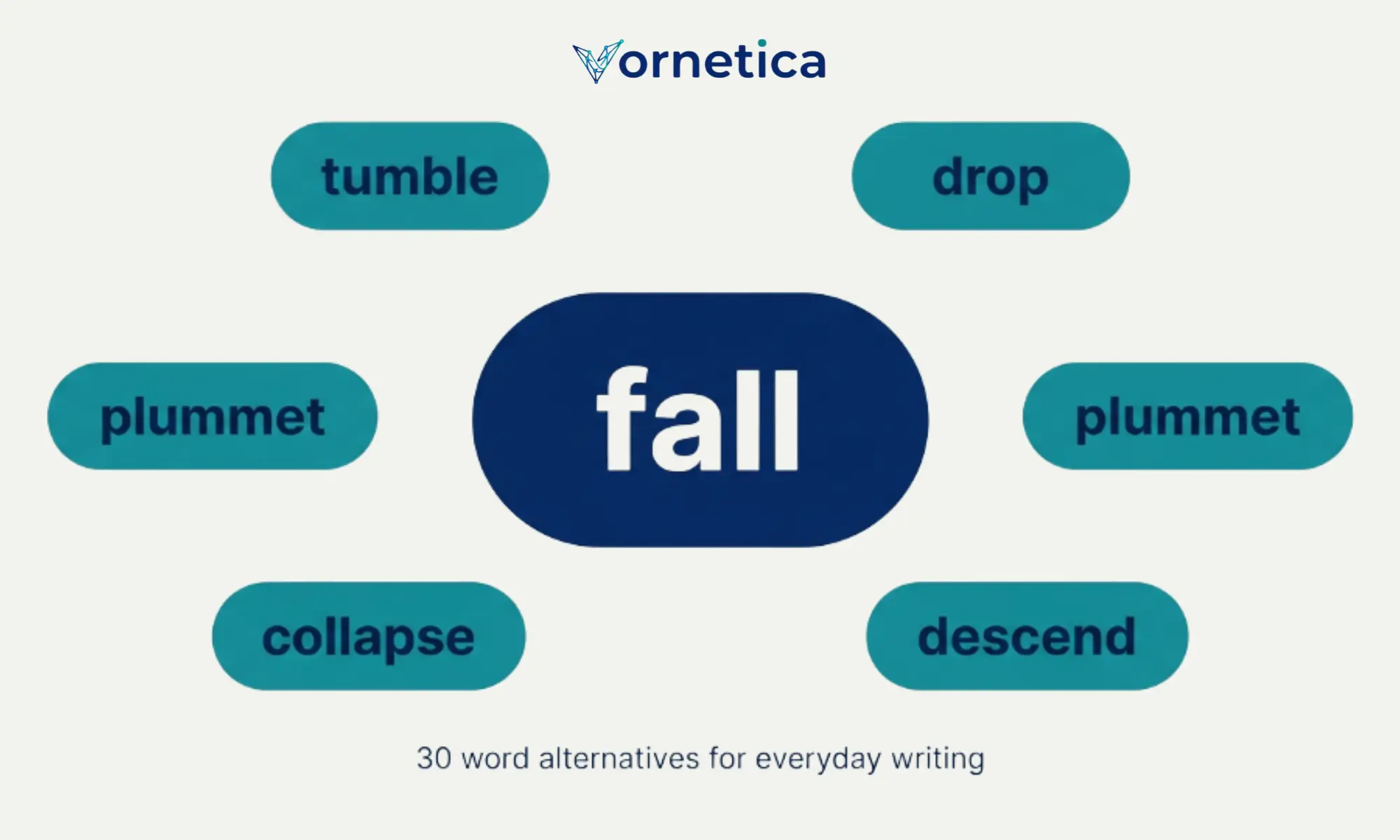
What is another word for fall? Common synonyms include drop, tumble, slip, collapse, descend. The best choice depends on how and why someone or something moves downward.
1. Drop
Meaning: To move down from a higher place.
Examples:
- Be careful not to drop the glass.
- The apple dropped from the tree.
Best Used When: Use it for objects or people moving downward suddenly.
2. Tumble
Meaning: To fall and roll or turn over several times.
Examples:
- The boy tumbled down the hill.
- The books tumbled off the shelf.
Best Used When: Use it for an uncontrolled fall with rolling or turning.
3. Slip
Meaning: To fall because your feet lose grip.
Examples:
- I slipped on the wet floor.
- She slipped on the ice.
Best Used When: Use it when someone loses balance because a surface is slippery.
4. Trip
Meaning: To fall or almost fall after hitting something with your foot.
Examples:
- I tripped over the toy.
- He tripped on the step.
Best Used When: Use it for falls caused by an object or uneven surface.
5. Collapse
Meaning: To fall down suddenly because something loses strength or support.
Examples:
- The old wall collapsed after the storm.
- He collapsed from exhaustion.
Best Used When: Use it for buildings, structures, or people who suddenly fall down.
6. Descend
Meaning: To move from a higher place to a lower place.
Examples:
- We descended the stairs slowly.
- The plane began to descend.
Best Used When: Use it in formal, travel, or technical writing.
7. Plunge
Meaning: To move down very quickly and suddenly.
Examples:
- The car plunged into the ditch.
- The stone plunged into the water.
Best Used When: Use it for a fast or deep downward movement.
8. Plummet
Meaning: To fall very quickly from a high place.
Examples:
- The rock plummeted down the cliff.
- Prices plummeted after the news.
Best Used When: Use it for very fast physical or numerical drops.
9. Crash
Meaning: To fall or hit something with great force and noise.
Examples:
- The bike crashed onto the road.
- A branch crashed onto the roof.
Best Used When: Use it when a fall involves a hard impact.
10. Spill
Meaning: To fall or flow out of a container or place.
Examples:
- Water spilled from the cup.
- The beans spilled onto the floor.
Best Used When: Use it for liquids, small objects, or things spreading out.
11. Topple
Meaning: To fall over from an upright position.
Examples:
- The chair toppled onto the floor.
- The strong wind toppled the tree.
Best Used When: Use it for things that fall over rather than straight down.
12. Overturn
Meaning: To turn upside down or fall onto one side.
Examples:
- The boat overturned in the rough water.
- The truck overturned on the road.
Best Used When: Use it for vehicles, boats, or objects that turn over.
13. Stumble
Meaning: To lose your balance while walking or running.
Examples:
- I stumbled on the uneven path.
- She stumbled but did not fall.
Best Used When: Use it when someone nearly falls or loses balance while moving.
14. Swoon
Meaning: To lose consciousness and fall down.
Examples:
- The heat made him swoon.
- She swooned after hearing the news.
Best Used When: Use it in literary or dramatic writing for fainting.
15. Faint
Meaning: To lose consciousness for a short time.
Examples:
- He fainted in the heat.
- She felt dizzy and fainted.
Best Used When: Use it when a person falls because they lose consciousness.
16. Sag
Meaning: To bend or hang down because of weight or weakness.
Examples:
- The old shelf began to sag.
- The wet clothes made the line sag.
Best Used When: Use it for something slowly bending downward.
17. Sink
Meaning: To move slowly down to a lower level.
Examples:
- The stone sank into the mud.
- He sank into the soft chair.
Best Used When: Use it for slow downward movement or movement into a lower place.
18. Dive
Meaning: To move quickly downward, often headfirst.
Examples:
- The bird dived toward the lake.
- He dived into the pool.
Best Used When: Use it for water, sports, birds, or quick downward movement.
19. Lurch
Meaning: To move suddenly and lose balance.
Examples:
- The bus lurched forward.
- She lurched toward the door.
Best Used When: Use it when sudden movement makes someone or something unstable.
20. Buckle
Meaning: To bend, break, or fall because of pressure.
Examples:
- The weak chair buckled under him.
- The bridge buckled under the heavy load.
Best Used When: Use it for structures, legs, or objects that give way under pressure.
21. Give Way
Meaning: To stop supporting weight and fall or break.
Examples:
- The old floor gave way beneath him.
- The weak branch gave way under the snow.
Best Used When: Use it for surfaces, structures, or objects that suddenly stop holding weight.
22. Crumble
Meaning: To break apart and fall into small pieces.
Examples:
- The dry cookie crumbled in my hand.
- The old wall began to crumble.
Best Used When: Use it for weak materials that break and fall apart.
23. Dwindle
Meaning: To become smaller or less over time.
Examples:
- Our food supply began to dwindle.
- Her savings dwindled quickly.
Best Used When: Use it for amounts, supplies, money, or numbers that slowly decrease.
24. Decline
Meaning: To become lower, weaker, or less.
Examples:
- Sales declined last month.
- His energy began to decline.
Best Used When: Use it in formal or business writing for a decrease.
For related vocabulary practice, learning words such as synonyms for employ can also help you vary your word choice in professional writing.
25. Decrease
Meaning: To become smaller or lower in amount.
Examples:
- The temperature decreased overnight.
- The number of visitors decreased this year.
Best Used When: Use it for numbers, amounts, levels, and measurements.
26. Drop Off
Meaning: To become lower or less than before.
Examples:
- Sales dropped off in winter.
- Attendance dropped off after lunch.
Best Used When: Use it in casual speech for a decrease.
This phrase can be useful when writing simple, natural content, just as choosing the right word matters when describing actions such as synonyms for devour.
27. Regress
Meaning: To move back to a worse or earlier state.
Examples:
- His skills regressed after a long break.
- The project regressed after the team changed.
Best Used When: Use it in formal or academic writing for a move backward.
28. Fail
Meaning: To stop working or supporting something.
Examples:
- The old rope failed under the weight.
- The engine failed during the trip.
Best Used When: Use it when something breaks or stops giving support.
29. Subside
Meaning: To become lower, weaker, or less strong.
Examples:
- The flood water began to subside.
- Her anger slowly subsided.
Best Used When: Use it for water, feelings, noise, pain, or other things that become less intense.
When choosing words for essays or blog posts, it also helps to know how related action words differ. For example, you can explore synonyms for encouraged to make your writing more varied.
30. Autumn
Meaning: The season that comes after summer and before winter.
Examples:
- We visit the park every autumn.
- The leaves turn red in autumn.
Best Used When: Use it when fall means the season, especially in British or formal English.
Note: “Autumn” is a synonym for fall only when fall refers to the season. The other words above mainly describe the action or idea of moving downward or becoming lower.
For example, fall can mean a person losing balance, a price becoming lower, or the season. Always check the meaning before choosing a synonym. A word that fits one meaning may not fit another.
Comparison Table
| Synonym | Tone (Formal/Neutral/Casual) | Best Used In (writing/speech/technical) |
| Drop | Neutral | Writing/Speech |
| Tumble | Neutral | Writing/Speech |
| Slip | Neutral | Writing/Speech |
| Trip | Neutral | Writing/Speech |
| Collapse | Neutral | Writing/Speech |
| Descend | Formal | Writing/Technical |
| Plunge | Neutral | Writing/Speech |
| Plummet | Formal | Writing/Technical |
| Crash | Casual | Writing/Speech |
| Spill | Neutral | Writing/Speech |
| Topple | Neutral | Writing/Speech |
| Overturn | Formal | Writing/Technical |
| Stumble | Neutral | Writing/Speech |
| Swoon | Formal | Creative Writing |
| Faint | Neutral | Writing/Speech |
| Sag | Neutral | Writing/Technical |
| Sink | Neutral | Writing/Speech |
| Dive | Neutral | Writing/Speech |
| Lurch | Neutral | Writing/Speech |
| Buckle | Neutral | Writing/Technical |
| Give Way | Neutral | Writing/Speech |
| Crumble | Neutral | Writing/Creative |
| Dwindle | Formal | Writing |
| Decline | Formal | Writing/Business |
| Decrease | Formal | Writing/Technical |
| Drop Off | Casual | Speech |
| Regress | Formal | Academic/Technical |
| Fail | Neutral | Writing/Technical |
| Subside | Formal | Writing |
| Autumn | Neutral | Writing/Speech |
Learning synonyms is also useful when you want to exemplify an idea without using the same word again and again.
Frequently Asked Questions
What is another word for fall?
Common synonyms for fall include drop, tumble, slip, trip, and descend. The best word depends on the meaning of fall.
What is a synonym for fall down?
Words such as drop, tumble, collapse, topple, and descend can describe falling down. Each word gives a slightly different meaning.
What is a synonym for fall in price?
Good choices include decrease, decline, drop, dwindle, and plummet. Use “plummet” when the decrease is very large or fast.
What is another word for fall season?
Autumn is another word for the fall season. “Fall” is more common in American English, while “autumn” is common in British English.
What is a formal word for fall?
Descend, decline, plummet, regress, and decrease can sound more formal, depending on the meaning. Choose the word that matches the exact context.
Practice Exercise
Fill in each blank with the best synonym from the list.
- The wet floor made Sarah __________ and lose her balance.
- The plane began to __________ as it got closer to the airport.
- The old building may __________ if the storm gets worse.
- The number of visitors began to __________ after the holiday.
- The leaves turn yellow and red in __________.
Answer Key
- slip
- descend
- collapse
- decline
- autumn
Key Takeaways Box
- Drop is a simple word for moving down from a higher place.
- Slip means losing balance because of a slippery surface.
- Tumble suggests falling and rolling or turning.
- Descend is a useful formal word for moving downward.
- Decline and decrease work well for numbers, amounts, or levels becoming lower.
- Autumn means fall when talking about the season. Tip: Always check the meaning of “fall” before choosing a synonym.
Before the conclusion, remember that the word exit also has several useful alternatives. Learning synonyms for exit can help you choose a more natural word when writing directions, stories, or everyday messages.
Conclusion
Learning synonyms for fall gives you more ways to express simple ideas. Words like drop, slip, tumble, descend, decline, and plummet can make your writing more clear and exact.
These words are useful in essays, blogs, emails, and daily conversations. Try using one new synonym each day.
With regular practice, your vocabulary will grow, and your English will sound more natural.
Search another word on the site whenever you want to build your vocabulary further.