Have you ever had a problem and wanted to tell someone about it? You may say, “I want to complain.” But using the same word again and again can make your English sound plain.
Learning synonyms for complain gives you more ways to share your feelings, report a problem, or speak about something you do not like.
For example, a customer may protest about poor service, while a student may object to an unfair rule. Both express a problem, but the tone is different.
The phrase synonyms for complain means other words that can replace “complain” based on the situation.
These words help students write better essays, help bloggers avoid repetition, and help content writers create clear text.
Daily English users can also use them to speak with more detail and confidence.
Quick Answer Box:
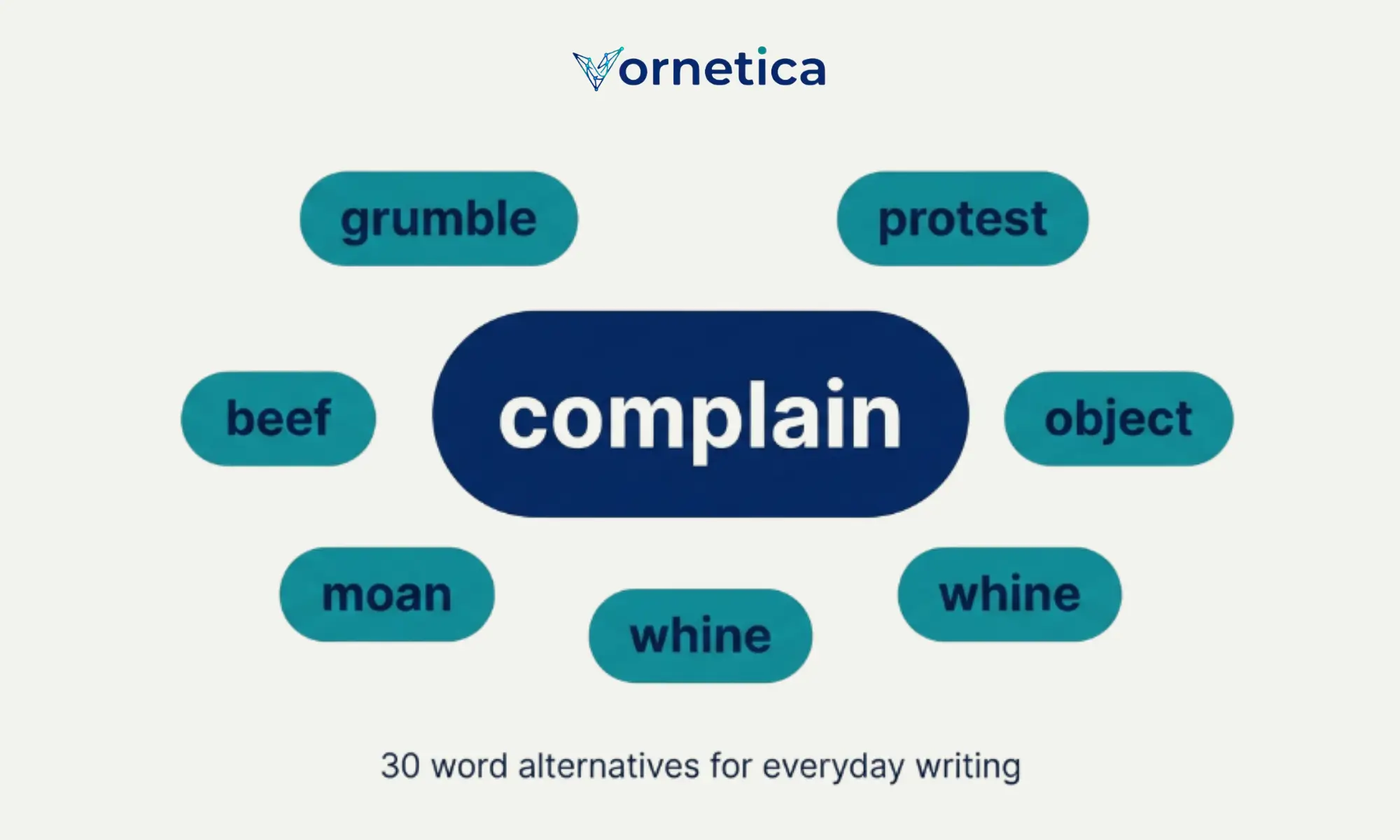
What is another word for complain? Common synonyms include protest, object, grumble, criticize, and whine. The best choice depends on whether the complaint is formal, neutral, or casual.
1. Protest
Meaning: To protest means to speak or act against something you think is wrong.
Examples:
- The workers protested against the new rule.
- She protested when her order arrived late.
Best Used When: Use it for strong disagreement in formal or public situations.
2. Object
Meaning: To object means to say that you do not agree with something.
Examples:
- I object to this unfair plan.
- He objected when they changed the schedule.
Best Used When: Best for formal speech, meetings, rules, and disagreements.
3. Grumble
Meaning: To grumble means to complain in a quiet or unhappy way.
Examples:
- Tom grumbled about the long wait.
- She grumbled that the room was too cold.
Best Used When: Use it for casual complaints about small problems.
4. Whine
Meaning: To whine means to complain in an annoying or weak voice.
Examples:
- The child whined about going home.
- He kept whining about his homework.
Best Used When: Best for casual speech when someone complains too much.
5. Criticize
Meaning: To criticize means to point out what you think is wrong with something.
Examples:
- The editor criticized the weak ending.
- She criticized the service at the hotel.
Best Used When: Use it in writing, reviews, work, and serious discussions.
6. Moan
Meaning: To moan means to complain about something in an unhappy way.
Examples:
- He moaned about his busy day.
- My brother always moans about school.
Best Used When: Best for informal British English and everyday complaints.
7. Grumble
Meaning: To grumble means to show that you are unhappy about something.
Examples:
- Dad grumbled about the high price.
- She grumbled when the bus was late.
Best Used When: Use it for mild, casual complaints.
8. Murmur
Meaning: To murmur means to speak quietly, often because you are unhappy.
Examples:
- He murmured a complaint about the food.
- She murmured that the room was noisy.
Best Used When: Best for quiet speech and creative writing.
9. Blame
Meaning: To blame means to say that someone or something caused a problem.
Examples:
- She blamed the company for the delay.
- He blamed the driver for the mistake.
Best Used When: Use it when a complaint focuses on responsibility.
10. Accuse
Meaning: To accuse means to say that someone did something wrong.
Examples:
- She accused him of breaking the rule.
- The customer accused the shop of cheating him.
Best Used When: Best for serious complaints involving alleged wrongdoing.
11. Condemn
Meaning: To condemn means to strongly say that something is wrong or bad.
Examples:
- The group condemned the unfair decision.
- Many people condemned the poor treatment.
Best Used When: Use it in formal writing, news, and serious public statements.
12. Denounce
Meaning: To denounce means to openly and strongly criticize something.
Examples:
- The leader denounced the unfair policy.
- She denounced the decision in public.
Best Used When: Best for formal speech, news writing, and public criticism.
13. Critique
Meaning: To critique means to carefully explain the good and bad parts of something.
Examples:
- The teacher critiqued my essay.
- We critiqued the new website design.
Best Used When: Use it in academic, creative, and professional settings.
14. Fault
Meaning: To fault someone means to say that they did something wrong.
Examples:
- I cannot fault her for being late once.
- The manager faulted him for missing the meeting.
Best Used When: Best for formal or professional discussions about mistakes.
15. Find Fault
Meaning: To find fault means to point out things that you think are wrong.
Examples:
- He always finds fault with my work.
- She found fault with the new plan.
Best Used When: Use it when someone focuses on flaws or mistakes.
16. Take Issue
Meaning: To take issue means to disagree with something.
Examples:
- I take issue with that claim.
- She took issue with the new policy.
Best Used When: Best for formal writing, debates, and professional speech.
17. Raise an Objection
Meaning: To raise an objection means to say that you disagree with a plan or idea.
Examples:
- The lawyer raised an objection in court.
- I raised an objection during the meeting.
Best Used When: Use it in formal, legal, academic, or business settings.
18. Report
Meaning: To report means to tell someone about a problem or bad event.
Examples:
- I reported the broken light to the manager.
- She reported the issue to her teacher.
Best Used When: Best when you want action on a real problem rather than simply expressing anger.
19. Inform
Meaning: To inform means to give someone useful information about a problem.
Examples:
- Please inform us about the damaged package.
- He informed the staff about the error.
Best Used When: Use it in formal emails, notices, and workplace communication.
20. Appeal
Meaning: To appeal means to ask strongly for help or a change in a decision.
Examples:
- She appealed against the unfair decision.
- The player appealed to the referee.
Best Used When: Best for formal complaints, decisions, rules, and official matters.
21. Challenge
Meaning: To challenge means to question whether something is right or fair.
Examples:
- She challenged the unfair charge.
- He challenged the decision at work.
Best Used When: Use it for formal disagreements and decisions you want reviewed.
22. Remonstrate
Meaning: To remonstrate means to strongly complain or argue about something.
Examples:
- He remonstrated with the manager about the bill.
- She remonstrated against the unfair treatment.
Best Used When: Best for formal writing and strong disagreements.
23. Rail
Meaning: To rail means to complain or speak angrily about something.
Examples:
- He railed against the new tax.
- She railed about the poor service.
Best Used When: Use it in strong, expressive, or literary writing.
24. Rant
Meaning: To rant means to speak or write angrily for a long time.
Examples:
- He ranted about the bad service.
- She went online to rant about the delay.
Best Used When: Best for casual speech, social media, and emotional complaints.
25. Vent
Meaning: To vent means to express strong feelings about something that upset you.
Examples:
- I called my friend to vent about work.
- She vented her anger after the meeting.
Best Used When: Use it for personal and emotional conversations.
26. Grieve
Meaning: To grieve means to express deep sadness or concern about something.
Examples:
- The group grieved over the unfair loss.
- He grieved about the damage to his home.
Best Used When: Best for serious or emotional situations rather than everyday complaints.
27. Bemoan
Meaning: To bemoan means to complain sadly about something.
Examples:
- She bemoaned the loss of her free time.
- He bemoaned the high cost of rent.
Best Used When: Use it in formal or literary writing.
28. Lament
Meaning: To lament means to express sadness or regret about something.
Examples:
- The writer lamented the loss of old traditions.
- She lamented the poor state of the park.
Best Used When: Best for formal, literary, and thoughtful writing.
29. Carp
Meaning: To carp means to complain often about small things.
Examples:
- He always carps about the food.
- She carped about every little mistake.
Best Used When: Use it when describing repeated and often unfair complaints.
30. Bellyache
Meaning: To bellyache means to complain a lot about something.
Examples:
- Stop bellyaching about the weather.
- He bellyached about having too much work.
Best Used When: Best for humorous and very casual speech.
Comparison Table
| Synonym | Tone | Best Used In |
| Protest | Formal/Neutral | Speech/Writing |
| Object | Formal | Writing/Speech |
| Grumble | Casual | Speech |
| Whine | Casual | Speech |
| Criticize | Neutral | Writing/Speech |
| Moan | Casual | Speech |
| Murmur | Neutral | Speech/Creative |
| Blame | Neutral | Speech/Writing |
| Accuse | Formal | Writing/Speech |
| Condemn | Formal | Writing/Speech |
| Denounce | Formal | Writing |
| Critique | Formal | Writing/Academic |
| Fault | Formal | Writing/Speech |
| Find Fault | Neutral | Speech/Writing |
| Take Issue | Formal | Writing/Speech |
| Raise an Objection | Formal | Writing/Speech |
| Report | Neutral | Writing/Speech |
| Inform | Formal | Writing |
| Appeal | Formal | Writing/Speech |
| Challenge | Neutral | Writing/Speech |
| Remonstrate | Formal | Writing |
| Rail | Strong/Formal | Writing |
| Rant | Casual | Speech/Social |
| Vent | Casual | Speech |
| Grieve | Formal | Writing |
| Bemoan | Formal | Writing |
| Lament | Formal | Writing |
| Carp | Formal/Neutral | Writing |
| Bellyache | Casual | Speech |
Learning related vocabulary can also help you connect one word to another. For example, if you are building a large vocabulary list, you can explore synonyms for absorb to learn more useful alternatives for common English words.
You can also compare complaint-related words with other vocabulary groups. Studying synonyms for become is another simple way to find better word choices for essays, blogs, and everyday writing.
For formal writing, remember that not every synonym has the same strength. Object, protest, and criticize are useful in many settings, while rant, whine, and bellyache sound much more casual.
If you enjoy building vocabulary through related word lists, synonyms for born can give you more alternatives for describing beginnings, origins, and life events.
The same rule applies when learning stronger vocabulary. For example, synonyms for abduct can help you understand how small changes in word choice can affect meaning and tone.
Frequently Asked Questions
What is another word for complain?
Common alternatives include protest, object, grumble, criticize, and whine. The best word depends on the situation and tone.
What is a polite word for complain?
Object, report, or raise an objection can sound more polite and formal. They work well in professional settings.
What is a formal synonym for complain?
Protest, object, criticize, denounce, and raise an objection are useful formal choices. They are common in business, academic, and official writing.
What is a strong word for complain?
Denounce, condemn, rail, and rant can show strong disagreement or anger. Choose one based on the level of emotion.
What is a casual synonym for complain?
Grumble, moan, whine, rant, vent, and bellyache are common casual choices. Some can sound negative if used too often.
Practice Exercise
Fill in each blank with the best synonym from the list.
- The customer decided to __________ about the damaged product.
- He always __________ about the cold weather.
- The workers decided to __________ against the new rule.
- She called her friend to __________ about her stressful day.
- The lawyer __________ an objection during the trial.
Answer Key
- complain / report
- grumble
- protest
- vent
- raised
Key Takeaways
Remember these useful points:
- Protest shows strong disagreement with something.
- Object is useful for polite or formal disagreement.
- Grumble and moan work well for casual complaints.
- Criticize is useful when pointing out problems or faults.
- Rant and vent show strong or emotional feelings.
- Pick a synonym based on tone, situation, and purpose, not just meaning.
Conclusion
Learning synonyms for complain helps you choose words that fit the situation.
You can use formal words such as object or protest in emails and essays, while grumble, rant, and vent work better in casual conversations.
Better word choices make your writing, blogging, speaking, and communication clearer. Try using one new synonym each day in an email, essay, or daily conversation.
When you want to improve your vocabulary, search for another word or synonym on the site.