Have you ever tried to study while people were talking loudly around you?
Maybe a dog was barking, cars were honking, or music was playing next door. All these sounds can be called noise.
Learning synonyms for noise helps you describe sounds in a better way.
For example, you can use racket for loud, annoying sounds or whisper for a very soft sound. Each word gives your sentence a different meaning.
A good list of synonyms for noise is useful for students, bloggers, content writers, and daily English users.
Students can use these words in essays. Bloggers can make their posts more interesting.
Content writers can describe scenes clearly, and English learners can speak with more confidence.
When you know the right word, you can explain what you hear without using the same word again and again.
Quick Answer Box
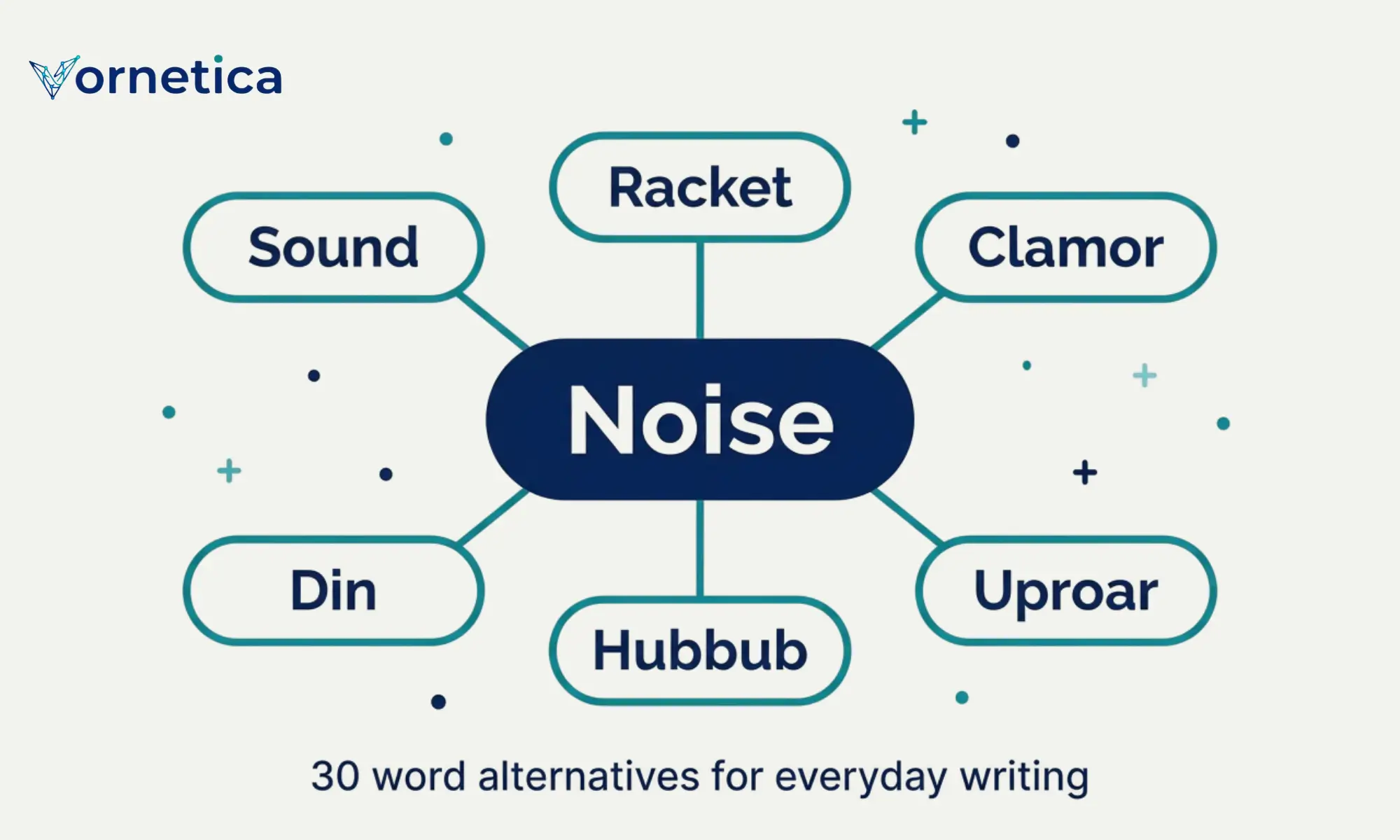
Another word for noise can be sound, racket, din, clamor, or uproar. The best synonym depends on the type of sound, how loud it is, and the situation in which you use it.
Top 5 synonyms: Sound, racket, din, clamor, uproar.
Main Content: 30 Synonyms for Noise
1. Sound
Meaning: Sound is something you hear with your ears.
Examples:
- I heard a strange sound outside my window.
- The sound of rain helps me relax.
Best Used When: You want a general, neutral word for anything you can hear.
Learning new words is a simple way to build your vocabulary. You can explore more useful words in this guide to synonyms for learning.
2. Racket
Meaning: A racket is a loud and annoying noise.
Examples:
- The kids made a racket in the hallway.
- I could not sleep because of the racket next door.
Best Used When: You describe loud, unwanted sounds in casual speech.
3. Din
Meaning: A din is a loud, steady mix of sounds.
Examples:
- The din in the school cafeteria was hard to ignore.
- We could barely hear the teacher over the din.
Best Used When: You describe many loud sounds happening at once.
4. Clamor
Meaning: Clamor is a loud noise made by many people.
Examples:
- The crowd raised a clamor when the singer arrived.
- A clamor of voices filled the busy market.
Best Used When: You write about crowds, protests, or public events.
Writers can make their descriptions stronger by choosing precise words. If you are writing about history or the lasting impact of a person, explore synonyms for legacy.
5. Uproar
Meaning: An uproar is a loud noise caused by excitement, anger, or surprise.
Examples:
- The news caused an uproar in the classroom.
- The fans created an uproar after the final goal.
Best Used When: You describe a loud reaction to an event.
6. Commotion
Meaning: Commotion is noisy activity that causes confusion.
Examples:
- There was a commotion near the school gate.
- I went outside to see what caused the commotion.
Best Used When: You describe a busy or confusing situation.
7. Hubbub
Meaning: Hubbub is the sound of many people talking at once.
Examples:
- The hubbub in the café made our talk difficult.
- A happy hubbub filled the room before the party.
Best Used When: You describe lively conversations in a casual or creative way.
8. Clatter
Meaning: Clatter is a series of loud, sharp sounds made when hard things hit each other.
Examples:
- The plates made a clatter in the kitchen.
- I heard the clatter of shoes on the stairs.
Best Used When: You describe dishes, tools, footsteps, or other hard objects.
9. Bang
Meaning: A bang is a sudden, loud sound.
Examples:
- I heard a bang when the door shut.
- The balloon made a loud bang when it burst.
Best Used When: You describe a short, sharp sound.
10. Crash
Meaning: A crash is a loud sound made when things hit or fall with force.
Examples:
- We heard a crash from the garage.
- The crash of falling boxes woke the baby.
Best Used When: You describe accidents, falling objects, or strong impacts.
11. Clank
Meaning: A clank is a hard, metallic sound.
Examples:
- The gate closed with a heavy clank.
- I heard a clank as the worker moved the metal tools.
Best Used When: You describe metal objects hitting or moving against each other.
12. Thud
Meaning: A thud is a dull, heavy sound.
Examples:
- The book hit the floor with a thud.
- We heard a thud when someone dropped a bag.
Best Used When: You describe a heavy object falling or hitting a surface.
13. Bang-Bang
Meaning: Bang-bang describes repeated loud, sudden sounds.
Examples:
- The old machine went bang-bang all morning.
- We heard a bang-bang sound from the construction site.
Best Used When: You want an informal or playful description of repeated bangs.
14. Roar
Meaning: A roar is a very loud, deep sound.
Examples:
- The roar of the crowd filled the stadium.
- We heard the roar of water near the waterfall.
Best Used When: You describe crowds, engines, animals, or powerful natural sounds.
15. Hiss
Meaning: A hiss is a long, soft sound like escaping air.
Examples:
- The kettle made a hiss before it began to boil.
- I heard a hiss as the air left the tire.
Best Used When: You describe steam, air, snakes, or other similar sounds.
16. Buzz
Meaning: A buzz is a low, steady sound like that of a bee.
Examples:
- A bee made a buzz near my ear.
- The phone gave a short buzz on the table.
Best Used When: You describe insects, phones, or machines making a vibrating sound.
17. Hum
Meaning: A hum is a low, steady sound.
Examples:
- I could hear the hum of the refrigerator.
- She began to hum while making breakfast.
Best Used When: You describe machines, quiet voices, or soft musical sounds.
18. Whir
Meaning: A whir is a fast, steady sound made by a moving machine.
Examples:
- The fan made a soft whir above us.
- I heard the whir of the printer in the office.
Best Used When: You describe fans, motors, printers, and other machines.
Geography learners can also improve their vocabulary by exploring synonyms for longitude, especially when writing about maps and locations.
19. Chatter
Meaning: Chatter is quick, informal talk between people.
Examples:
- The chatter of students filled the school bus.
- I heard happy chatter from the guests outside.
Best Used When: You describe friendly conversations or repeated small sounds.
20. Babble
Meaning: Babble is a mix of voices that is hard to understand.
Examples:
- The babble of voices grew louder in the hall.
- I could hear the babble of people across the street.
Best Used When: You describe many voices blending together.
21. Murmur
Meaning: A murmur is a low, soft sound or quiet talk.
Examples:
- A murmur spread through the audience.
- I heard a soft murmur from the next room.
Best Used When: You describe quiet voices or sounds in a calm setting.
When describing a small group that reflects a larger community, you may find synonyms for microcosm useful for your writing.
22. Whisper
Meaning: A whisper is a very soft voice that others may find hard to hear.
Examples:
- She spoke in a whisper during the movie.
- I heard him whisper my name.
Best Used When: You describe secret or quiet speech, not loud noise.
23. Squeak
Meaning: A squeak is a short, high-pitched sound.
Examples:
- The old chair made a squeak when I sat down.
- I heard a squeak as the mouse ran away.
Best Used When: You describe small animals, shoes, toys, or objects making high sounds.
24. Screech
Meaning: A screech is a loud, sharp, high-pitched sound.
Examples:
- The brakes made a screech as the car stopped.
- We heard a screech from a bird in the tree.
Best Used When: You describe harsh sounds from brakes, birds, or people.
25. Squawk
Meaning: A squawk is a loud, rough sound made by a bird or person.
Examples:
- The parrot gave a squawk when I entered the room.
- A squawk came from the noisy birds outside.
Best Used When: You describe rough, sharp cries, especially from birds.
26. Peal
Meaning: A peal is a loud, clear sound, often made by bells or laughter.
Examples:
- A peal of bells rang across the town.
- Her peal of laughter made everyone smile.
Best Used When: You want a descriptive word for ringing bells or bursts of laughter.
27. Patter
Meaning: Patter is a series of light, quick sounds.
Examples:
- I heard the patter of rain on the roof.
- The patter of little feet came down the hall.
Best Used When: You describe rain, small footsteps, or other light repeated sounds.
28. Rustle
Meaning: A rustle is a soft sound made when light things rub or move.
Examples:
- I heard a rustle in the dry leaves.
- The pages made a rustle as she turned them.
Best Used When: You describe leaves, paper, fabric, or other light materials moving.
If you enjoy writing about brief events and special experiences, you can also explore synonyms for moments.
29. Discord
Meaning: Discord is a lack of harmony between sounds or voices.
Examples:
- The band played in discord during the first song.
- A feeling of discord filled the room as everyone argued.
Best Used When: You write formally about clashing sounds or disagreement.
30. Din of Voices
Meaning: A din of voices is a loud mix of people speaking at once.
Examples:
- The din of voices grew louder as the doors opened.
- We struggled to hear the guide over the din of voices.
Best Used When: You need a descriptive phrase for a noisy crowd.
Comparison Table: Synonyms for Noise
| Synonym | Tone (Formal/Neutral/Casual) | Best Used In |
| Sound | Neutral | Writing and speech |
| Racket | Casual | Everyday speech |
| Din | Neutral | Writing and speech |
| Clamor | Formal | Writing and news |
| Uproar | Neutral | News and storytelling |
| Commotion | Neutral | Writing and speech |
| Hubbub | Casual | Speech and creative writing |
| Clatter | Neutral | Stories and descriptions |
| Bang | Casual | Speech and storytelling |
| Crash | Neutral | Writing and speech |
| Clank | Neutral | Technical and descriptive writing |
| Thud | Neutral | Stories and descriptions |
| Bang-bang | Casual | Informal storytelling |
| Roar | Neutral | Writing and speech |
| Hiss | Neutral | Technical and descriptive writing |
| Buzz | Casual | Speech and descriptions |
| Hum | Neutral | Technical and everyday writing |
| Whir | Neutral | Technical and descriptive writing |
| Chatter | Casual | Speech and storytelling |
| Babble | Neutral | Writing and speech |
| Murmur | Neutral | Stories and descriptions |
| Whisper | Neutral | Speech and storytelling |
| Squeak | Neutral | Writing and speech |
| Screech | Neutral | Stories and descriptions |
| Squawk | Casual | Speech and storytelling |
| Peal | Formal | Creative writing |
| Patter | Neutral | Stories and descriptions |
| Rustle | Neutral | Writing and storytelling |
| Discord | Formal | Essays and music writing |
| Din of voices | Neutral | Descriptive writing |
Frequently Asked Questions
1. What is another word for noise?
Another word for noise is sound. Other choices include racket, din, clamor, and uproar.
2. What is the best synonym for loud noise?
Racket is a good choice for loud, annoying noise. You can also use din for a loud mix of sounds.
3. What is a formal word for noise?
Clamor is a formal word for loud noise, especially from a crowd. Din is another useful choice.
4. What is the difference between noise and sound?
Sound is anything you can hear. Noise often means a sound that is loud, unwanted, or disturbing, but its meaning depends on the context.
5. How can I use synonyms for noise in writing?
Choose a word that describes the sound clearly. For example, use clatter for dishes and rustle for moving leaves.
Practice Exercise
Fill in each blank with the best synonym from the list above. Use each answer only once.
- The plates made a loud ______ when they fell into the sink.
- I heard a soft ______ from the fan while I studied.
- The crowd made a huge ______ after the team won.
- The dry leaves began to ______ as the wind blew.
- The heavy box hit the floor with a ______.
Answer Key
- Clatter
- Hum
- Uproar
- Rustle
- Thud
Key Takeaways
- Sound is a general word for anything you hear.
- Racket describes loud, annoying sounds.
- Din describes a loud mix of sounds.
- Clatter works well for hard objects hitting each other.
- Hum describes a low, steady sound.
- Rustle describes soft sounds made by leaves, paper, or fabric.
Learning tip: When you hear a sound, try to describe it with one specific word. This simple habit can improve your vocabulary and make your writing clearer.
Conclusion
Learning synonyms for noise can make your writing, blogging, and everyday speech more clear and interesting.
Words like racket, clatter, hum, and rustle help you describe different sounds with greater care.
Students can use these words in essays, while bloggers and content writers can create better descriptions.
Practice using them in emails, schoolwork, and daily conversations. The more you practice, the easier it becomes to choose the right word.
Keep building your vocabulary by searching for another word on the site.