Have you ever used the word exit many times and wished you had a better word?
Maybe you are writing an essay, giving directions, or telling someone when to leave. Using the same word again and again can make your writing feel dull.
For example, you might say, “Please exit the building.” You could also say, “Please leave the building.”
Both sentences have a clear meaning, but the second sounds more natural in many daily talks.
The phrase synonyms for exit means words that have a similar meaning to “exit.” Some words work in casual speech, while others fit formal writing, signs, or stories.
Learning synonyms for exit can help students write better essays, help bloggers avoid repetition, and help content writers create smoother text.
Daily English users can also choose the right word for each situation.
Quick Answer Box
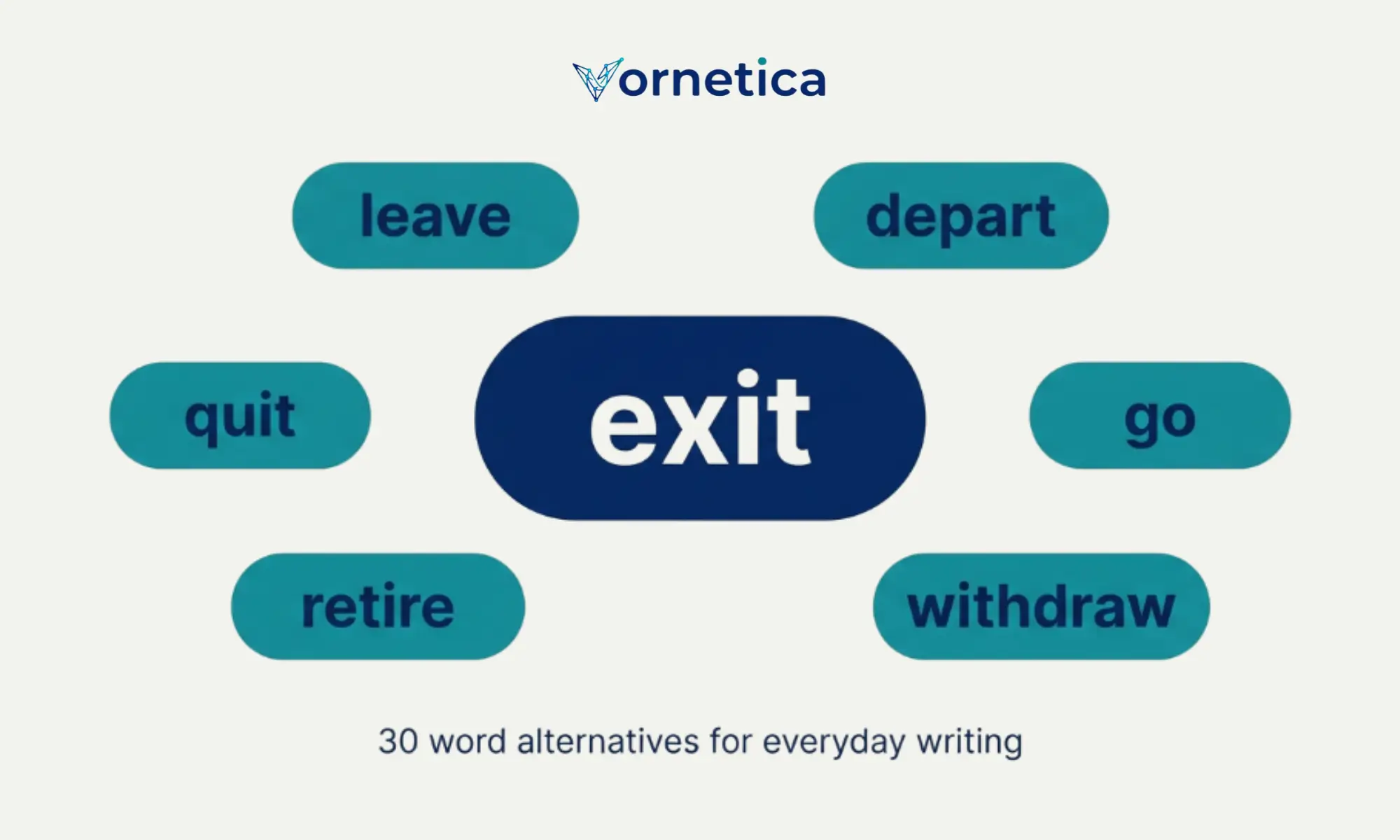
What is another word for exit? Common synonyms for exit include leave, depart, go out, withdraw, and retreat. The best choice depends on the situation, tone, and type of writing.
1. Leave
Meaning: To go away from a place or person.
Examples:
- I need to leave the office now.
- Please leave the room quietly.
Best Used When: Use it in casual speech and everyday writing.
The word leave is one of the most common alternatives to exit. It sounds natural and simple. You can use it when talking about homes, schools, offices, events, or other places.
For students and daily English users, “leave” is often the easiest choice. It can also make blog writing sound more friendly.
2. Depart
Meaning: To go away from a place, often at a planned time.
Examples:
- The train will depart at six.
- We departed from the hotel early.
Best Used When: Use it in formal speech, travel writing, and official notices.
“Depart” is more formal than “leave.” You often see it at airports, train stations, and bus stations.
For example, a travel sign may say that a train “departs” at 8:00 a.m. It is less common in casual conversation.
3. Go Out
Meaning: To move from inside a place to the outside.
Examples:
- Please go out through the back door.
- We went out after dinner.
Best Used When: Use it in casual speech and simple daily conversations.
“Go out” is a natural phrase for everyday English. It works well when someone moves from one place to another.
It can also mean spending time away from home. The exact meaning depends on the sentence.
4. Withdraw
Meaning: To move away from a place, group, or situation.
Examples:
- The soldiers withdrew from the town.
- She decided to withdraw from the meeting.
Best Used When: Use it in formal, military, academic, or professional contexts.
“Withdraw” often suggests a planned move away. It can describe people leaving a place, but it can also describe leaving an activity or group.
If you are writing a formal report, “withdraw” may sound more suitable than “leave.”
5. Retreat
Meaning: To move back or away from a place.
Examples:
- The team retreated after the attack.
- We retreated to a quiet room.
Best Used When: Use it in military, serious, or creative writing.
“Retreat” often suggests moving away because of danger, pressure, or a need for safety.
It can also be used in stories. A character may retreat from a busy crowd or move back from a difficult situation.
6. Vacate
Meaning: To leave a place so that it becomes empty.
Examples:
- Tenants must vacate the apartment by Friday.
- Please vacate your seat when asked.
Best Used When: Use it in formal notices, legal writing, and property-related contexts.
“Vacate” is a formal word. It is common in rules, rental notices, and official documents.
Unlike “leave,” it often focuses on making a space empty. This makes it useful when writing about buildings, rooms, seats, or properties.
7. Abandon
Meaning: To leave a person, place, or thing and not return.
Examples:
- They had to abandon the car.
- The family abandoned the old house.
Best Used When: Use it when the idea of leaving permanently or without care is important.
“Abandon” is stronger than “exit.” It can suggest that someone leaves something behind.
For example, a person may exit a house for a short time, but they may abandon a house when they leave it for good.
8. Escape
Meaning: To get away from a place, person, or danger.
Examples:
- The dog escaped through the open gate.
- We escaped the crowded hall quickly.
Best Used When: Use it when leaving involves danger, trouble, or a strong need to get away.
“Escape” is not always a direct synonym for exit. It adds the idea of getting free from something.
This makes it useful in stories, news reports, and situations involving danger.
9. Flee
Meaning: To leave a place quickly because of fear or danger.
Examples:
- The villagers fled the area.
- He fled when he saw the fire.
Best Used When: Use it in serious, dramatic, or news-style writing.
“Flee” is stronger than “leave.” It usually suggests speed and fear.
You would not normally say that someone “fled the classroom” just because the lesson ended. The word works better when there is danger or a serious reason to leave.
10. Evacuate
Meaning: To leave a dangerous place for safety.
Examples:
- Everyone had to evacuate the building.
- We evacuated the area after the warning.
Best Used When: Use it for emergencies, safety instructions, and official communication.
“Evacuate” is a specific type of leaving. It usually happens because of fire, storms, war, gas leaks, or another danger.
This word is common on emergency signs and in safety messages.
11. Disembark
Meaning: To leave a ship, plane, train, or other vehicle.
Examples:
- Passengers may disembark now.
- We disembarked from the bus at noon.
Best Used When: Use it in formal travel or transportation contexts.
“Disembark” is a precise word. It tells readers that someone is leaving a vehicle or vessel.
It is more formal than simply saying “get off.”
12. Depart From
Meaning: To leave a particular place.
Examples:
- The bus will depart from Gate 4.
- We departed from the station early.
Best Used When: Use it in travel information and formal writing.
“Depart from” is especially useful when you want to name the exact starting point.
You may see it on travel schedules, tickets, airport information, and transport websites.
13. Move Out
Meaning: To leave a home or building where you have been living.
Examples:
- We are moving out next month.
- She moved out of her old apartment.
Best Used When: Use it in casual conversations about homes and housing.
“Move out” has a specific meaning. It usually refers to leaving a house, apartment, or other living space.
For example, a student may move out of a dorm after finishing college.
14. Get Out
Meaning: To leave or move outside a place.
Examples:
- We need to get out before it rains.
- Please get out of the car.
Best Used When: Use it in casual speech and direct instructions.
“Get out” is very common in spoken English. However, it can sound rude or forceful when used as a command.
Use it carefully in polite or formal situations.
15. Pull Out
Meaning: To leave a place, activity, or situation.
Examples:
- The company pulled out of the project.
- The car pulled out of the parking lot.
Best Used When: Use it in business, travel, sports, and casual speech.
“Pull out” has several meanings. It can describe a vehicle leaving a place or a person or group leaving an activity.
It is common in news and business writing when an organization stops taking part in something.
16. Move Away
Meaning: To leave one place and live or stay somewhere else.
Examples:
- My friend moved away last year.
- They moved away from the city.
Best Used When: Use it in casual conversations about changing locations.
“Move away” often suggests a longer change rather than a short exit.
It is a useful phrase when talking about homes, cities, jobs, schools, or family changes.
17. Clear Out
Meaning: To leave a place, often quickly.
Examples:
- We should clear out before the store closes.
- The workers cleared out of the room.
Best Used When: Use it in casual speech and informal writing.
“Clear out” can sound direct and informal. It may mean leaving a place or removing things from it.
Because it is casual, it is better for conversations than formal reports.
18. Quit
Meaning: To leave an activity, job, or situation.
Examples:
- She quit her job last week.
- He quit the team after one season.
Best Used When: Use it when someone stops taking part in something.
“Quit” is not a direct synonym for leaving a physical place. It is mainly used when someone stops a job, activity, habit, or group.
This distinction is important for correct English use.
19. Resign
Meaning: To formally leave a job or position.
Examples:
- The manager decided to resign.
- She resigned from her position yesterday.
Best Used When: Use it in professional and workplace writing.
“Resign” is a formal word for leaving a job by choice.
It should not normally replace “exit” when you mean walking out of a room or building.
20. Step Out
Meaning: To leave a place for a short time.
Examples:
- I need to step out for a minute.
- She stepped out to take a phone call.
Best Used When: Use it in polite and casual conversations.
“Step out” sounds softer than “leave.” It is useful when you do not want to make your departure sound sudden or serious.
It is common in offices, homes, and social situations.
21. Slip Away
Meaning: To leave quietly without being noticed.
Examples:
- He slipped away before the party ended.
- She slipped away during the meeting.
Best Used When: Use it in casual or creative writing.
“Slip away” gives a quiet and gentle feeling. It is useful when someone wants to leave without drawing attention.
It can also make stories more vivid.
22. Take Off
Meaning: To leave a place quickly or suddenly.
Examples:
- He took off after lunch.
- We took off before the traffic got worse.
Best Used When: Use it in casual speech.
“Take off” is an informal phrase. It can mean leaving a place, but it has other meanings too, such as an airplane leaving the ground.
The context makes the meaning clear.
23. Make an Exit
Meaning: To leave a place or situation.
Examples:
- He made an exit before the argument began.
- She made a quick exit from the party.
Best Used When: Use it in casual, creative, or descriptive writing.
“Make an exit” is a phrase rather than a single-word synonym. It can make writing sound more expressive.
It is especially useful when describing how someone leaves.
24. Go Away
Meaning: To leave a place or move to another place.
Examples:
- Please go away for a few minutes.
- They went away for the weekend.
Best Used When: Use it in casual speech and everyday writing.
“Go away” is simple and common. It can mean leaving a place or spending time somewhere else.
Be careful with tone because “go away” can sound unfriendly when said directly to someone.
25. Break Away
Meaning: To leave or separate from a group or situation.
Examples:
- She broke away from the crowd.
- The runner broke away from the team.
Best Used When: Use it in sports, stories, and situations involving separation.
“Break away” often shows a clear separation. It is useful when someone leaves a group or moves away from others.
The phrase can also be used in creative writing to show freedom or change.
26. Back Out
Meaning: To leave an agreement, plan, or activity.
Examples:
- He backed out of the trip.
- She backed out of the deal.
Best Used When: Use it in casual speech about plans, deals, or promises.
“Back out” does not usually mean walking out of a room. It means deciding not to continue with something that was already planned.
This makes it useful for social and business conversations.
27. Disappear
Meaning: To leave or become impossible to see.
Examples:
- The child disappeared into the crowd.
- He disappeared before I could speak.
Best Used When: Use it in creative writing and situations where someone leaves suddenly.
“Disappear” focuses more on no longer being visible than on the act of exiting.
It can make a sentence sound more dramatic.
28. Depart From the Scene
Meaning: To leave a particular place or event.
Examples:
- The driver departed from the scene.
- Police asked people to depart from the scene.
Best Used When: Use it in formal reports, news writing, and official contexts.
This phrase is more formal than “leave the place.” It is useful when describing an exact location.
It can be especially helpful in reports where clear and serious language is needed.
29. Head Out
Meaning: To leave a place and begin going somewhere.
Examples:
- I am going to head out now.
- We headed out after breakfast.
Best Used When: Use it in casual conversations and friendly messages.
“Head out” is natural spoken English. It sounds relaxed and friendly.
It is a great choice for messages such as “I need to head out soon.”
30. Exit
Meaning: To leave a place or move out of it.
Examples:
- Please exit through the main door.
- The passengers exited the train.
Best Used When: Use it in formal instructions, signs, directions, and clear descriptions.
“Exit” is both a verb and a noun. As a verb, it means to leave. As a noun, it can mean a door or path used for leaving.
It is common in buildings, transportation areas, software, and official instructions.
Learning its alternatives helps you avoid repeating the same word.
Comparison Table
| Synonym | Tone (Formal/Neutral/Casual) | Best Used In (writing/speech/technical) |
| Leave | Neutral | Writing & speech |
| Depart | Formal | Writing & travel |
| Go Out | Casual | Speech |
| Withdraw | Formal | Writing |
| Retreat | Formal | Writing |
| Vacate | Formal | Technical & writing |
| Abandon | Neutral | Writing |
| Escape | Neutral | Writing & speech |
| Flee | Formal | Writing |
| Evacuate | Formal | Technical & writing |
| Disembark | Formal | Technical & travel |
| Depart From | Formal | Writing & travel |
| Move Out | Casual | Speech |
| Get Out | Casual | Speech |
| Pull Out | Neutral | Writing & speech |
| Move Away | Neutral | Speech |
| Clear Out | Casual | Speech |
| Quit | Neutral | Writing & speech |
| Resign | Formal | Writing & business |
| Step Out | Casual | Speech |
| Slip Away | Neutral | Creative writing |
| Take Off | Casual | Speech |
| Make an Exit | Neutral | Creative writing |
| Go Away | Casual | Speech |
| Break Away | Neutral | Writing & speech |
| Back Out | Casual | Speech |
| Disappear | Neutral | Creative writing |
| Depart From the Scene | Formal | Writing & reports |
| Head Out | Casual | Speech |
| Exit | Neutral | Technical & writing |
When choosing among these words, think about who you are talking to and why the person is leaving. For example, “vacate” works well in a formal notice, while “head out” sounds natural in a text to a friend.
If you are writing about understanding difficult words or instructions, you may also find synonyms for decipher useful. It can help you choose clearer words when explaining how someone understands or solves something.
Writers should also pay attention to the exact meaning of each synonym. For example, evacuate suggests danger, while move out usually relates to changing homes. Choosing the closest word makes your writing more accurate.
Similarly, if you are describing how someone organizes or clears a space before leaving, synonyms for declutter can give you useful vocabulary for that context.
Words related to leaving can also appear in descriptions of people, places, and events. If your writing needs stronger descriptive vocabulary, check synonyms for described for more word choices.
For present-tense writing, synonyms for describes can also help you avoid repeating “describes” in essays, blog posts, and other content.
Frequently Asked Questions
What is another word for exit?
Common alternatives include leave, depart, go out, withdraw, and retreat. The best choice depends on the situation.
What is a simple synonym for exit?
Leave is the simplest and most common synonym for exit. It works well in everyday English.
What is a formal word for exit?
Depart, withdraw, vacate, and evacuate can work as formal alternatives. Choose the word that matches the exact situation.
What is the difference between exit and leave?
“Exit” often sounds more direct or formal, while “leave” is more common in everyday speech. Both can mean going away from a place.
What is a synonym for exit in writing?
Useful choices include depart, withdraw, vacate, retreat, and leave. The right word depends on the tone and meaning of your sentence.
Practice Exercise
Fill in each blank with the best synonym from the list above.
- The passengers may __________ the plane after the doors open.
- We need to __________ the building because there is a fire.
- I need to __________ now because my bus is here.
- The tenant must __________ the apartment by the end of the month.
- She decided to __________ from her job after ten years.
Answer Key
- disembark
- evacuate
- head out
- vacate
- resign
Key Takeaways
Quick Learning Tips
- Leave is the easiest everyday synonym for exit.
- Depart is useful in formal and travel writing.
- Vacate means to leave a space empty.
- Evacuate means to leave a dangerous place for safety.
- Head out and step out sound natural in casual speech.
- Always choose a synonym based on the context and tone, not just the basic meaning.
Learning synonyms is not only about finding different words. It is about choosing the word that gives your sentence the right meaning and tone.
Conclusion
Learning synonyms for exit can make your writing clearer, more natural, and less repetitive.
Words such as leave, depart, withdraw, evacuate, vacate, and head out each fit different situations.
Practice them in emails, essays, blog posts, and daily conversations. Over time, choosing the right word will become easier.
Keep building your vocabulary one word at a time, and search the site for another synonym when you want to improve your English.