Have you ever opened a messy drawer and thought, “I need to clean this up”? You may need to declutter it.
To declutter means to remove things you do not need so a space becomes clean and clear. For example, you might declutter your desk by throwing away old papers and putting useful items in their place.
Learning synonyms for declutter can help you describe this action in many ways. Students can use these words in essays and school work.
Bloggers and content writers can use them to avoid repeating the same word. Daily English users can also choose the right word for cleaning, organizing, or removing extra things.
This declutter synonym list gives you simple choices with clear meanings and examples.
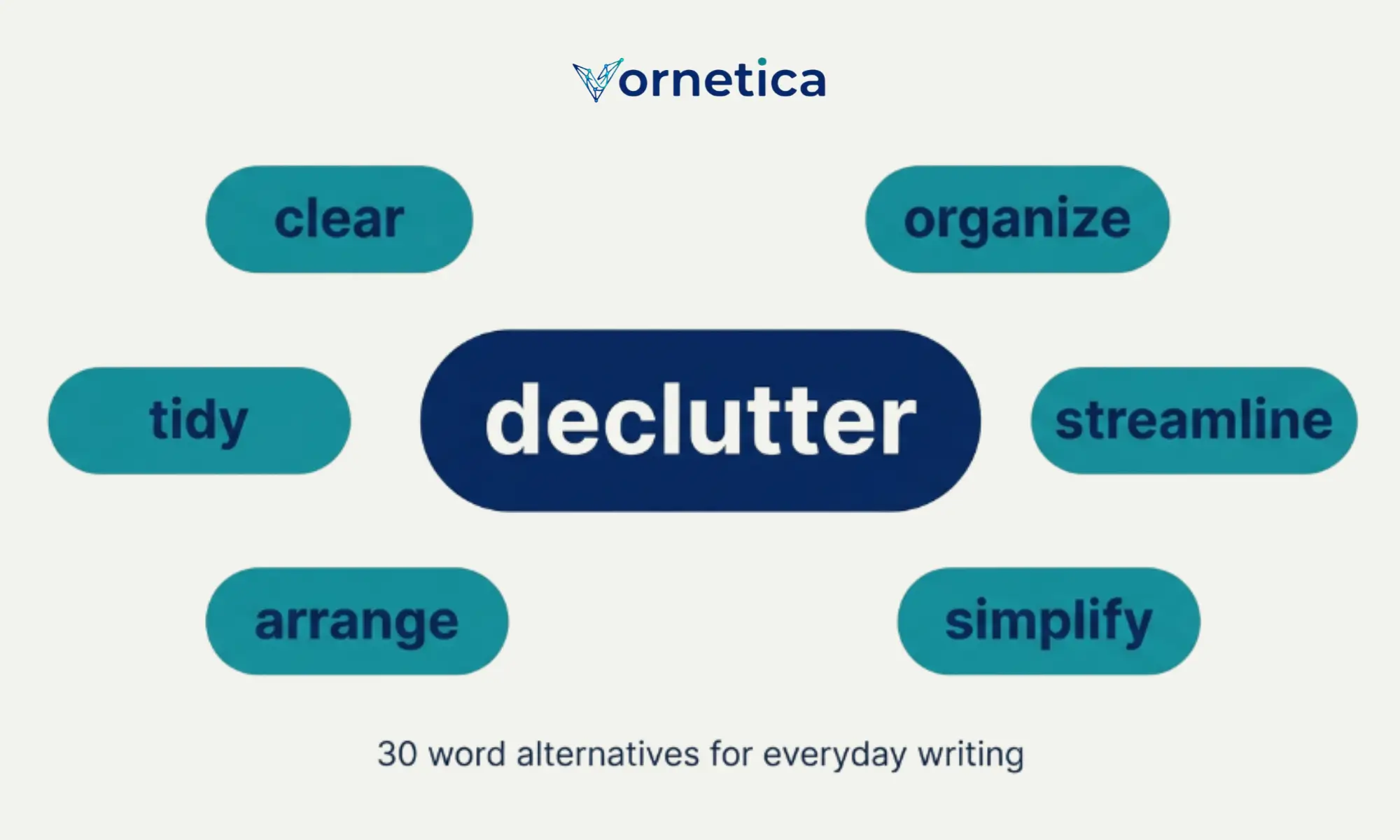
Quick Answer: Another word for declutter is tidy, organize, clear, clean up, or sort out.
Top 5 synonyms: tidy, organize, clear, clean up, sort out.
1. Tidy
Meaning: To tidy means to make a place neat and clean.
Examples:
- I need to tidy my bedroom before dinner.
- She tidied the desk after studying.
Best Used When: Use it in casual and everyday speech.
2. Organize
Meaning: To organize means to put things in a clear and useful order.
Examples:
- I organized my books by subject.
- He organized his desk before work.
Best Used When: Use it for homes, offices, files, and tasks.
3. Clear
Meaning: To clear means to remove unwanted things from a place.
Examples:
- Please clear the table after lunch.
- We cleared the garage last weekend.
Best Used When: Use it in everyday speech and writing.
4. Clean Up
Meaning: To clean up means to remove dirt, mess, or unwanted items.
Examples:
- Let’s clean up the kitchen now.
- The kids cleaned up their toys.
Best Used When: Use it in casual conversations.
5. Sort Out
Meaning: To sort out means to separate and arrange things in a better way.
Examples:
- I need to sort out my old clothes.
- She sorted out the papers on her desk.
Best Used When: Use it for mixed, messy, or confusing items.
6. Simplify
Meaning: To simplify means to make something easier by removing extra parts.
Examples:
- I simplified my workspace.
- She simplified her daily routine.
Best Used When: Use it for spaces, plans, systems, and routines.
7. Remove
Meaning: To remove means to take something away from a place.
Examples:
- I removed the old boxes from the room.
- Please remove these broken items.
Best Used When: Use it in neutral or formal writing.
8. Discard
Meaning: To discard means to throw away something you do not need.
Examples:
- I discarded the empty boxes.
- She discarded some old papers.
Best Used When: Use it in formal writing and practical instructions.
9. Purge
Meaning: To purge means to remove many unwanted things at once.
Examples:
- I purged my closet last month.
- We purged old files from the computer.
Best Used When: Use it for a major cleanout.
10. Weed Out
Meaning: To weed out means to remove things that are unwanted or not useful.
Examples:
- I weeded out clothes I never wear.
- She weeded out old files from the folder.
Best Used When: Use it when choosing useful items from many things.
11. Cleanse
Meaning: To cleanse means to make something clean by removing unwanted things.
Examples:
- I cleansed my workspace of old papers.
- They cleansed the room of unused items.
Best Used When: Use it in creative or slightly formal writing.
12. Empty
Meaning: To empty means to take everything out of a place or container.
Examples:
- I emptied the drawer this morning.
- She emptied the closet before moving.
Best Used When: Use it when removing all or most items.
13. Arrange
Meaning: To arrange means to put things in a neat order.
Examples:
- I arranged the books on the shelf.
- She arranged her clothes by color.
Best Used When: Use it when the main goal is neat placement.
14. Streamline
Meaning: To streamline means to remove extra things so something works better.
Examples:
- We streamlined our office storage.
- He streamlined his desk setup.
Best Used When: Use it in business, work, and technical writing.
15. Reduce
Meaning: To reduce means to make the amount of something smaller.
Examples:
- I reduced the number of boxes in my room.
- She reduced the clutter on her desk.
Best Used When: Use it when talking about lowering quantity.
16. Minimize
Meaning: To minimize means to make something as small as possible.
Examples:
- I minimized the items on my desk.
- She minimized extra decorations in the room.
Best Used When: Use it in formal, professional, or practical writing.
17. Neaten
Meaning: To neaten means to make something look more neat and orderly.
Examples:
- I need to neaten my desk.
- He neatened the shelves before guests arrived.
Best Used When: Use it for small everyday cleaning tasks.
18. Straighten
Meaning: To straighten means to make things neat by putting them back in place.
Examples:
- I straightened the cushions on the sofa.
- She straightened the books on the shelf.
Best Used When: Use it for quick and simple tidying.
19. Unclutter
Meaning: To unclutter means to remove things that make a space look crowded.
Examples:
- I uncluttered my desk before starting work.
- She uncluttered the kitchen counter.
Best Used When: Use it when focusing on a crowded space.
20. Clean Out
Meaning: To clean out means to remove unwanted things from a space.
Examples:
- We cleaned out the garage on Saturday.
- I cleaned out my old backpack.
Best Used When: Use it in casual speech for drawers, rooms, garages, or closets.
21. Cull
Meaning: To cull means to remove items that are no longer wanted or useful.
Examples:
- I culled old magazines from my collection.
- She culled unused files from the folder.
Best Used When: Use it in formal, professional, or collection-related writing.
22. Get Rid Of
Meaning: To get rid of means to remove or throw away something unwanted.
Examples:
- I got rid of my broken chair.
- She got rid of old clothes.
Best Used When: Use it in casual everyday English.
23. Dispose Of
Meaning: To dispose of means to remove something by throwing it away properly.
Examples:
- Please dispose of the empty boxes.
- We disposed of old papers safely.
Best Used When: Use it in formal instructions and practical writing.
24. Abandon
Meaning: To abandon means to leave something behind and stop using it.
Examples:
- He abandoned the old furniture.
- We abandoned items that were too damaged to use.
Best Used When: Use it when something is left behind rather than simply organized.
25. Free Up
Meaning: To free up means to make space available by removing things.
Examples:
- I freed up space in the kitchen.
- She freed up a shelf for new books.
Best Used When: Use it when the goal is to create more space.
26. Pare Down
Meaning: To pare down means to reduce something by removing extra parts.
Examples:
- I pared down my wardrobe.
- She pared down her collection of books.
Best Used When: Use it for possessions, plans, lists, and collections.
27. Trim
Meaning: To trim means to remove some extra parts to make something smaller or neater.
Examples:
- I trimmed my collection of old magazines.
- He trimmed the items on his desk.
Best Used When: Use it when making a small reduction.
28. Order
Meaning: To order means to put things into a neat and proper arrangement.
Examples:
- She ordered the files by date.
- I ordered the items on my shelf.
Best Used When: Use it in formal or neutral writing about arranging things.
29. Purify
Meaning: To purify means to remove unwanted or harmful parts from something.
Examples:
- The process purifies the water.
- We purified the storage area by removing waste.
Best Used When: Use it mainly in technical or scientific contexts.
30. Decongest
Meaning: To decongest means to reduce crowding by removing extra things.
Examples:
- We decongested the small storage room.
- She decongested her workspace by removing extra items.
Best Used When: Use it in formal, technical, or creative descriptions of crowded spaces.
Comparison Table
| Synonym | Tone (Formal/Neutral/Casual) | Best Used In (writing/speech/technical) |
| Tidy | Neutral | Speech/writing |
| Organize | Neutral | Writing/speech |
| Clear | Neutral | Speech/writing |
| Clean Up | Casual | Speech |
| Sort Out | Casual | Speech/writing |
| Simplify | Neutral | Writing |
| Remove | Formal | Writing |
| Discard | Formal | Writing |
| Purge | Neutral | Writing |
| Weed Out | Neutral | Speech/writing |
| Cleanse | Formal | Writing |
| Empty | Neutral | Speech/writing |
| Arrange | Neutral | Writing/speech |
| Streamline | Formal | Business/technical |
| Reduce | Neutral | Writing |
| Minimize | Formal | Writing |
| Neaten | Neutral | Speech/writing |
| Straighten | Neutral | Speech |
| Unclutter | Neutral | Writing/speech |
| Clean Out | Casual | Speech |
| Cull | Formal | Writing |
| Get Rid Of | Casual | Speech |
| Dispose Of | Formal | Writing |
| Abandon | Formal | Writing |
| Free Up | Casual | Speech/writing |
| Pare Down | Neutral | Writing/speech |
| Trim | Neutral | Writing/speech |
| Order | Formal | Writing |
| Purify | Formal | Technical |
| Decongest | Formal | Technical/writing |
Frequently Asked Questions
What is another word for declutter?
Another word for declutter is tidy, organize, clear, clean up, or sort out.
What is the best synonym for declutter?
Organize is a useful synonym when you mean putting things in a neat and useful order.
What is a simple word for declutter?
Tidy is a simple and common word for declutter.
What is the difference between declutter and organize?
Declutter means removing things you do not need. Organize means putting useful things in order.
How can I use declutter in a sentence?
You can say, “I need to declutter my room before the weekend.”
Practice Exercise
Fill in each blank with the best synonym from the list.
- I need to __________ my bedroom before my friends arrive.
- She decided to __________ her old clothes and keep only her favorites.
- Please __________ the table after breakfast.
- We need to __________ the garage to make more room.
- He wants to __________ his desk by removing extra items.
Answer Key
- tidy
- discard
- clear
- clean out
- unclutter
Key Takeaways
- Tidy is a simple everyday synonym for declutter.
- Organize focuses on putting useful things in order.
- Discard means to throw away unwanted items.
- Clear and clean out work well for removing things from spaces.
- Streamline and minimize are useful in formal writing.
- Pick a synonym based on the action you want to describe, not just the general idea.
Before the conclusion, you can naturally connect this topic with other vocabulary pages. For example, learning synonyms for decide can help you choose the right word when describing decisions about what to keep or remove. You can also explore synonyms for created when writing about new spaces, systems, or storage ideas. For more vocabulary practice, synonyms for complain and synonyms for cascade offer more useful word choices for everyday writing.
Conclusion
Learning synonyms for declutter helps you make your writing clearer and more natural.
Words such as tidy, organize, clear, discard, streamline, and simplify each give a slightly different meaning.
These choices are useful in emails, essays, blogs, and daily conversations. Try using one new synonym each day.
With practice, you will know which word fits each situation best. If you want to build your vocabulary further, search for another word on the site and explore its synonym list.