Have you ever seen someone face a hard time, fall down, and still keep going? That person is resilient.
They may feel tired or hurt, but they do not give up easily. The word “resilent” is often searched online, but the correct spelling is resilient.
If you are looking for synonyms for resilent, you may want words that describe strength, courage, or the ability to recover.
Learning synonyms for resilent can help you choose the right word for each situation. Students can use them in essays.
Bloggers and content writers can avoid using the same word again and again. Daily English users can also speak and write more clearly.
This synonym list gives you 30 simple choices, with examples and tips for using each word.
Quick Answer Box
What is another word for resilent?
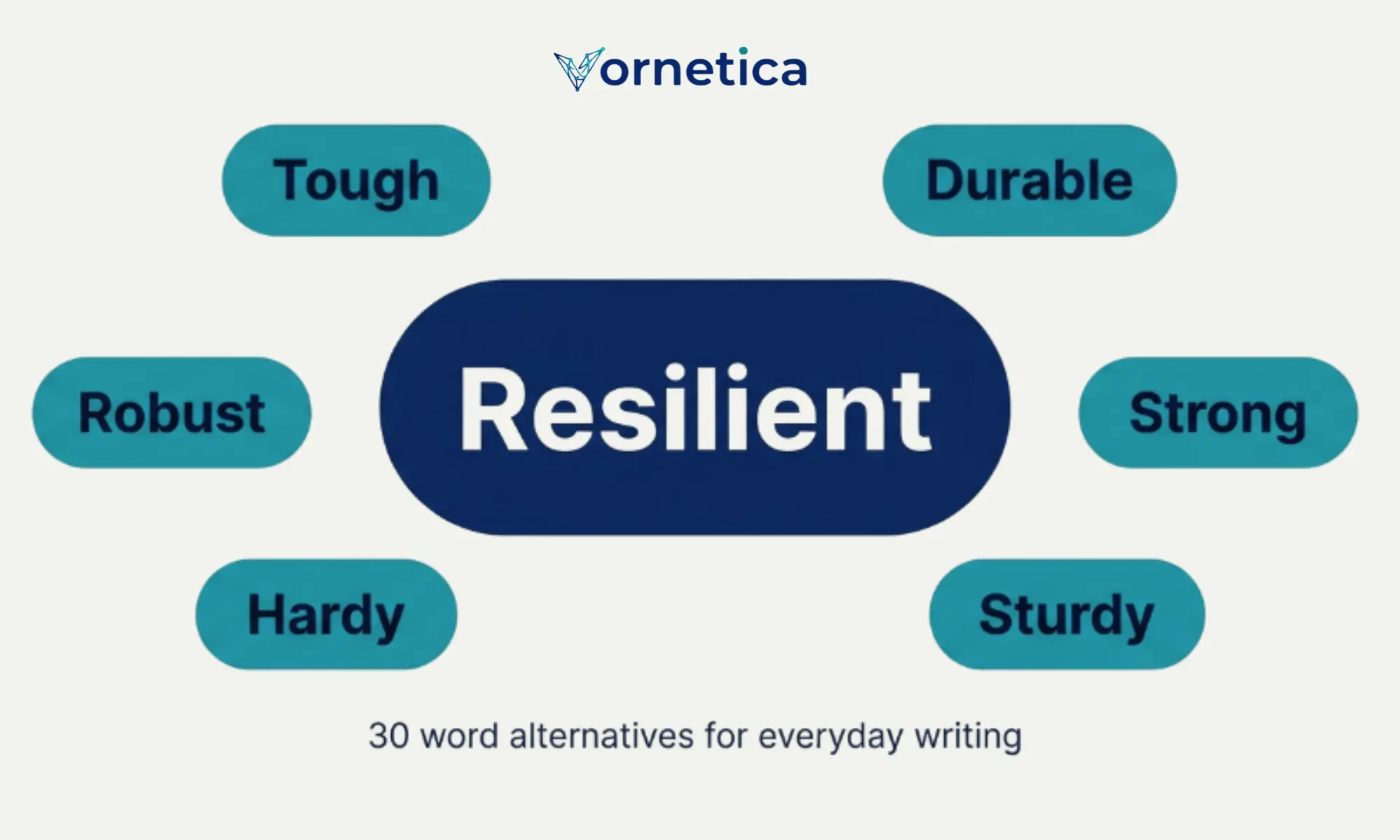
Another word for resilient is strong, tough, hardy, adaptable, or durable. The best choice depends on whether you mean emotional strength, physical strength, or the ability to recover.
30 Synonyms for Resilent
1. Strong
Meaning:
Strong means able to deal with hard things without giving up.
Examples:
- She stayed strong after losing her job.
- He is strong enough to face this problem.
Best Used When:
Use it in casual speech, daily writing, and general descriptions.
2. Tough
Meaning:
Tough means able to handle pain, trouble, or hard situations.
Examples:
- She is tough and rarely gives up.
- This was a tough year, but he kept going.
Best Used When:
Use it in casual speech and everyday writing.
3. Hardy
Meaning:
Hardy means able to live or work well in difficult conditions.
Examples:
- These hardy plants can survive very cold weather.
- The hardy traveler walked through the storm.
Best Used When:
Use it for people, plants, animals, and physical conditions.
4. Durable
Meaning:
Durable means able to last a long time without being easily damaged.
Examples:
- This bag is strong and durable.
- We need durable shoes for the long trip.
Best Used When:
Use it mainly for products, materials, and physical objects.
5. Adaptable
Meaning:
Adaptable means able to change when a situation changes.
Examples:
- Good workers are adaptable when plans change.
- Mia is adaptable and learns new tasks quickly.
Best Used When:
Use it in work, school, and professional writing.
6. Flexible
Meaning:
Flexible means able to change your plans or actions when needed.
Examples:
- Tom is flexible when problems come up.
- We need a flexible plan for the trip.
Best Used When:
Use it in daily, academic, and workplace English.
7. Persistent
Meaning:
Persistent means continuing to try even when something is hard.
Examples:
- She was persistent and finally passed the test.
- His persistent effort helped the team win.
Best Used When:
Use it for goals, study, work, and long-term effort.
8. Determined
Meaning:
Determined means having a strong wish to reach a goal.
Examples:
- She was determined to finish the race.
- He is determined to improve his English.
Best Used When:
Use it in personal, academic, and professional writing.
9. Tenacious
Meaning:
Tenacious means not giving up even when something is very difficult.
Examples:
- The tenacious student kept studying after failing once.
- She was tenacious during the long project.
Best Used When:
Use it in formal writing, business writing, and strong descriptions.
10. Steadfast
Meaning:
Steadfast means staying firm and not changing your purpose.
Examples:
- He remained steadfast during the crisis.
- She was steadfast in her support for her friend.
Best Used When:
Use it in formal writing and serious situations.
11. Unyielding
Meaning:
Unyielding means refusing to give up, bend, or change.
Examples:
- His unyielding spirit helped him overcome many problems.
- She showed unyielding courage during the crisis.
Best Used When:
Use it in formal or powerful creative writing.
12. Enduring
Meaning:
Enduring means able to last or continue through a difficult time.
Examples:
- Their enduring friendship helped them through hard times.
- She showed enduring strength after the setback.
Best Used When:
Use it in formal writing and descriptions of long-lasting strength.
13. Robust
Meaning:
Robust means strong and able to work well under difficult conditions.
Examples:
- The company has a robust plan for emergencies.
- This robust system can handle heavy use.
Best Used When:
Use it in business, technical, and professional writing.
14. Vigorous
Meaning:
Vigorous means full of strength, energy, and power.
Examples:
- He made a vigorous effort to solve the problem.
- She enjoys a vigorous walk every morning.
Best Used When:
Use it for physical activity, effort, and energetic actions.
15. Sturdy
Meaning:
Sturdy means strong and not easy to break or damage.
Examples:
- We bought a sturdy table for the kitchen.
- The sturdy chair held his weight easily.
Best Used When:
Use it mainly for objects, buildings, and physical things.
16. Unbreakable
Meaning:
Unbreakable means very hard to damage or defeat.
Examples:
- Their friendship feels unbreakable.
- She has an unbreakable spirit.
Best Used When:
Use it in casual, emotional, or creative writing.
17. Invulnerable
Meaning:
Invulnerable means not easily hurt, harmed, or defeated.
Examples:
- No one is completely invulnerable to stress.
- The hero seemed invulnerable to every attack.
Best Used When:
Use it in formal, technical, or fictional writing.
18. Self-reliant
Meaning:
Self-reliant means able to manage problems without needing much help.
Examples:
- She became self-reliant after moving away from home.
- The self-reliant student solved the problem alone.
Best Used When:
Use it for people, personal growth, education, and work.
19. Resourceful
Meaning:
Resourceful means good at finding ways to solve problems.
Examples:
- He is resourceful when money is tight.
- She found a resourceful way to fix the broken tool.
Best Used When:
Use it when resilience comes from smart problem-solving.
20. Courageous
Meaning:
Courageous means willing to face fear or danger.
Examples:
- She was courageous during the difficult surgery.
- The courageous child spoke up for his friend.
Best Used When:
Use it in personal stories, formal writing, and serious situations.
21. Brave
Meaning:
Brave means willing to face something scary or difficult.
Examples:
- He was brave when he started at a new school.
- She was brave enough to tell the truth.
Best Used When:
Use it in casual speech, stories, and everyday writing.
22. Gritty
Meaning:
Gritty means showing courage and determination during hard times.
Examples:
- Her gritty attitude helped her finish the course.
- The team showed a gritty effort in the final game.
Best Used When:
Use it in sports, casual writing, and motivational content.
23. Resolute
Meaning:
Resolute means very firm about doing something.
Examples:
- He remained resolute after hearing the bad news.
- She was resolute in her decision to continue.
Best Used When:
Use it in formal writing, speeches, and serious discussions.
24. Unshakeable
Meaning:
Unshakeable means not easily changed, frightened, or weakened.
Examples:
- Her confidence remained unshakeable.
- He has an unshakeable belief in his team.
Best Used When:
Use it for confidence, beliefs, courage, and emotional strength.
25. Stoic
Meaning:
Stoic means staying calm and strong when facing pain or trouble.
Examples:
- He stayed stoic during the long wait.
- She gave a stoic response to the bad news.
Best Used When:
Use it for emotional control and calm behavior.
26. Survivor
Meaning:
A survivor is someone who continues after facing a very hard event.
Examples:
- She is a cancer survivor and an inspiration to others.
- The flood survivor returned home safely.
Best Used When:
Use it for people who have lived through serious hardship.
27. Recovery-minded
Meaning:
Recovery-minded means focused on getting better after a setback.
Examples:
- The recovery-minded athlete returned to training slowly.
- His recovery-minded approach helped him rebuild his routine.
Best Used When:
Use it in wellness, sports, personal growth, and recovery contexts.
28. Persevering
Meaning:
Persevering means continuing to work toward something despite problems.
Examples:
- The persevering student kept practicing every day.
- Her persevering nature helped her complete the project.
Best Used When:
Use it in academic writing, motivational writing, and personal stories.
29. Persistent-minded
Meaning:
Persistent-minded describes someone who keeps working toward a goal.
Examples:
- The persistent-minded worker did not quit after one failure.
- A persistent-minded learner keeps practicing new skills.
Best Used When:
Use it when describing steady effort toward a goal.
30. Elastic
Meaning:
Elastic can describe something that can bend, change, or recover without breaking.
Examples:
- The elastic material returned to its original shape.
- Her elastic approach helped the team adjust to change.
Best Used When:
Use it mainly in technical or creative contexts, especially for materials or ideas.
Comparison Table
| Synonym | Tone (Formal/Neutral/Casual) | Best Used In (writing/speech/technical) |
| Strong | Neutral | Writing / Speech |
| Tough | Casual | Speech / Writing |
| Hardy | Neutral | Writing / Technical |
| Durable | Neutral | Technical / Writing |
| Adaptable | Neutral | Writing / Speech |
| Flexible | Neutral | Writing / Speech |
| Persistent | Neutral | Writing / Speech |
| Determined | Neutral | Writing / Speech |
| Tenacious | Formal | Writing |
| Steadfast | Formal | Writing / Speech |
| Unyielding | Formal | Writing |
| Enduring | Formal | Writing |
| Robust | Formal | Technical / Writing |
| Vigorous | Formal | Writing / Speech |
| Sturdy | Neutral | Writing / Technical |
| Unbreakable | Casual | Speech / Creative |
| Invulnerable | Formal | Technical / Creative |
| Self-reliant | Neutral | Writing / Speech |
| Resourceful | Neutral | Writing / Speech |
| Courageous | Formal | Writing / Speech |
| Brave | Casual | Speech / Writing |
| Gritty | Casual | Speech / Writing |
| Resolute | Formal | Writing / Speech |
| Unshakeable | Neutral | Writing / Speech |
| Stoic | Neutral | Writing / Speech |
| Survivor | Neutral | Writing / Speech |
| Recovery-minded | Neutral | Writing |
| Persevering | Formal | Writing |
| Persistent-minded | Neutral | Writing |
| Elastic | Technical | Technical / Writing |
Frequently Asked Questions
What is another word for resilient?
Strong, tough, hardy, adaptable, and persistent are common synonyms for resilient. The best choice depends on the exact meaning you need.
What is the correct spelling of resilent?
The correct spelling is resilient. “Resilent” is a common spelling mistake.
What does resilient mean in simple English?
Resilient means able to recover after a problem or keep going during a hard time. A resilient person does not give up easily.
What is a good synonym for resilient in writing?
Adaptable, persistent, determined, and tenacious are good choices in writing. Pick the word that matches the type of strength you mean.
What is the opposite of resilient?
The opposite can be fragile, weak, or vulnerable. The best opposite depends on the sentence.
Practice Exercise
Fill in each blank with the best synonym from the list above.
- Sara stayed ______ after she failed her first driving test.
- We need a ______ material that will not break easily.
- The student was ______ and kept studying every night.
- Good workers are ______ when plans change suddenly.
- The rescue worker was ______ enough to face the dangerous situation.
Answer Key
- determined
- durable
- persistent
- adaptable
- courageous
Key Takeaways Box
- Strong is a simple synonym for resilient in everyday English.
- Tough works well in casual speech.
- Adaptable is useful when someone handles change well.
- Persistent and tenacious show that someone keeps trying.
- Durable and sturdy are better for physical objects.
- Courageous and brave focus more on facing fear or danger.
- Tip: Choose a synonym based on the exact type of strength you want to describe.
Conclusion
Learning synonyms for resilent can make your English clearer, stronger, and more natural.
Words such as strong, tough, adaptable, persistent, determined, and tenacious can help you avoid repeating the same word.
They are useful in essays, blogs, emails, conversations, and professional writing. Remember that “resilent” is usually a misspelling of resilient.
Practice these words in your daily sentences to build confidence. When you need another useful word, search the site for more simple synonym guides.