Have you ever watched a group project change after one person joined the team? The mood shifts, people talk more, and the way they work together changes.
These changing patterns are part of the dynamics of the group.
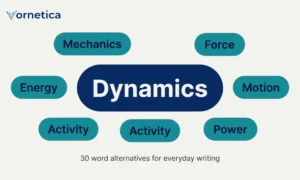
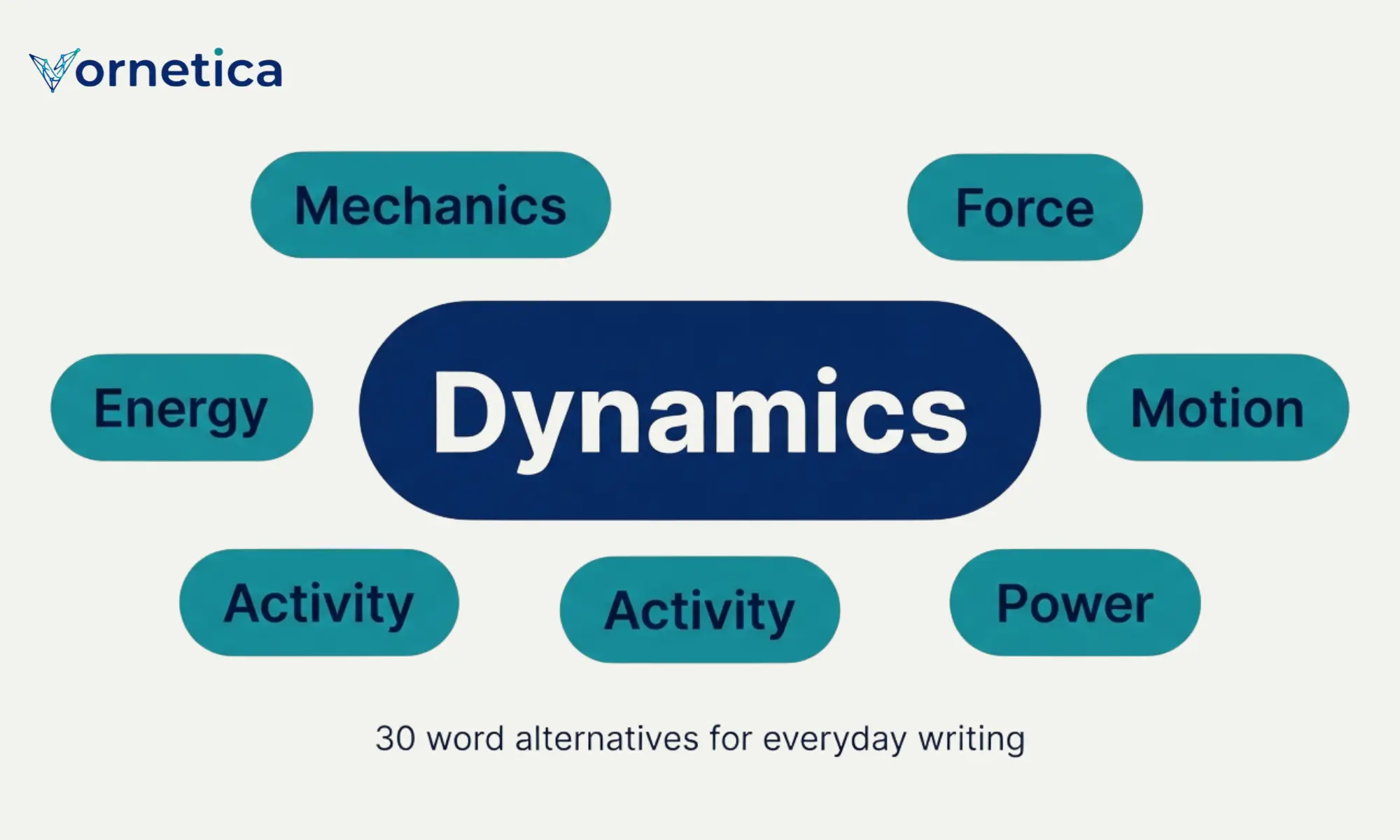
The word dynamics can describe how people interact, how things change, or how forces work together.
The best synonym depends on the situation. For example, “relationships” may work when talking about people, while “forces” may fit science.
Learning synonyms for dynamics helps you choose clearer words. Students can use them in essays and reports.
Bloggers and content writers can avoid repeating the same word. Daily English users can also sound more natural.
This dynamics synonym list gives you 30 useful choices with simple meanings and examples.
Quick Answer Box
What is another word for dynamics? Common synonyms include interactions, relationships, forces, patterns, and interplay. The best choice depends on whether you are talking about people, change, systems, or physical forces.
Main Content – Synonyms List
1. Interactions
Meaning: Interactions are the ways people or things act with each other.
Examples:
- The teacher watched the students’ interactions.
- Good interactions can build trust.
For related vocabulary about help and support, you can also explore synonyms for assistance.
Best Used When: Talking about people, groups, or systems affecting each other.
2. Relationships
Meaning: Relationships are the connections between people, groups, or things.
Examples:
- Their relationships changed after the meeting.
- Strong relationships help teams work well.
When discussing how people connect in groups, related vocabulary such as synonyms for attendance can also be useful for expanding your word choices.
Best Used When: Discussing personal, social, or professional connections.
3. Forces
Meaning: Forces are powers that cause movement, change, or action.
Examples:
- Several forces shaped the final decision.
- The two forces pushed against each other.
Best Used When: Writing about science, power, conflict, or major influences.
4. Patterns
Meaning: Patterns are ways that actions or events happen again and again.
Examples:
- We noticed patterns in customer behavior.
- These patterns changed over time.
Best Used When: Describing repeated actions, trends, or behavior.
5. Interplay
Meaning: Interplay is the way two or more things affect each other.
Examples:
- The story shows the interplay between fear and hope.
- The interplay of ideas made the debate useful.
For workplace situations, the idea of people working together can also connect with synonyms for collaboration.
Best Used When: Writing about complex relationships between ideas or factors.
6. Trends
Meaning: Trends are general directions in which something is changing.
Examples:
- We studied recent trends in online shopping.
- These trends may affect small businesses.
Best Used When: Discussing changes in data, culture, business, or public behavior.
7. Developments
Meaning: Developments are changes or events that happen over time.
Examples:
- New developments changed the project.
- We followed the latest developments closely.
Best Used When: Talking about ongoing changes or new events.
8. Changes
Meaning: Changes are differences that happen over time.
Examples:
- The team went through many changes.
- Small changes improved the plan.
When many unexpected changes happen at once, vocabulary such as synonyms for chaos can help describe the situation more clearly.
Best Used When: Using simple, everyday English.
9. Shifts
Meaning: Shifts are noticeable changes from one state or position to another.
Examples:
- There was a shift in public opinion.
- The company made a shift toward online sales.
Best Used When: Describing a clear change in direction, attitude, or focus.
10. Activity
Meaning: Activity means the actions or events happening in a place or system.
Examples:
- There was a lot of activity in the office.
- Online activity increased during the sale.
Best Used When: Talking about general action or movement.
11. Behavior
Meaning: Behavior is the way a person, group, or thing acts.
Examples:
- The study examined student behavior.
- His behavior changed after the discussion.
Best Used When: Discussing people, animals, customers, or groups.
12. Movements
Meaning: Movements are changes in position, direction, or action.
Examples:
- The coach studied the players’ movements.
- Social movements can change communities.
Best Used When: Talking about physical action, groups, or social change.
13. Processes
Meaning: Processes are sets of actions that lead to a result.
Examples:
- We studied the processes behind the change.
- Clear processes help teams work faster.
Best Used When: Discussing business, science, work, or systems.
14. Mechanisms
Meaning: Mechanisms are ways that something works or produces an effect.
Examples:
- The report explains the mechanisms behind growth.
- Scientists studied the mechanisms of the machine.
Best Used When: Writing in technical, scientific, or formal contexts.
15. Workings
Meaning: Workings are the way something operates or functions.
Examples:
- She explained the workings of the system.
- I wanted to understand the workings of the machine.
Best Used When: Explaining how a system, device, or organization works.
16. Functioning
Meaning: Functioning means the way something works or operates.
Examples:
- Good communication supports team functioning.
- The report examined the functioning of the system.
Best Used When: Writing about organizations, systems, or technical subjects.
17. Activity Patterns
Meaning: Activity patterns are repeated ways that actions happen.
Examples:
- The app tracks daily activity patterns.
- Researchers found new activity patterns in the group.
Best Used When: Discussing repeated behavior in data or research.
18. Exchanges
Meaning: Exchanges are acts of giving, receiving, or sharing between people or groups.
Examples:
- Their exchanges became more friendly.
- Cultural exchanges can build understanding.
Best Used When: Talking about communication, ideas, goods, or social contact.
19. Connections
Meaning: Connections are links between people, ideas, events, or things.
Examples:
- The study found connections between sleep and learning.
- Strong connections helped the team succeed.
Best Used When: Using clear and friendly language for links or relationships.
20. Relations
Meaning: Relations are the connections or dealings between people or groups.
Examples:
- Good relations improved the workplace.
- The two teams built better relations.
Best Used When: Writing about groups, organizations, countries, or formal social links.
21. Tensions
Meaning: Tensions are feelings of stress or conflict between people or groups.
Examples:
- Tensions grew during the meeting.
- The manager tried to reduce tensions.
When conflict or limits on information affect a group, related vocabulary such as synonyms for censorship may also help you describe the situation.
Best Used When: Describing conflict, pressure, or disagreement.
22. Influences
Meaning: Influences are people or things that affect an action or result.
Examples:
- Many influences shaped her decision.
- Family can have a strong influence on behavior.
Best Used When: Explaining why something changes or develops.
23. Factors
Meaning: Factors are things that help cause a result or change.
Examples:
- Cost is an important factor in the decision.
- Several factors affected the final result.
Best Used When: Writing essays, reports, research papers, or explanations.
24. Momentum
Meaning: Momentum is growing strength that keeps an action or change moving.
Examples:
- The campaign gained momentum after the event.
- The project lost momentum during the delay.
Best Used When: Describing progress, growth, movements, or ongoing change.
25. Flow
Meaning: Flow is the way something moves smoothly from one point to another.
Examples:
- The manager improved the flow of work.
- Good design makes the flow of information clear.
Best Used When: Talking about information, work, traffic, ideas, or movement.
26. Progression
Meaning: Progression is the way something develops step by step.
Examples:
- The book shows the progression of the story.
- We tracked the progression of the project.
Best Used When: Discussing stages of change, development, or growth.
27. Evolution
Meaning: Evolution is the gradual way something changes over time.
Examples:
- We studied the evolution of the company.
- The website shows the evolution of the brand.
Best Used When: Describing long-term change or development.
28. Mechanics
Meaning: Mechanics are the basic ways that something works.
Examples:
- The teacher explained the mechanics of the game.
- We need to understand the mechanics of the system.
Best Used When: Discussing technical systems, games, machines, or processes.
29. Conditions
Meaning: Conditions are the situations that affect what happens.
Examples:
- Weather conditions changed the plan.
- Working conditions affect employee performance.
Best Used When: Describing situations, environments, or outside influences.
30. Circumstances
Meaning: Circumstances are the facts or conditions around an event.
Examples:
- The team changed its plan because of new circumstances.
- Different circumstances can lead to different choices.
Best Used When: Writing about situations, events, or reasons for change.
Comparison Table
| Synonym | Tone | Best Used In |
| Interactions | Neutral | Speech, writing |
| Relationships | Neutral | Speech, writing |
| Forces | Neutral | Technical, writing |
| Patterns | Neutral | Writing, technical |
| Interplay | Formal | Writing |
| Trends | Neutral | Writing, technical |
| Developments | Formal | Writing |
| Changes | Neutral | Speech, writing |
| Shifts | Neutral | Writing, speech |
| Activity | Neutral | Speech, writing |
| Behavior | Neutral | Writing, technical |
| Movements | Neutral | Speech, writing |
| Processes | Formal | Writing, technical |
| Mechanisms | Formal | Technical |
| Workings | Neutral | Writing, speech |
| Functioning | Formal | Writing, technical |
| Activity Patterns | Formal | Technical |
| Exchanges | Neutral | Speech, writing |
| Connections | Neutral | Speech, writing |
| Relations | Formal | Writing |
| Tensions | Neutral | Speech, writing |
| Influences | Neutral | Writing, speech |
| Factors | Formal | Writing, technical |
| Momentum | Neutral | Speech, writing |
| Flow | Neutral | Speech, writing |
| Progression | Formal | Writing |
| Evolution | Formal | Writing, technical |
| Mechanics | Formal | Technical |
| Conditions | Neutral | Speech, writing |
| Circumstances | Formal | Writing |
Frequently Asked Questions
What is another word for dynamics?
Common words include interactions, relationships, forces, patterns, and interplay. The best synonym depends on the context.
What is a simple synonym for dynamics?
Interactions and changes are simple choices. They work well in many everyday sentences.
What is a synonym for dynamics in a relationship?
Relationships, interactions, and interplay can describe how people affect each other in a relationship.
What is a synonym for group dynamics?
Group interactions, relationships, behavior, and patterns can describe how members of a group act and respond to each other.
What is a formal word for dynamics?
Interplay, mechanisms, processes, and factors can work in formal writing, depending on the meaning.
Practice Exercise
Fill in each blank with the best synonym from the list.
- The manager studied the team’s ________ before changing the work plan.
- Several ________ affected the company’s final decision.
- The two teams had good ________ during the joint project.
- The machine’s ________ were explained in the training session.
- The project gained ________ after more people joined the team.
Answer Key
- interactions
- factors
- relations
- mechanics
- momentum
Key Takeaways
- Interactions work well for people or groups acting with each other.
- Relationships describe connections between people or groups.
- Forces can describe power, influence, or physical action.
- Patterns are useful for repeated actions or behaviors.
- Interplay fits situations where several things affect each other.
- Always choose a synonym based on the exact meaning and context.
Conclusion
Learning synonyms for dynamics gives you more ways to explain change, relationships, movement, and interaction.
These words can make your essays clearer, your blog posts less repetitive, and your everyday speech more natural.
Try using words like interactions, patterns, forces, shifts, and interplay in emails, essays, and daily conversations.
Practice one new word each day. When you need another useful word, search for another synonym on the site.