Imagine writing a post and being told that some parts cannot be shown.
Maybe a video is removed, a book is blocked, or a news story is changed before people can read it. This is a simple example of censorship.
Censorship means stopping, limiting, or controlling information, speech, art, or other content.
The word is useful when you talk about rules that control what people can see, read, hear, or share.
Learning synonyms for censorship can help students write better essays. Bloggers and content writers can avoid using the same word again and again.
Daily English users can also choose a word that fits the exact situation.
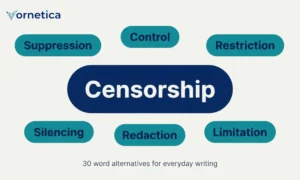
If you need another word for censorship, this list gives you 30 useful choices. Some are formal, while others work better in everyday speech.
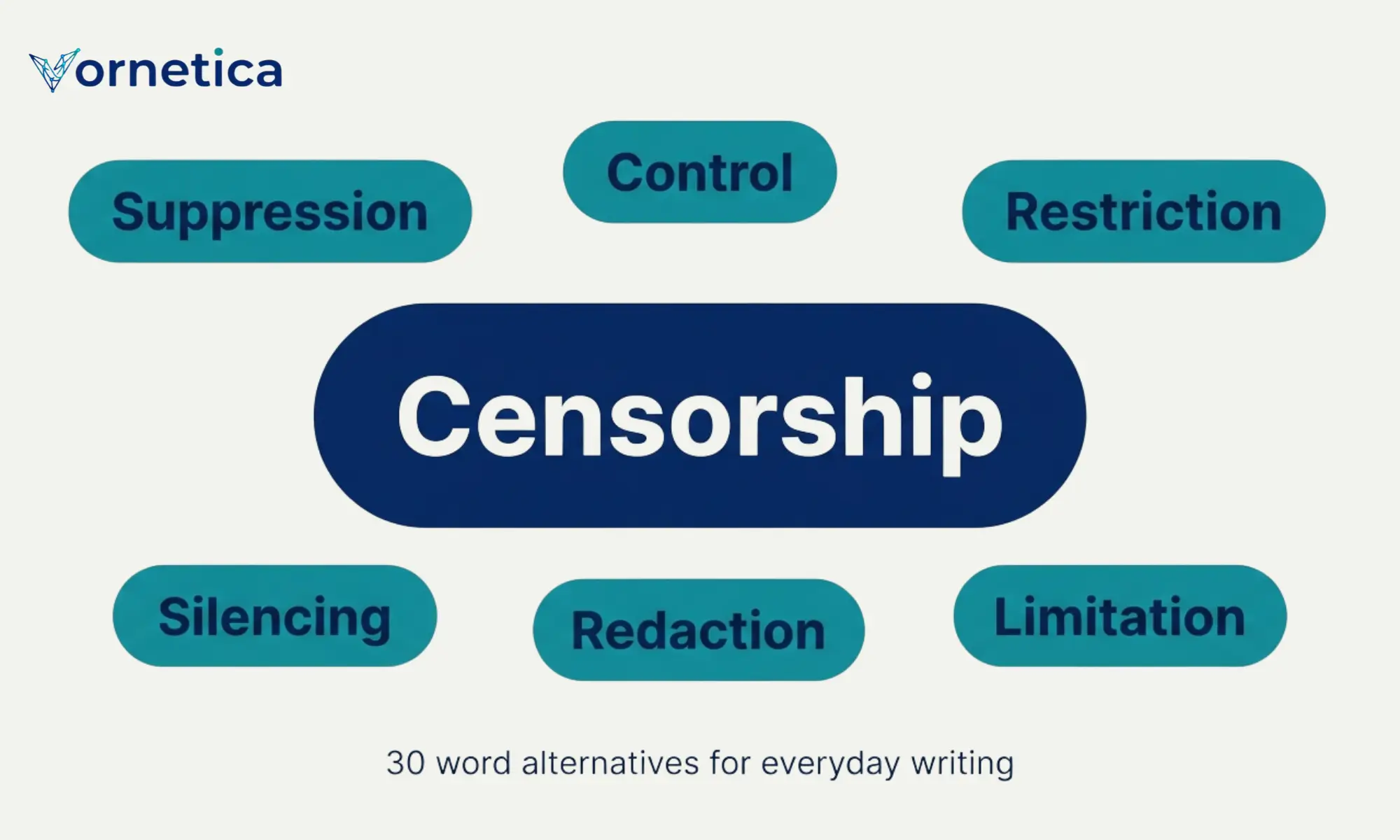
Quick Answer: Another word for censorship is suppression, restriction, control, silencing, or prohibition.
The best synonym depends on whether you mean limiting information, stopping speech, or banning content.
Top 5 synonyms: suppression, restriction, control, silencing, prohibition
1. Suppression
Meaning: Suppression means stopping something from being seen, heard, or shared.
Examples:
- The government faced claims of news suppression.
- The writer spoke about the suppression of ideas.
Best Used When: Use it in formal writing about information, speech, or ideas being stopped.
2. Restriction
Meaning: Restriction means putting a limit on what people can do or access.
Examples:
- The website has restrictions on certain content.
- New restrictions limited what users could post.
Best Used When: Use it when rules place limits on content, speech, or access.
3. Control
Meaning: Control means having power over what can be shown, shared, or said.
Examples:
- The group wanted more control over public information.
- Media control can affect what people see.
Best Used When: Use it when discussing power over information or communication.
4. Silencing
Meaning: Silencing means stopping someone from speaking or sharing an opinion.
Examples:
- The journalist said the rule was silencing critics.
- Silencing people can stop useful ideas from being heard.
Best Used When: Use it when the focus is on stopping people from speaking.
5. Prohibition
Meaning: Prohibition means officially saying that something is not allowed.
Examples:
- The law included a prohibition on certain publications.
- The prohibition stopped the book from being sold.
Best Used When: Use it in formal, legal, or official writing.
6. Banning
Meaning: Banning means officially stopping something from being used, shown, or shared.
Examples:
- The school considered banning the controversial video.
- Banning the book caused a public debate.
Best Used When: Use it when content is completely stopped by a rule or authority.
7. Suppressing
Meaning: Suppressing means keeping something from being known, seen, or heard.
Examples:
- The report accused officials of suppressing information.
- Suppressing the story made people more curious.
Best Used When: Use it in formal discussions about hidden or blocked information.
8. Limitation
Meaning: Limitation means a rule or condition that reduces what is possible.
Examples:
- The platform has a limitation on certain types of posts.
- These limitations affect online discussions.
Best Used When: Use it when censorship involves limits rather than a total ban.
9. Restraint
Meaning: Restraint means holding something back or keeping it under control.
Examples:
- The editor showed restraint when discussing the case.
- Government restraint can affect public information.
Best Used When: Use it in formal writing about controlled speech or publishing.
10. Blockage
Meaning: Blockage means stopping something from reaching people.
Examples:
- The blockage prevented users from opening the site.
- The news blockage lasted for several days.
Best Used When: Use it when access to information or websites is physically or digitally stopped.
11. Filtering
Meaning: Filtering means removing some information before people receive it.
Examples:
- The app uses filtering to remove certain posts.
- Content filtering can change what users see.
Best Used When: Use it for websites, apps, social media, and digital content.
12. Editing
Meaning: Editing means changing content before it is published or shared.
Examples:
- The editor made heavy changes to the report.
- Some readers questioned the editing of the interview.
Best Used When: Use it when information is changed before publication.
13. Redaction
Meaning: Redaction means hiding or removing parts of a document.
Examples:
- The report contained several redactions.
- The names were removed through redaction.
Best Used When: Use it for official, legal, or confidential documents.
14. Obstruction
Meaning: Obstruction means stopping something from moving forward or being shared.
Examples:
- The group called the rule an obstruction to free speech.
- The obstruction delayed the release of the report.
Best Used When: Use it in formal writing about barriers to information or speech.
15. Interference
Meaning: Interference means getting involved in something in a way that changes or limits it.
Examples:
- The reporter complained about outside interference.
- Political interference can affect media work.
Best Used When: Use it when another person or group affects communication or publishing.
16. Curtailment
Meaning: Curtailment means reducing or stopping something before it can continue freely.
Examples:
- The law led to a curtailment of public discussion.
- Journalists reported a curtailment of media freedom.
Best Used When: Use it in formal or academic writing.
17. Curbing
Meaning: Curbing means reducing or controlling something.
Examples:
- The new rule focused on curbing online speech.
- Officials discussed ways of curbing harmful content.
Best Used When: Use it when something is limited but not completely stopped.
18. Repression
Meaning: Repression means using power to stop people from expressing ideas or opinions.
Examples:
- The report described political repression.
- Repression made public discussion more difficult.
Best Used When: Use it in serious political, historical, or academic writing.
19. Muzzling
Meaning: Muzzling means stopping someone from speaking freely.
Examples:
- The journalist accused the company of muzzling employees.
- Muzzling critics can reduce open discussion.
Best Used When: Use it when talking about people being prevented from speaking openly.
20. Gatekeeping
Meaning: Gatekeeping means deciding what information people are allowed to receive.
Examples:
- The editor was accused of gatekeeping important information.
- Online gatekeeping can affect public discussion.
Best Used When: Use it in media, journalism, publishing, and online communication.
21. Blackout
Meaning: A blackout means stopping information or communication from being available.
Examples:
- The news blackout lasted through the night.
- The blackout left many people without updates.
Best Used When: Use it for a complete or temporary stop in information access.
22. Censoring
Meaning: Censoring means removing or changing content that someone does not want people to see.
Examples:
- The platform was criticized for censoring posts.
- Censoring the image changed the meaning of the story.
Best Used When: Use it when directly describing the act of applying censorship.
23. Silencing of Speech
Meaning: Silencing of speech means preventing people from freely expressing their views.
Examples:
- The law was described as a silencing of speech.
- Many writers feared the silencing of speech.
Best Used When: Use it in essays and discussions about freedom of expression.
When discussing different views, writers often need precise language. For example, a disagreement is not always censorship. A simple argument is a different idea from preventing someone from sharing information.
24. Information Control
Meaning: Information control means managing what information people can receive or share.
Examples:
- The policy gave officials more information control.
- Information control can shape public knowledge.
Best Used When: Use it in academic, political, media, or technical writing.
25. Content Control
Meaning: Content control means deciding what content can be published or viewed.
Examples:
- The website uses strict content control.
- Content control is common on large online platforms.
Best Used When: Use it for websites, social media, apps, and digital platforms.
26. Publication Ban
Meaning: A publication ban is an official order stopping certain information from being published.
Examples:
- The court issued a publication ban.
- The publication ban stopped newspapers from sharing the details.
Best Used When: Use it in legal or news-related contexts.
27. Speech Restriction
Meaning: Speech restriction means placing limits on what people can say.
Examples:
- The new rule created a speech restriction.
- Critics discussed the effects of speech restrictions.
Best Used When: Use it in formal writing about speech and communication.
28. Media Suppression
Meaning: Media suppression means stopping or limiting news and other media content.
Examples:
- The report focused on media suppression.
- Media suppression can make important stories harder to find.
Best Used When: Use it in journalism, politics, history, and academic writing.
29. Content Filtering
Meaning: Content filtering means checking and removing certain content from a platform.
Examples:
- The app uses content filtering to block some posts.
- Content filtering can protect users from unwanted material.
Best Used When: Use it for websites, apps, social networks, and technical discussions.
30. Information Restriction
Meaning: Information restriction means limiting the information people can access.
Examples:
- The new policy created information restrictions.
- Information restriction can affect public knowledge.
Best Used When: Use it in formal, academic, or policy-related writing.
Comparison Table
| Synonym | Tone | Best Used In |
| Suppression | Formal | Writing |
| Restriction | Neutral | Writing/Speech |
| Control | Neutral | Writing/Speech |
| Silencing | Neutral | Speech/Writing |
| Prohibition | Formal | Technical/Writing |
| Banning | Neutral | Speech/Writing |
| Filtering | Neutral | Technical |
| Redaction | Formal | Technical/Writing |
| Repression | Formal | Writing |
| Gatekeeping | Neutral | Writing/Technical |
| Blackout | Neutral | Writing/Speech |
| Censoring | Neutral | Writing/Speech |
| Information Control | Formal | Technical/Writing |
| Content Control | Neutral | Technical |
| Publication Ban | Formal | Writing/Technical |
| Speech Restriction | Formal | Writing/Speech |
| Media Suppression | Formal | Writing |
| Content Filtering | Neutral | Technical |
| Information Restriction | Formal | Writing/Technical |
Words about communication can describe very different actions. For example, gatekeeping can describe a person deciding what gets published, while redaction usually means hiding specific parts of a document.
It is also useful to learn related vocabulary. If you are comparing one idea with another, an analogy can make a difficult point easier to understand.
Likewise, words such as “win” and “loss” may appear when people discuss the results of public debates or disputes. Learning synonyms for win can help you vary your writing when describing a successful result.
Frequently Asked Questions
What is another word for censorship?
Common synonyms include suppression, restriction, control, silencing, and prohibition. The right word depends on the situation.
What is a simple synonym for censorship?
Restriction is a simple synonym when censorship means putting limits on information or speech.
What is the opposite of censorship?
The opposite can be described as free expression or open access to information. The exact opposite depends on the context.
Is suppression the same as censorship?
Suppression and censorship are closely related. Suppression focuses on stopping something from being known, seen, or heard.
What is censorship in simple words?
Censorship means controlling or stopping information, speech, art, or other content from being shared freely.
Practice Exercise
Fill in each blank with the correct synonym from the list above.
- The court issued a __________ on the publication of the report.
- The website uses content __________ to remove harmful posts.
- The journalist spoke about media __________.
- The report contained several __________ that hid private names.
- The new rule placed a __________ on certain types of speech.
Answer Key
- publication ban
- filtering
- suppression
- redactions
- restriction
Key Takeaways
- Suppression means stopping information or ideas from being shared.
- Restriction means placing limits on speech or content.
- Silencing focuses on stopping people from speaking.
- Prohibition means something is officially not allowed.
- Redaction means hiding parts of a document.
- Choose a synonym based on the exact situation and tone.
Related vocabulary can also help you describe conversations and public discussions. For example, yapping refers to talking a lot, especially when the speech is not seen as useful or important.
People may also use words about loyalty when discussing public groups or institutions. Learning synonyms for allegiance can give you more ways to describe loyalty and support.
Conclusion
Learning synonyms for censorship can make your writing clearer and more flexible.
Students can use them in essays, while bloggers and content writers can avoid repeating the same word.
These words can also improve daily conversations and emails. Start with simple terms like restriction, control, and suppression, then learn more formal words as your vocabulary grows.
Practice them in real sentences, and when you need another useful word, search for another synonym on the site.