Have you ever had a small disagreement with a friend that quickly turned into a long debate?
Maybe you wanted to watch one movie, while your friend wanted another. That simple difference can become an argument.
The word argument can mean a disagreement between people. It can also mean a reason used to support an idea.
Because of these meanings, choosing the right synonym can make your English much clearer.
Learning synonyms for argument helps students write better essays and helps bloggers avoid using the same word again and again.
Content writers can choose words that fit the tone of their work. Daily English users can also speak in a more natural way.
This guide gives you 30 useful synonyms for argument, with simple meanings and examples. You will also learn when each word works best.
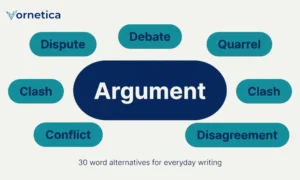
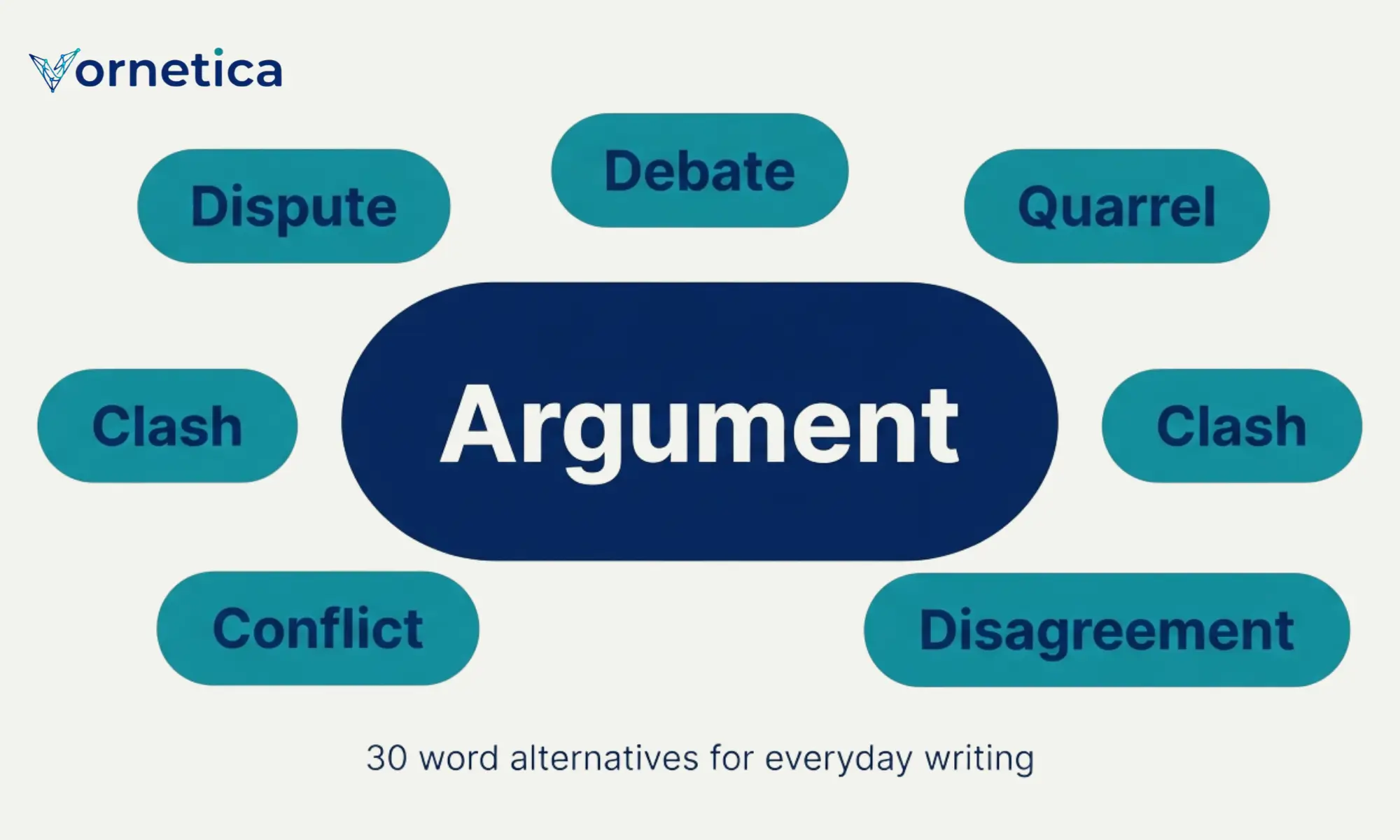
Quick Answer: Another word for argument can be dispute, disagreement, debate, quarrel, or conflict.
The best synonym depends on whether you mean a simple difference of opinion, a heated fight, or a reason that supports an idea.
1. Disagreement
Meaning: A disagreement is a situation where two people do not share the same opinion.
Examples:
- We had a disagreement about the best route.
- Their disagreement ended after they talked.
Best Used When: Use it for a neutral and common difference of opinion.
2. Debate
Meaning: A debate is a discussion where people give different views about a topic.
Examples:
- The students had a debate about school rules.
- We watched a debate on TV last night.
Best Used When: Use it for formal or organized discussions.
3. Dispute
Meaning: A dispute is a serious disagreement between people or groups.
Examples:
- The neighbors had a dispute over the fence.
- They are trying to settle the dispute.
Best Used When: Use it for serious personal, business, or legal disagreements.
4. Quarrel
Meaning: A quarrel is an angry argument between people.
Examples:
- The brothers had a quarrel over the game.
- She had a quarrel with her sister.
Best Used When: Use it for personal arguments, especially between people who know each other.
5. Conflict
Meaning: Conflict is a serious difference between people, groups, or ideas.
Examples:
- The two teams were in conflict over the plan.
- His work caused conflict with his manager.
Best Used When: Use it for serious or ongoing disagreements.
6. Fight
Meaning: A fight can mean a strong verbal argument or a physical struggle.
Examples:
- They had a fight about money.
- I do not want to start a fight.
Best Used When: Use it in casual speech for a strong personal argument.
7. Row
Meaning: A row is a loud or angry argument, mainly used in British English.
Examples:
- The couple had a row last night.
- We heard a row coming from the next room.
Best Used When: Use it in casual British English.
8. Spat
Meaning: A spat is a short and usually minor argument.
Examples:
- The friends had a small spat.
- Their spat was over in ten minutes.
Best Used When: Use it for small and temporary arguments.
9. Squabble
Meaning: A squabble is a silly or unimportant argument.
Examples:
- The children had a squabble over a toy.
- Their little squabble did not last long.
Best Used When: Use it for petty or minor arguments.
10. Bickering
Meaning: Bickering means arguing about small things again and again.
Examples:
- The children were bickering in the back seat.
- I am tired of their constant bickering.
Best Used When: Use it for repeated small arguments.
11. Altercation
Meaning: An altercation is a short and angry argument, sometimes involving physical action.
Examples:
- An altercation started outside the store.
- Police arrived after the altercation.
Best Used When: Use it in formal reports or news-style writing.
12. Clash
Meaning: A clash is a strong disagreement between people or groups.
Examples:
- The two leaders clashed over the new plan.
- Their views often clash.
Best Used When: Use it for strong differences in views, plans, or interests.
13. Contention
Meaning: Contention is a disagreement or point that people strongly argue about.
Examples:
- The price was a major point of contention.
- Their main contention was about timing.
Best Used When: Use it in formal, academic, or professional writing.
14. Wrangle
Meaning: A wrangle is a long and difficult argument.
Examples:
- The teams had a wrangle over the contract.
- They spent hours wrangling about the budget.
Best Used When: Use it for long arguments, especially in business or formal settings.
15. Tiff
Meaning: A tiff is a small and short argument between people.
Examples:
- They had a tiff before dinner.
- Her tiff with her friend soon ended.
Best Used When: Use it for light or minor personal arguments.
16. Feud
Meaning: A feud is a long and bitter disagreement between people or groups.
Examples:
- The two families have had a feud for years.
- Their old feud started over land.
Best Used When: Use it for long-lasting personal or group conflicts.
17. Difference of Opinion
Meaning: A difference of opinion means that people think differently about something.
Examples:
- We have a difference of opinion about the plan.
- A difference of opinion does not mean we are enemies.
Best Used When: Use it when you want a polite and neutral expression.
18. Controversy
Meaning: Controversy is a public disagreement about an issue or idea.
Examples:
- The new rule caused a lot of controversy.
- The decision became a major controversy.
Best Used When: Use it for public, social, political, or media-related disagreements.
19. Discussion
Meaning: A discussion is a talk where people share ideas about a topic.
Examples:
- We had a discussion about the project.
- The discussion helped us find a solution.
Best Used When: Use it when the conversation is calm and focused on ideas.
For example, when discussing a new idea, it can help to unlock different ways of explaining your point instead of repeating the word “argument.”
20. Case
Meaning: A case is a set of reasons used to support an idea or position.
Examples:
- She made a strong case for more study time.
- He presented his case clearly.
Best Used When: Use it when presenting reasons in support of an idea.
21. Reasoning
Meaning: Reasoning is the process of using reasons to reach an idea or decision.
Examples:
- His reasoning was easy to understand.
- Good reasoning can make an essay stronger.
Best Used When: Use it in academic, logical, or analytical writing.
22. Rationale
Meaning: A rationale is the main reason behind a decision or action.
Examples:
- The manager explained the rationale for the change.
- We need a clear rationale for this decision.
Best Used When: Use it in formal, academic, or professional writing.
23. Justification
Meaning: Justification is a reason that shows why something is right or reasonable.
Examples:
- He gave a clear justification for the decision.
- The report needs better justification for this claim.
Best Used When: Use it in formal writing when explaining or defending a choice.
24. Assertion
Meaning: An assertion is a strong statement that someone says is true.
Examples:
- His assertion surprised everyone.
- She made an assertion without giving proof.
Best Used When: Use it in academic, formal, or analytical writing.
25. Claim
Meaning: A claim is something a person says is true, often as part of an argument.
Examples:
- The writer made a strong claim.
- Can you support that claim with evidence?
Best Used When: Use it in essays, articles, research, and discussions.
When making a strong claim in a blog post, clear examples can help readers understand your point. This is also useful when writing about events such as waving or other everyday actions.
26. Point
Meaning: A point is an idea or reason that someone gives during an argument or discussion.
Examples:
- You made a good point.
- I understand your point now.
Best Used When: Use it in everyday speech, discussions, and informal writing.
27. Position
Meaning: A position is the opinion or side that someone takes on an issue.
Examples:
- The writer explained her position clearly.
- His position on the issue has changed.
Best Used When: Use it in formal discussions, essays, and debates.
28. Counterargument
Meaning: A counterargument is a reason or idea that goes against another argument.
Examples:
- The essay includes a strong counterargument.
- She answered the counterargument with new evidence.
Best Used When: Use it mainly in academic and persuasive writing.
29. Yapping
Meaning: Yapping is informal speech for talking a lot, especially about things that seem unimportant.
Examples:
- He kept yapping about his new shoes.
- Stop yapping and listen for a minute.
Best Used When: Use it only in casual or humorous speech.
If you want more casual vocabulary for talking, you can also explore synonyms for yapping to find words that fit different everyday situations.
30. Strife
Meaning: Strife means serious trouble or conflict between people or groups.
Examples:
- The community suffered from years of strife.
- Political strife divided the group.
Best Used When: Use it in formal, literary, or serious writing.
Comparison Table
| Synonym | Tone | Best Used In |
| Disagreement | Neutral | Speech, writing |
| Debate | Formal | Speech, writing |
| Dispute | Formal | Writing, speech |
| Quarrel | Neutral | Speech, writing |
| Conflict | Neutral | Writing, speech |
| Fight | Casual | Speech |
| Row | Casual | Speech |
| Spat | Casual | Speech |
| Squabble | Casual | Speech, writing |
| Bickering | Casual | Speech, writing |
| Altercation | Formal | Writing |
| Clash | Neutral | Writing, speech |
| Contention | Formal | Writing |
| Wrangle | Neutral | Writing, speech |
| Tiff | Casual | Speech |
| Feud | Neutral | Writing, speech |
| Difference of Opinion | Neutral | Writing, speech |
| Controversy | Formal | Writing |
| Discussion | Neutral | Speech, writing |
| Case | Neutral | Writing, speech |
| Reasoning | Formal | Writing |
| Rationale | Formal | Writing |
| Justification | Formal | Writing |
| Assertion | Formal | Writing |
| Claim | Neutral | Writing, speech |
| Point | Neutral | Speech, writing |
| Position | Formal | Writing, speech |
| Counterargument | Formal | Writing |
| Yapping | Casual | Speech |
| Strife | Formal | Writing |
Frequently Asked Questions
What is another word for argument?
Common synonyms include disagreement, debate, dispute, quarrel, and conflict. The right word depends on the situation.
What is a polite word for argument?
Disagreement is a polite and neutral word for argument. You can also say difference of opinion.
What is a strong synonym for argument?
Conflict, dispute, or quarrel can describe a stronger argument. The best choice depends on the type of disagreement.
What is a formal synonym for argument?
Formal choices include dispute, contention, reasoning, rationale, justification, and counterargument. These words work well in essays and professional writing.
What is the difference between an argument and a debate?
An argument can be an angry disagreement, while a debate is usually an organized discussion of different views. The tone and setting are often different.
Practice Exercise
Fill in each blank with the best synonym from the list.
- The students had a formal ________ about school uniforms.
- The two neighbors had a small ________ about the parking space.
- The writer gave a strong ________ to support her main idea.
- The children kept ________ over who would use the tablet first.
- The essay presents a clear ________ against the main claim.
Answer Key
- Debate
- Dispute
- Case
- Bickering
- Counterargument
Key Takeaways
Remember these useful points:
- Disagreement is a simple and neutral word for argument.
- Debate works well for organized discussions.
- Dispute fits serious disagreements.
- Quarrel, spat, and tiff are useful for personal arguments.
- Claim, case, reasoning, and counterargument work well in essays.
- Choose a synonym based on the tone, situation, and type of argument.
A good vocabulary choice can make a sentence clearer. For example, if you write about trying to win an argument, “win” may describe the result, while “debate” describes the type of discussion.
You can also use different vocabulary when describing unusual actions. For example, if a story includes someone who can teleport, choosing the right synonym can make the writing feel more natural and varied.
Conclusion
Learning synonyms for argument gives you more ways to express disagreement, discussion, and reasons.
Words like disagreement, debate, dispute, conflict, claim, and counterargument can make your writing more clear and precise.
Practice these words in emails, essays, blog posts, and daily conversations. Pay attention to the tone before choosing a synonym.
When you are ready to improve another part of your vocabulary, search for another word on the site and keep learning.