Have you ever disagreed with a rule so much that you wanted to speak up?
Maybe students protest a school decision, workers protest unfair treatment, or people protest a new law. A protest is a way to show that you strongly disagree with something.
The phrase synonyms for protest means other words that can express disagreement, resistance, or public action.
Some words fit peaceful speech, while others describe large public events or strong resistance.
Learning synonyms for protest can make your English clearer and more interesting. Students can use them in essays.
Bloggers and content writers can avoid repeating the same word. Daily English users can also choose the right word for each situation.
This protest synonym list gives you 30 useful choices with simple meanings and examples.
Quick Answer Box
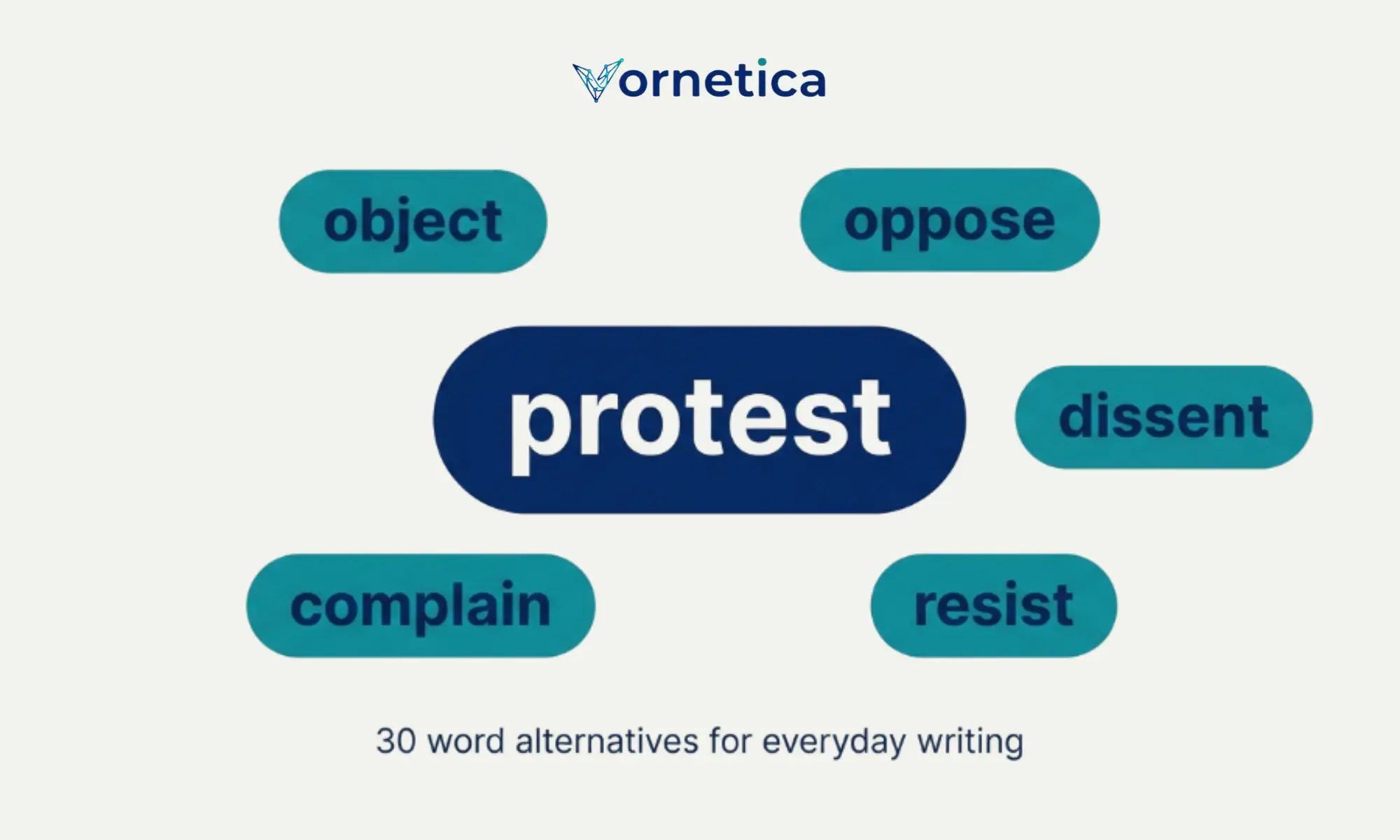
What is another word for protest? Common synonyms include objection, dissent, demonstration, opposition, and resistance. The best word depends on whether you mean spoken disagreement, public action, or strong resistance.
Main Content – 30 Synonyms for Protest
1. Objection
Meaning: An objection is a statement that shows you disagree with something.
Examples:
- She raised an objection to the new rule.
- His objection was clear and polite.
Best Used When: Use it for formal or polite disagreement.
2. Dissent
Meaning: Dissent means having or showing a different opinion.
Examples:
- Several workers expressed dissent.
- Her dissent was recorded during the meeting.
Best Used When: Use it in formal, political, or academic writing.
3. Demonstration
Meaning: A demonstration is a public event where people show what they support or oppose.
Examples:
- Thousands joined the demonstration.
- The demonstration remained peaceful.
Best Used When: Use it for organized public protests.
4. Opposition
Meaning: Opposition means strong disagreement with an idea, plan, or action.
Examples:
- The plan faced strong opposition.
- Local people showed opposition to the project.
Best Used When: Use it in formal writing, politics, and public discussions.
5. Resistance
Meaning: Resistance means refusing to accept or follow something.
Examples:
- The workers showed resistance to the new policy.
- Her resistance stopped the plan.
Best Used When: Use it for strong refusal or opposition.
6. Rally
Meaning: A rally is a public meeting where people gather to support or oppose something.
Examples:
- The group held a rally downtown.
- Many students attended the rally.
Best Used When: Use it for organized public gatherings.
7. March
Meaning: A march is a public walk where people show support or disagreement.
Examples:
- The group planned a peaceful march.
- Thousands joined the march on Saturday.
Best Used When: Use it for protests involving organized walking.
8. Complaint
Meaning: A complaint is something you say when you are unhappy about a problem.
Examples:
- She made a complaint about the service.
- His complaint was taken seriously.
Best Used When: Use it for personal or everyday problems.
9. Grievance
Meaning: A grievance is a serious complaint about unfair treatment.
Examples:
- The workers filed a grievance.
- He shared his grievance with the manager.
Best Used When: Use it in workplaces and formal situations.
10. Outcry
Meaning: An outcry is a strong public expression of anger or concern.
Examples:
- The decision caused a public outcry.
- There was an outcry over the unfair rule.
Best Used When: Use it for strong public reactions.
11. Uproar
Meaning: An uproar is a loud and angry reaction from many people.
Examples:
- The new rule caused an uproar.
- Parents created an uproar over the decision.
Best Used When: Use it for noisy or emotional public disagreement.
12. Remonstrance
Meaning: Remonstrance is a formal and strong expression of disagreement.
Examples:
- The group sent a remonstrance to the council.
- His remonstrance was respectful but firm.
Best Used When: Use it in formal or literary writing.
13. Petition
Meaning: A petition is a written request signed by people who want a change.
Examples:
- Students started a petition against the rule.
- More than 500 people signed the petition.
Best Used When: Use it for formal requests for change.
14. Strike
Meaning: A strike happens when workers stop working to demand better treatment or changes.
Examples:
- The workers went on strike.
- The strike lasted for three days.
Best Used When: Use it for workplace or labor protests.
15. Boycott
Meaning: A boycott means refusing to buy or use something as a way to protest.
Examples:
- Customers started a boycott of the company.
- The group called for a boycott.
Best Used When: Use it when people protest through refusal to buy or participate.
16. Revolt
Meaning: A revolt is an organized attempt to fight against authority or control.
Examples:
- The people began a revolt against the ruler.
- The revolt spread to nearby towns.
Best Used When: Use it for serious resistance against authority.
17. Rebellion
Meaning: Rebellion is strong and organized resistance against authority.
Examples:
- The rebellion lasted for several months.
- The leader joined the rebellion.
Best Used When: Use it for historical, political, or serious resistance.
18. Uprising
Meaning: An uprising is a large and often sudden act of resistance by a group.
Examples:
- The uprising began after the new law.
- The city saw a major uprising.
Best Used When: Use it for large-scale public resistance.
19. Mutiny
Meaning: Mutiny is when people in an army or group refuse to obey their leaders.
Examples:
- The sailors were accused of mutiny.
- The soldiers planned a mutiny.
Best Used When: Use it mainly for military or similar groups.
20. Defiance
Meaning: Defiance means openly refusing to obey or accept something.
Examples:
- She spoke in defiance of the new rule.
- His defiance surprised everyone.
Best Used When: Use it for strong personal or public refusal.
21. Challenge
Meaning: A challenge is an act of questioning or opposing something.
Examples:
- The group issued a challenge to the new policy.
- Her speech was a challenge to the decision.
Best Used When: Use it for disagreement that questions an idea or decision.
22. Condemnation
Meaning: Condemnation is a strong statement that something is wrong or unacceptable.
Examples:
- The decision received widespread condemnation.
- Leaders issued condemnation of the attack.
Best Used When: Use it in formal news, political, or serious writing.
23. Denunciation
Meaning: Denunciation is a strong public statement against someone or something.
Examples:
- The minister made a denunciation of the policy.
- Her denunciation was widely reported.
Best Used When: Use it for strong and formal public criticism.
24. Disapproval
Meaning: Disapproval means showing that you do not like or support something.
Examples:
- He showed his disapproval of the plan.
- Her silence showed clear disapproval.
Best Used When: Use it for polite or moderate disagreement.
25. Censure
Meaning: Censure is strong official criticism of a person or action.
Examples:
- The official faced censure from the committee.
- The board issued a formal censure.
Best Used When: Use it in formal, legal, political, or organizational writing.
26. Criticism
Meaning: Criticism is an expression that says something is wrong or needs improvement.
Examples:
- The plan received criticism from teachers.
- His criticism was fair and helpful.
Best Used When: Use it for general disagreement or negative feedback.
27. Disagreement
Meaning: Disagreement means having a different opinion from someone else.
Examples:
- They had a disagreement about the rule.
- Their disagreement stayed peaceful.
Best Used When: Use it in everyday speech and general writing.
28. Protestation
Meaning: A protestation is a strong statement showing that you disagree or deny something.
Examples:
- He made a protestation of innocence.
- Her protestation was clear and firm.
Best Used When: Use it in formal or literary writing.
29. Noncompliance
Meaning: Noncompliance means refusing to follow a rule or requirement.
Examples:
- The company faced penalties for noncompliance.
- His noncompliance caused a serious problem.
Best Used When: Use it in technical, legal, workplace, or official writing.
30. Dispute
Meaning: A dispute is a serious disagreement between people or groups.
Examples:
- The two groups had a dispute over the land.
- The dispute lasted for weeks.
Best Used When: Use it for serious disagreements between people or groups.
Comparison Table
| Synonym | Tone (Formal/Neutral/Casual) | Best Used In (writing/speech/technical) |
| Objection | Formal | Writing, speech |
| Dissent | Formal | Writing, speech |
| Demonstration | Neutral | Writing, speech |
| Opposition | Formal | Writing, speech |
| Resistance | Neutral | Writing, speech |
| Rally | Neutral | Writing, speech |
| March | Neutral | Writing, speech |
| Complaint | Neutral | Writing, speech |
| Grievance | Formal | Writing, workplace |
| Outcry | Neutral | Writing, speech |
| Uproar | Neutral | Writing, speech |
| Remonstrance | Formal | Writing |
| Petition | Formal | Writing, speech |
| Strike | Neutral | Writing, speech |
| Boycott | Neutral | Writing, speech |
| Revolt | Neutral | Writing |
| Rebellion | Neutral | Writing |
| Uprising | Neutral | Writing, news |
| Mutiny | Formal | Writing, technical |
| Defiance | Neutral | Writing, speech |
| Challenge | Neutral | Writing, speech |
| Condemnation | Formal | Writing, news |
| Denunciation | Formal | Writing, news |
| Disapproval | Neutral | Writing, speech |
| Censure | Formal | Writing, technical |
| Criticism | Neutral | Writing, speech |
| Disagreement | Neutral | Writing, speech |
| Protestation | Formal | Writing |
| Noncompliance | Formal | Technical, writing |
| Dispute | Neutral | Writing, speech |
Using Protest Synonyms in Better Writing
Choosing the right protest synonym depends on the situation. For example, complaint works well for a customer problem, while demonstration describes a public event.
A writer may also use dissent when describing a different political or academic opinion. If a person refuses to follow a rule, defiance or resistance may be more accurate.
When you need to describe the act of creating something, you can also use more precise vocabulary. For example, you can learn more alternatives through our guide to synonyms for generate.
Using different words can help bloggers and content writers avoid repeating the same verb. This makes articles easier to read and gives readers more useful vocabulary.
A protest can also involve a formal demand for change. A petition is useful when people collect signatures and send a written request to an authority.
Writers may also need words that describe certainty or promises when discussing a response to public pressure. For example, you can explore synonyms for guarantee when you want stronger alternatives for promises and assurances.
For example, a company may guarantee better service after receiving public complaints. This shows how related vocabulary can help you explain a situation with more detail.
Another useful distinction is between protest and opposition. A protest often shows active disagreement, while opposition can simply describe a position against an idea or plan.
When writing about a plan, writers may also need precise action words. If people want to put a new policy into practice, they may need to implement it after the discussion ends.
Learning synonyms alongside useful action words can make your writing more natural and varied.
You can also improve your vocabulary by learning different alternatives for common words. For example, our guide to synonyms for made can help you find more precise words when describing how something was created or produced.
The same idea applies to manage. Depending on the sentence, manage can mean control, organize, handle, or succeed in doing something. You can find useful alternatives in our guide to synonyms for manage.
Protest vs. Related Words
Not every word in this list can replace protest in every sentence. Context matters.
For example, dissent is usually about having a different opinion. Demonstration is usually a public event. Complaint is often personal and can be much less serious than a public protest.
Similarly, rebellion, revolt, and uprising suggest stronger resistance, often against authority. They should not be used for a small disagreement.
A good writer should always check the meaning and tone before replacing one word with another.
Frequently Asked Questions
What is another word for protest?
Common alternatives include objection, dissent, demonstration, opposition, and resistance. The best choice depends on the situation.
What is a formal synonym for protest?
Dissent, objection, censure, remonstrance, and denunciation can work in formal contexts. The right word depends on the exact meaning.
What is a synonym for protest in writing?
Useful choices include objection, opposition, criticism, dissent, complaint, and disapproval. Choose the word that best matches the context.
What is the difference between protest and demonstration?
A protest can be any act of showing disagreement. A demonstration usually means a public event where people gather to express that disagreement.
What is a strong word for protest?
Rebellion, revolt, uprising, defiance, and resistance can express strong opposition. Some of these words suggest conflict or resistance against authority.
Practice Exercise
Fill in each blank with the best synonym from the list.
- The students organized a peaceful _______ against the new school rule.
- Many workers went on _______ to ask for better pay.
- The company received a formal _______ from several customers.
- Thousands of people joined the public _______ in the city.
- The new policy caused an angry public _______.
Answer Key
- demonstration
- strike
- complaint
- march
- outcry
Key Takeaways Box
- Objection is useful for a clear statement of disagreement.
- Dissent works well in formal and political contexts.
- Demonstration describes an organized public protest.
- Complaint is common for personal problems or poor service.
- Resistance and defiance show stronger opposition.
- Always choose a synonym based on the context and tone, not just the basic meaning.
Conclusion
Learning synonyms for protest gives you more ways to express disagreement clearly.
Words such as objection, dissent, demonstration, resistance, and opposition can make your writing and speech more precise.
These words are useful in emails, essays, blogs, news writing, and daily conversations.
Practice one new synonym at a time and notice how its meaning changes with the situation.
When you want to improve another part of your vocabulary, search for another word on the site.