Have you ever bought something and asked, “Does it come with a guarantee?” You want to know that your money is safe and the product will work as promised.
A store may offer a refund or repair if something goes wrong. That promise gives you peace of mind.
The word guarantee means a promise that something will happen or that a product, service, or result will be protected.
Knowing synonyms for guarantee helps you choose the right word for different situations.
Students can use these words in essays and assignments. Bloggers and content writers can avoid repeating the same word.
Daily English users can also use them when making promises, giving confidence, or talking about protection.
This list of synonyms for guarantee gives you 30 useful words with simple meanings, examples, and usage tips.
Quick Answer Box
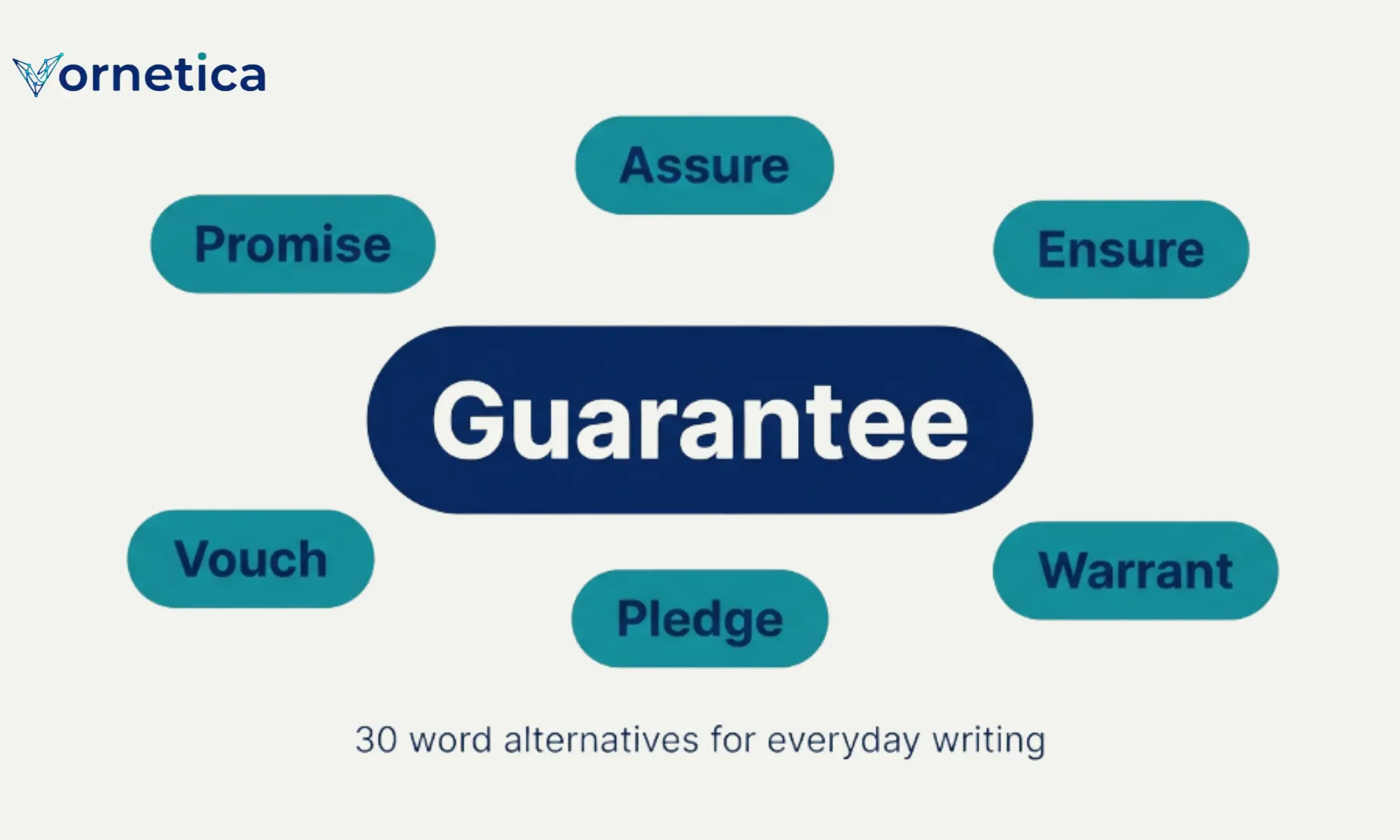
What is another word for guarantee? The most common synonyms are assure, promise, ensure, warrant, and pledge. The best choice depends on the meaning and situation.
1. Assure
Meaning: Assure means to tell someone that something is certain or true.
Examples:
- I assure you that your order is safe.
- She assured me that everything was ready.
Best Used When: Use it when giving someone confidence or peace of mind.
2. Promise
Meaning: Promise means to say that you will definitely do something or that something will happen.
Examples:
- I promise to call you later.
- The seller promised fast delivery.
Best Used When: Use it in everyday speech, personal writing, and casual conversations.
3. Ensure
Meaning: Ensure means to make sure that something happens.
Examples:
- Please check the lock to ensure the door is secure.
- We tested the machine to ensure good results.
Best Used When: Use it in formal, academic, and professional writing.
4. Warrant
Meaning: Warrant means to give a formal promise that something is reliable or correct.
Examples:
- The company warrants that the product is safe.
- This device is warranted for two years.
Best Used When: Use it in legal, business, product, and technical writing.
5. Pledge
Meaning: Pledge means to make a serious promise.
Examples:
- The company pledged to improve its service.
- She pledged her support to the project.
Best Used When: Use it for serious or public promises.
6. Certify
Meaning: Certify means to officially say that something is correct, safe, or genuine.
Examples:
- The expert certified the document as genuine.
- The inspector certified the building as safe.
Best Used When: Use it in official, legal, technical, and professional situations.
7. Confirm
Meaning: Confirm means to say or show that something is true or certain.
Examples:
- Please confirm your booking today.
- The manager confirmed the delivery date.
Best Used When: Use it for bookings, plans, facts, and arrangements.
8. Vouch
Meaning: Vouch means to say that someone or something is trustworthy.
Examples:
- I can vouch for his honesty.
- Her manager vouched for her skills.
Best Used When: Use it when supporting someone’s trustworthiness.
9. Secure
Meaning: Secure means to make sure that something is obtained or protected.
Examples:
- We secured a good deal.
- She secured a place at the event.
Best Used When: Use it for deals, agreements, positions, and protection.
10. Indemnify
Meaning: Indemnify means to promise to pay for a loss or damage.
Examples:
- The policy indemnifies customers against certain losses.
- The company agreed to indemnify the client.
Best Used When: Use it mainly in legal, insurance, and business writing.
11. Underwrite
Meaning: Underwrite means to agree to support a cost, risk, or possible loss.
Examples:
- The bank agreed to underwrite the project.
- The insurer will underwrite the possible loss.
Best Used When: Use it in finance, insurance, and business contexts.
12. Insure
Meaning: Insure means to protect something from financial loss through insurance.
Examples:
- We insured the car against theft.
- They insured the house against fire.
Best Used When: Use it when discussing insurance and financial protection.
13. Covenant
Meaning: Covenant means a formal promise or agreement.
Examples:
- The two groups signed a covenant.
- The contract contains a covenant to protect the property.
Best Used When: Use it in legal, religious, or very formal writing.
14. Attest
Meaning: Attest means to state that something is true or genuine.
Examples:
- I can attest that the report is correct.
- The witness attested to the accuracy of the record.
Best Used When: Use it in legal, formal, and academic writing.
15. Affirm
Meaning: Affirm means to clearly say that something is true.
Examples:
- She affirmed her support for the plan.
- The company affirmed that the product was genuine.
Best Used When: Use it in formal speech, business, and official writing.
16. Verify
Meaning: Verify means to check that something is true or correct.
Examples:
- Please verify your email address.
- The worker verified the customer’s information.
Best Used When: Use it for facts, information, records, and online details.
17. Validate
Meaning: Validate means to show that something is correct or acceptable.
Examples:
- The test helped validate our idea.
- We need to validate the results first.
Best Used When: Use it in technical, academic, and professional writing.
18. Substantiate
Meaning: Substantiate means to support a claim with facts or proof.
Examples:
- The writer could not substantiate the claim.
- We need evidence to substantiate this statement.
Best Used When: Use it in research, journalism, academic work, and formal reports.
19. Back
Meaning: Back means to support someone or something.
Examples:
- The company backed its new product.
- My friends backed me during the project.
Best Used When: Use it in casual speech, business writing, and everyday English.
20. Uphold
Meaning: Uphold means to support or keep a rule, decision, or promise.
Examples:
- The company promised to uphold its standards.
- The court upheld the original decision.
Best Used When: Use it in legal, formal, and professional contexts.
21. Commit
Meaning: Commit means to promise or agree to do something.
Examples:
- We committed to improving customer service.
- She committed to finishing the work today.
Best Used When: Use it for serious plans, duties, and promises.
22. Give Your Word
Meaning: Give your word means to make a strong personal promise.
Examples:
- I give you my word that I will help.
- He gave his word that he would return.
Best Used When: Use it in personal and conversational English.
23. Make Certain
Meaning: Make certain means to make sure that something happens.
Examples:
- Make certain that all windows are closed.
- We made certain that everyone was safe.
Best Used When: Use it in clear everyday and professional English.
24. Make Sure
Meaning: Make sure means to check or act so that something is certain.
Examples:
- Make sure you bring your ID.
- I made sure the children were ready.
Best Used When: Use it in casual and everyday speech.
25. Protect
Meaning: Protect means to keep someone or something safe from harm or loss.
Examples:
- This case protects your phone.
- The policy protects customers from large losses.
Best Used When: Use it when talking about safety, security, or protection.
26. Cover
Meaning: Cover means to provide protection against a cost, loss, or problem.
Examples:
- Does the plan cover accidental damage?
- The warranty covers repairs for one year.
Best Used When: Use it for insurance, warranties, costs, and services.
27. Safeguard
Meaning: Safeguard means to protect something from harm or danger.
Examples:
- Strong passwords safeguard your account.
- These rules safeguard customer information.
Best Used When: Use it in formal, business, technical, and security writing.
28. Warranty
Meaning: A warranty is a written promise to repair or replace a product under certain conditions.
Examples:
- The laptop comes with a two-year warranty.
- Check the warranty before buying the machine.
Best Used When: Use it when talking about products, repairs, and purchases.
29. Assurance
Meaning: Assurance is a promise or statement that gives someone confidence.
Examples:
- The manager gave us assurance that the issue would be fixed.
- Her assurance made me feel better.
Best Used When: Use it in formal, professional, and reassuring situations.
30. Commitment
Meaning: Commitment means a strong promise or decision to do something.
Examples:
- The company showed a commitment to quality.
- His commitment to the project was clear.
Best Used When: Use it for serious promises, goals, and responsibilities.
Comparison Table
| Synonym | Tone (Formal/Neutral/Casual) | Best Used In (writing/speech/technical) |
| Assure | Neutral | Speech/writing |
| Promise | Neutral | Speech/writing |
| Ensure | Formal | Writing/technical |
| Warrant | Formal | Legal/technical |
| Pledge | Formal | Writing/speech |
| Certify | Formal | Technical/writing |
| Confirm | Neutral | Writing/speech |
| Vouch | Casual | Speech |
| Secure | Neutral | Writing/speech |
| Indemnify | Formal | Legal/technical |
| Underwrite | Formal | Business/technical |
| Insure | Neutral | Business/technical |
| Covenant | Formal | Legal/writing |
| Attest | Formal | Legal/writing |
| Affirm | Formal | Writing/speech |
| Verify | Neutral | Technical/writing |
| Validate | Formal | Technical/writing |
| Substantiate | Formal | Academic/writing |
| Back | Casual | Speech/writing |
| Uphold | Formal | Legal/writing |
| Commit | Neutral | Speech/writing |
| Give Your Word | Casual | Speech |
| Make Certain | Neutral | Speech/writing |
| Make Sure | Casual | Speech/writing |
| Protect | Neutral | Speech/writing |
| Cover | Neutral | Business/speech |
| Safeguard | Formal | Technical/writing |
| Warranty | Neutral | Business/writing |
| Assurance | Formal | Writing/speech |
| Commitment | Neutral | Writing/speech |
Internal link placement 1 — under “Generate/Create” related vocabulary:
Internal link placement 2 — under everyday action/vocabulary discussion:
Frequently Asked Questions
What is another word for guarantee?
Another word for guarantee is assure, promise, ensure, warrant, or pledge. The best choice depends on the sentence.
What is the best synonym for guarantee?
Assure and promise are common choices in everyday English. Warrant works well in formal and legal writing.
Are guarantee and promise the same?
They can have similar meanings, but they are not always the same. A guarantee often gives confidence about a result, while a promise shows a person’s commitment.
What is the formal word for guarantee?
Warrant, certify, assure, and ensure can be formal alternatives. The right choice depends on the context.
What is the difference between guarantee and warranty?
A guarantee is a promise about something, while a warranty is usually a written promise about a product or service.
Practice Exercise
Fill in each blank with the best synonym from the list above.
- Please ______ that the door is locked before leaving.
- The company gave us a two-year ______ on the new laptop.
- I can ______ you that your information is safe.
- The expert was able to ______ the report as genuine.
- The insurance plan will ______ the cost of the repair.
Answer Key
- ensure
- warranty
- assure
- certify
- cover
Key Takeaways
Quick Learning Box
- Assure is useful when giving someone confidence.
- Promise works well for personal commitments.
- Ensure means making sure something happens.
- Warrant is useful in legal and technical contexts.
- Warranty is common for products and repairs.
- Learn one synonym at a time and use it in a real sentence.
Helpful Related Vocabulary
When writing about promises, results, or actions, using related vocabulary can make your sentences more varied. For example, you may also want to learn synonyms for following when describing what comes next or explaining a process.
Good vocabulary also helps bloggers and students make their writing clearer. Words connected with support, growth, and positive action can be useful too, such as those covered in synonyms for fostering.
Conclusion
Learning synonyms for guarantee can make your writing clearer and more natural. Words such as assure, promise, ensure, warrant, and pledge help you express different kinds of promises and certainty.
These words are useful in emails, essays, blogs, business writing, and daily conversations.
Try using one new synonym each day and notice how its meaning changes with the situation.
When you want to improve another part of your vocabulary, search for another word on the site.