Have you ever read a page and tried to absorb every detail before a test? Or watched a sponge soak up water in seconds?
The word absorb can describe both actions. It can mean taking in liquid, learning information, accepting an idea, or even using up energy.
That is why knowing synonyms for absorb can make your English more clear and exact. Students can use these words in essays and schoolwork.
Bloggers and content writers can avoid using the same word too often. Daily English users can also choose a word that fits the situation better.
Learning synonyms for absorb helps you say what you mean with more detail. A good synonym can make a simple sentence sound more natural, clear, and useful.
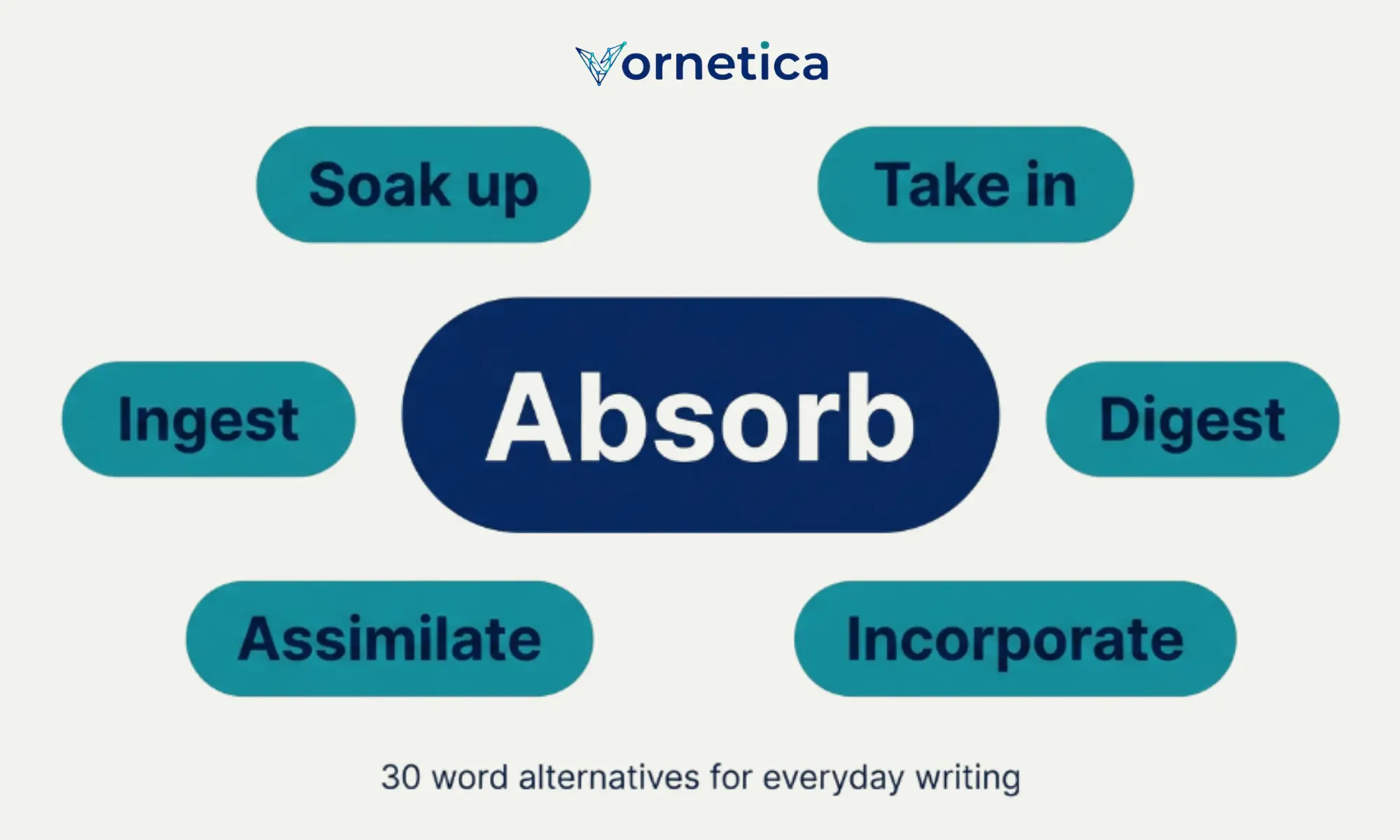
Quick Answer Box: Another word for absorb can be soak up, take in, learn, understand, or consume.
The best choice depends on whether you mean taking in liquid, gaining knowledge, understanding an idea, or using something up.
Soak Up
Meaning: To soak up means to take in liquid, knowledge, or an experience.
Examples:
- The towel soaked up the spilled water.
- I like to soak up new ideas in class.
Best Used When: Use it in casual speech for liquids, information, or experiences.
Take In
Meaning: To take in means to receive and understand something.
Examples:
- She took in every word the teacher said.
- The old cloth took in the rain.
Best Used When: Use it in everyday speech and general writing.
Learn
Meaning: To learn means to gain knowledge or a new skill.
Examples:
- I want to learn Spanish this year.
- He learned the new rules quickly.
Best Used When: Use it for education, skills, and new information.
Understand
Meaning: To understand means to know what something means.
Examples:
- I understand the lesson now.
- She understood his simple point.
Best Used When: Use it when absorb means mentally grasping an idea.
Comprehend
Meaning: To comprehend means to understand something clearly.
Examples:
- The student could comprehend the short passage.
- I did not comprehend the full message.
Best Used When: Use it in formal or academic writing.
Take Up
Meaning: To take up means to use or absorb something such as space, time, or liquid.
Examples:
- These boxes take up too much space.
- The dry soil took up the rain.
Best Used When: Use it for space, time, liquid, or resources.
Consume
Meaning: To consume means to use, eat, drink, or take in something.
Examples:
- This machine consumes a lot of power.
- We should consume less sugar.
Best Used When: Use it in formal, technical, health, or business contexts.
Ingest
Meaning: To ingest means to take food, drink, or another substance into the body.
Examples:
- The body ingests food during digestion.
- Never ingest cleaning products.
Best Used When: Use it in medical, scientific, or technical writing.
Assimilate
Meaning: To assimilate means to take in and understand new information or ideas.
Examples:
- The class needed time to assimilate the new facts.
- She quickly assimilated the training.
Best Used When: Use it in formal education, business, or academic writing.
Internalize
Meaning: To internalize means to fully learn an idea or rule.
Examples:
- He internalized the safety rules.
- She practiced until the lesson became easy to internalize.
Best Used When: Use it for learning, beliefs, rules, or ideas.
Incorporate
Meaning: To incorporate means to add something into a larger whole.
Examples:
- We incorporated her idea into the plan.
- The chef incorporated fresh herbs into the dish.
Best Used When: Use it in formal, business, creative, or academic writing.
Take On
Meaning: To take on means to accept or deal with something.
Examples:
- She took on a new project at work.
- This sponge can take on a lot of water.
Best Used When: Use it in casual and professional speech.
Receive
Meaning: To receive means to get or accept something that is given.
Examples:
- I received your email this morning.
- The plant received plenty of sunlight.
Best Used When: Use it in neutral or formal writing.
Accept
Meaning: To accept means to agree to take or receive something.
Examples:
- He accepted the advice from his coach.
- She accepted the new facts calmly.
Best Used When: Use it for ideas, advice, offers, or information.
Grasp
Meaning: To grasp means to understand something well.
Examples:
- Mia quickly grasped the math problem.
- I finally grasped the main idea.
Best Used When: Use it for understanding in everyday or academic English.
Perceive
Meaning: To perceive means to notice or understand something through the senses or mind.
Examples:
- She perceived a change in his voice.
- We perceive the image in a different way.
Best Used When: Use it in formal, academic, or descriptive writing.
Register
Meaning: To register means to notice or understand something.
Examples:
- He did not register the warning at first.
- Her face registered surprise.
Best Used When: Use it when describing a reaction or mental awareness.
Process
Meaning: To process means to think about and understand information.
Examples:
- Give me time to process the news.
- The brain processes new information.
Best Used When: Use it in everyday, academic, or technical contexts.
Digest
Meaning: To digest means to think about and understand information slowly.
Examples:
- I need time to digest the report.
- She paused to digest the new idea.
Best Used When: Use it as a figurative word in casual or formal writing.
Absorb
Meaning: To absorb means to take something in fully.
Examples:
- The sponge absorbed the water.
- He absorbed every detail of the lesson.
Best Used When: Use it as the direct and flexible choice for most situations.
Soak
Meaning: To soak means to become full of liquid or make something full of liquid.
Examples:
- Leave the beans to soak overnight.
- The heavy rain soaked my jacket.
Best Used When: Use it mainly for liquids and physical objects.
Sponge Up
Meaning: To sponge up means to absorb liquid like a sponge.
Examples:
- Use a cloth to sponge up the milk.
- The paper sponged up the spilled juice.
Best Used When: Use it in casual speech for cleaning or liquid.
Mop Up
Meaning: To mop up means to remove liquid from a surface.
Examples:
- Please mop up the water.
- She mopped up the spill quickly.
Best Used When: Use it for cleaning and removing spilled liquids.
Draw In
Meaning: To draw in means to pull or take something inward.
Examples:
- The plant draws in water through its roots.
- The heater draws in cool air.
Best Used When: Use it in physical, scientific, or descriptive contexts.
Pull In
Meaning: To pull in means to bring or take something toward a place.
Examples:
- The roots pull in water from the soil.
- The filter pulls in dust from the air.
Best Used When: Use it in casual, physical, or technical descriptions.
Gather
Meaning: To gather means to collect things together.
Examples:
- We gathered useful facts for the report.
- The sponge gathered water from the floor.
Best Used When: Use it for collecting information, objects, or resources.
Collect
Meaning: To collect means to bring or receive things together.
Examples:
- She collected notes for her project.
- The bucket collected rainwater.
Best Used When: Use it for information, objects, data, or liquids.
Retain
Meaning: To retain means to keep something instead of losing it.
Examples:
- Good sleep helps you retain new facts.
- This soil can retain water for days.
Best Used When: Use it in academic, technical, or formal writing.
Use Up
Meaning: To use up means to finish all of something.
Examples:
- We used up all the paper.
- The old car used up too much fuel.
Best Used When: Use it in casual speech for resources, supplies, time, or energy.
Engage With
Meaning: To engage with means to give attention to and think about something.
Examples:
- Students should engage with the reading.
- She engaged with the topic during the meeting.
Best Used When: Use it in education, work, and formal communication.
Study
Meaning: To study means to spend time learning about something.
Examples:
- I study new words every night.
- She studied the chapter before the test.
Best Used When: Use it for school, learning, research, and preparation.
Comparison Table
| Synonym | Tone (Formal/Neutral/Casual) | Best Used In |
| Soak Up | Casual | Speech |
| Take In | Neutral | Speech/Writing |
| Learn | Neutral | Writing/Speech |
| Understand | Neutral | Writing/Speech |
| Comprehend | Formal | Writing |
| Take Up | Neutral | Writing/Speech |
| Consume | Formal | Technical/Writing |
| Ingest | Formal | Technical |
| Assimilate | Formal | Writing |
| Internalize | Formal | Writing |
| Incorporate | Formal | Writing |
| Take On | Neutral | Speech/Writing |
| Receive | Neutral | Writing/Speech |
| Accept | Neutral | Writing/Speech |
| Grasp | Neutral | Writing/Speech |
| Perceive | Formal | Writing |
| Register | Neutral | Writing/Speech |
| Process | Neutral | Writing/Technical |
| Digest | Neutral | Writing/Speech |
| Absorb | Neutral | Writing/Speech |
| Soak | Neutral | Speech/Writing |
| Sponge Up | Casual | Speech |
| Mop Up | Casual | Speech |
| Draw In | Neutral | Technical/Writing |
| Pull In | Casual | Speech |
| Gather | Neutral | Writing/Speech |
| Collect | Neutral | Writing/Speech |
| Retain | Formal | Writing/Technical |
| Use Up | Casual | Speech |
| Engage With | Formal | Writing/Speech |
| Study | Neutral | Writing/Speech |
For readers building vocabulary around people and roles, you can also explore synonyms for representative when you need a stronger word for someone who speaks or acts for others.
Frequently Asked Questions
What is another word for absorb?
Another word for absorb is take in, soak up, learn, understand, or consume. The right word depends on the meaning.
What is a synonym for absorb information?
Learn, understand, grasp, process, and internalize can describe taking in information.
What is a synonym for absorb liquid?
Soak up, soak, sponge up, and mop up can describe taking in or removing liquid.
What is the formal word for absorb?
Assimilate, ingest, comprehend, internalize, and retain can work in formal contexts, depending on the meaning.
What is the opposite of absorb?
Common opposites include release, give out, emit, and repel. The best opposite depends on the context.
Practice Exercise
Fill in each blank with the best synonym from the list.
- The towel can _________ a lot of water.
- I needed a few minutes to _________ the surprising news.
- She worked hard to _________ the new lesson before the test.
- The soil can _________ water after heavy rain.
- The factory can _________ a large amount of electricity.
Answer Key
- soak up
- digest
- understand
- retain
- consume
Key Takeaways
Remember these useful points:
- Soak up is great for liquids, ideas, and experiences.
- Understand and grasp are useful for ideas and information.
- Consume works well for food, energy, fuel, and resources.
- Assimilate and internalize suit formal learning contexts.
- Retain means to keep information, liquid, or something else.
- Pick a synonym based on the exact meaning and situation, not just the similar word.
You can also expand your vocabulary with synonyms for secretary when writing about office roles, or learn synonyms for senior for better descriptions of age, rank, or experience.
Conclusion
Learning synonyms for absorb helps you write with more variety and speak with greater accuracy.
Words like soak up, understand, grasp, consume, and retain each fit different situations. Use them in emails, essays, blog posts, and daily conversations.
Try choosing one new synonym each day and make your own sentence with it. With regular practice, these words will become easier to remember.
When you want to improve another part of your vocabulary, search for another word or synonym on the site.