Have you ever wanted to describe an older person, a top manager, or an experienced worker without using the word senior again and again? The right synonym can make your writing sound clearer and more natural.
For example, a company may have a senior manager, but you could also call that person a chief, leading, or experienced professional, depending on the meaning.
The phrase synonyms for senior means words that have a similar meaning to senior.
The best choice depends on the situation. Students can use these words in essays. Bloggers and content writers can avoid repeated words.
Daily English users can speak with more detail. Learning synonyms for senior also helps you understand job titles, school terms, age, and rank more clearly.
Quick Answer Box
What is another word for senior? Common synonyms include elder, older, experienced, veteran, and higher-ranking. The best synonym depends on whether you mean age, experience, or position.
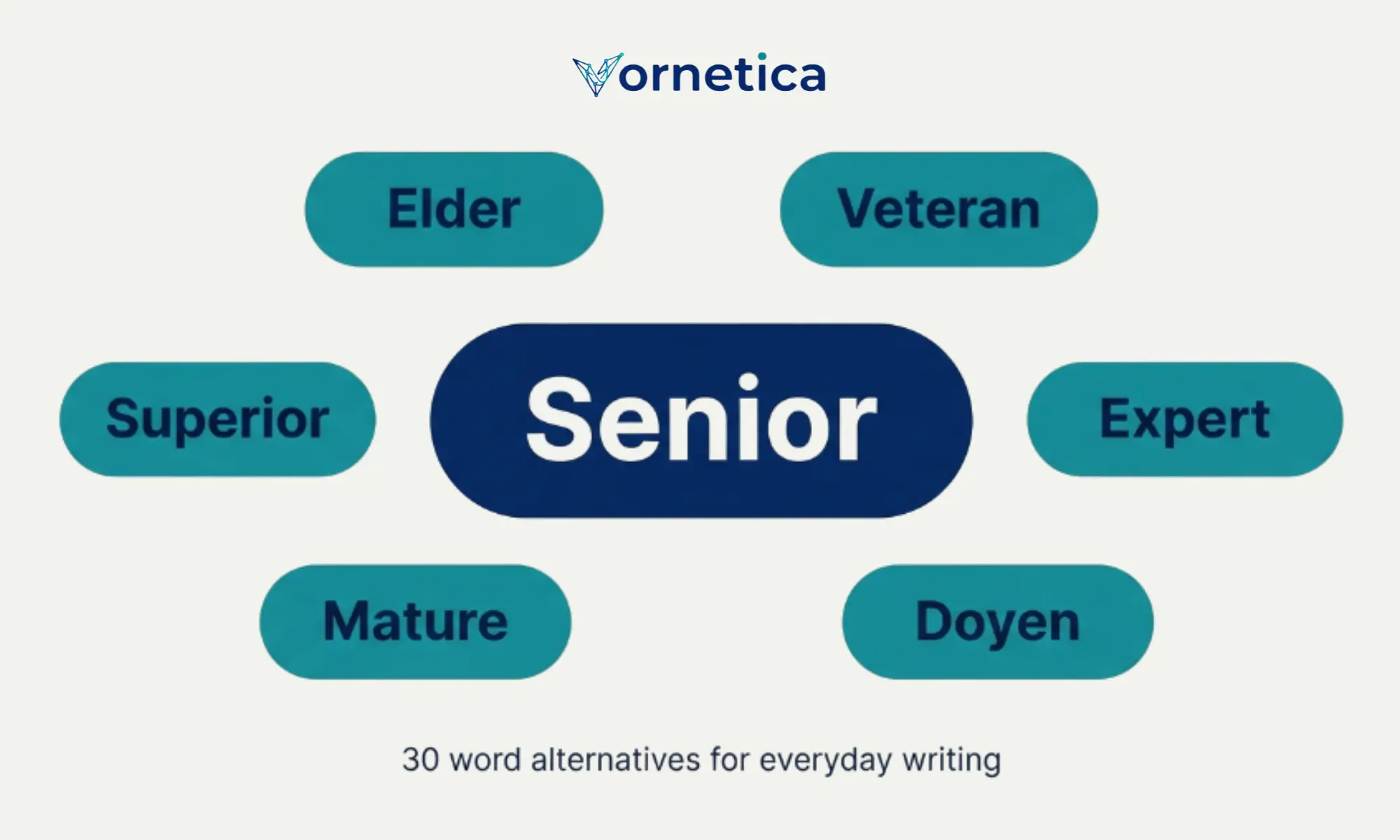
Elder
Meaning: An elder is a person who is older than another person or group.
Examples:
- My elder brother lives in Lahore.
- The village elders gave good advice.
Best Used When: Use it for family relationships, communities, or respectful references to older people.
Older
Meaning: Older means having more years of life than someone or something else.
Examples:
- My older sister is a teacher.
- This building is older than the school.
Best Used When: Use it in simple, everyday speech and writing about age.
Elderly
Meaning: Elderly describes a person who is fairly old.
Examples:
- An elderly man sat near the window.
- The nurse helped an elderly woman.
Best Used When: Use it when talking politely about older people, especially in formal or general writing.
Experienced
Meaning: Experienced means having learned a lot through doing something for a long time.
Examples:
- We need an experienced driver.
- She is an experienced teacher.
Best Used When: Use it for work, skills, jobs, and people with strong practical knowledge.
Veteran
Meaning: A veteran is someone who has many years of experience in a field.
Examples:
- The veteran journalist knows many editors.
- A veteran coach led the team.
Best Used When: Use it for people with long experience in a profession, sport, military service, or field.
Seasoned
Meaning: Seasoned means very experienced and skilled.
Examples:
- We hired a seasoned manager.
- She is a seasoned writer with many published stories.
Best Used When: Use it in professional, business, and creative writing.
Senior-Level
Meaning: Senior-level describes a high position that needs strong skills or experience.
Examples:
- He applied for a senior-level job.
- The company needs senior-level staff.
Best Used When: Use it for jobs, careers, business roles, and professional settings.
Higher-Ranking
Meaning: Higher-ranking means having a higher position than another person.
Examples:
- A higher-ranking officer spoke first.
- She asked a higher-ranking manager for help.
Best Used When: Use it for organizations, workplaces, military roles, and official positions.
Superior
Meaning: Superior can mean a person who has a higher rank or position.
Examples:
- The worker reported to his superior.
- Her superior approved the request.
Best Used When: Use it in formal workplace or organizational language.
Higher-Up
Meaning: A higher-up is a person with more power or authority in an organization.
Examples:
- I need to ask a higher-up first.
- A higher-up approved the plan.
Best Used When: Use it in casual workplace speech.
Chief
Meaning: A chief is a person who leads a group or organization.
Examples:
- The chief spoke to the staff.
- She became the chief of the department.
Best Used When: Use it for leadership roles, official titles, and organizations.
Head
Meaning: A head is the person who leads a group, team, or department.
Examples:
- He is the head of sales.
- Ask the head teacher for help.
Best Used When: Use it in workplaces, schools, teams, and departments.
Principal
Meaning: Principal can mean the main or most important person in a group.
Examples:
- The principal officer signed the form.
- She is the principal adviser on the project.
Best Used When: Use it in formal, academic, legal, or professional contexts.
Leading
Meaning: Leading describes someone or something that is among the most important or successful.
Examples:
- She is a leading expert in science.
- He works for a leading company.
Best Used When: Use it in professional, academic, business, and promotional writing.
Top
Meaning: Top means being at the highest level or position.
Examples:
- He is one of the top managers.
- She is a top student in her class.
Best Used When: Use it in casual and neutral speech when talking about high status or ability.
Advanced
Meaning: Advanced means being at a higher level of skill or study.
Examples:
- She joined an advanced English class.
- He has advanced computer skills.
Best Used When: Use it for education, skills, training, and technical ability rather than age.
Upper-Level
Meaning: Upper-level means being at a high level in a group or system.
Examples:
- She has an upper-level position.
- The meeting was for upper-level staff.
Best Used When: Use it for business, education, management, and organizational structures.
Upperclassman
Meaning: An upperclassman is a student in a higher year of school or college.
Examples:
- An upperclassman helped me find the library.
- The upperclassman gave advice to new students.
Best Used When: Use it mainly in American English for school and college settings.
Final-Year
Meaning: Final-year describes a student who is in the last year of a course or program.
Examples:
- She is a final-year medical student.
- Final-year students are preparing for exams.
Best Used When: Use it for schools, colleges, universities, and academic writing.
Mature
Meaning: Mature describes someone who acts in a calm and responsible way.
Examples:
- He is mature for his age.
- She gave a mature answer to the question.
Best Used When: Use it for behavior, judgment, and personal development rather than job rank.
Aged
Meaning: Aged means old, especially when talking about a person’s age.
Examples:
- The program helps people aged sixty and above.
- He is an aged farmer who still works daily.
Best Used When: Use it mainly in formal, official, or age-related descriptions.
Senior Citizen
Meaning: A senior citizen is an older adult, often used in official or public settings.
Examples:
- The bus offers discounts to senior citizens.
- A senior citizen asked for help at the desk.
Best Used When: Use it for public services, benefits, transport, and respectful age-related language.
Elderly Person
Meaning: An elderly person is an older adult.
Examples:
- An elderly person needed a seat.
- The volunteer helped an elderly person cross the road.
Best Used When: Use it in general descriptions, care settings, and respectful writing about age.
Old-Timer
Meaning: An old-timer is someone who has been around for a long time.
Examples:
- The old-timer knew every street in town.
- An old-timer shared stories about the village.
Best Used When: Use it in casual speech, stories, and informal writing.
Long-Serving
Meaning: Long-serving describes someone who has worked in a role for many years.
Examples:
- The long-serving teacher retired last year.
- Our long-serving manager knows the team well.
Best Used When: Use it for employees, leaders, public workers, and people with long service.
Long-Standing
Meaning: Long-standing describes something or someone that has existed or continued for a long time.
Examples:
- She is a long-standing member of the club.
- He has a long-standing role in the group.
Best Used When: Use it in formal and professional writing about long-term roles or relationships.
Authority
Meaning: An authority is a person with the power or knowledge to make decisions.
Examples:
- Ask an authority before changing the rule.
- She is an authority on local history.
Best Used When: Use it for leadership, official power, or expert knowledge.
Expert
Meaning: An expert is someone who knows a lot about a subject.
Examples:
- We asked an expert for advice.
- The expert explained the problem clearly.
Best Used When: Use it when the main idea is knowledge or skill, not age or rank.
Mentor
Meaning: A mentor is an experienced person who guides and teaches someone.
Examples:
- My mentor helped me improve my writing.
- She became a mentor to new employees.
Best Used When: Use it for education, careers, training, and personal guidance.
Authority Figure
Meaning: An authority figure is a person who has power or control in a group.
Examples:
- The teacher was an authority figure in the school.
- Children often listen to a trusted authority figure.
Best Used When: Use it when discussing people with social, school, family, or workplace authority.
Comparison Table
| Synonym | Tone | Best Used In |
| Elder | Neutral | Writing/speech |
| Older | Neutral | Writing/speech |
| Elderly | Formal | Writing/speech |
| Experienced | Neutral | Writing/speech |
| Veteran | Neutral | Writing/speech |
| Seasoned | Neutral | Writing |
| Senior-Level | Formal | Technical/writing |
| Higher-Ranking | Formal | Technical/writing |
| Superior | Formal | Writing |
| Higher-Up | Casual | Speech |
| Chief | Formal | Writing/speech |
| Head | Neutral | Writing/speech |
| Principal | Formal | Writing |
| Leading | Neutral | Writing |
| Top | Casual | Speech/writing |
| Advanced | Neutral | Technical/writing |
| Upper-Level | Formal | Technical/writing |
| Upperclassman | Neutral | Speech/writing |
| Final-Year | Neutral | Writing/speech |
| Mature | Neutral | Writing/speech |
| Aged | Formal | Writing |
| Senior Citizen | Formal | Writing/speech |
| Elderly Person | Formal | Writing/speech |
| Old-Timer | Casual | Speech/creative |
| Long-Serving | Formal | Writing |
| Long-Standing | Formal | Writing |
| Authority | Formal | Writing/speech |
| Expert | Neutral | Writing/speech |
| Mentor | Neutral | Writing/speech |
| Authority Figure | Neutral | Writing/speech |
Learning related vocabulary can also help you connect different ideas across your vocabulary practice. For example, words such as vigilant describe careful attention, which is useful when choosing the right word for a person or role. You can explore more with the synonyms for vigilant page.
When writing about people, tone matters too. A word such as elder can sound respectful, while old-timer is much more casual. For more vocabulary about positive descriptions of people, see the synonyms for gentleman page.
Words related to status can also change based on context. Senior, chief, head, and principal can describe authority, while experienced, seasoned, and veteran focus more on skill. If you want to expand your vocabulary with other descriptive terms, visit the synonyms for idol page.
Historical and creative writing may also use words that suggest age, status, or respect. For example, elder can fit a traditional story, while veteran may work well for an experienced character. You can find another useful word list on the synonyms for knight page.
Even simple animal-related vocabulary can help learners build a wider synonym bank. If you enjoy comparing everyday words, check the synonyms for rabbit page as another vocabulary resource.
Frequently Asked Questions
What is the most common synonym for senior?
Common choices include older, elder, experienced, veteran, and higher-ranking. The best choice depends on the meaning.
What is another word for senior at work?
Experienced, higher-ranking, seasoned, senior-level, and higher-up can work in workplace settings. Choose the word that matches the person’s role.
What is a synonym for senior when talking about age?
Older, elder, elderly, and senior citizen can describe age. Older is the simplest choice for everyday English.
What is the opposite of senior?
The opposite can be junior, younger, lower-ranking, or less experienced. The correct opposite depends on the context.
Can senior mean experienced?
Yes. Senior can describe someone with a high level of experience or responsibility. Words such as seasoned, veteran, and experienced can express this meaning.
Practice Exercise
Fill in each blank with the best synonym from the list.
- My ______ brother helped me with my homework.
- The company hired an ______ manager to lead the team.
- She is a ______ student who is completing her last year at college.
- We asked a computer ______ to fix the problem.
- The ______ employee received an award for twenty years of service.
Answer Key
- elder
- experienced
- final-year
- expert
- long-serving
Key Takeaways
Quick Learning Tips
- Use older for simple comparisons about age.
- Use elder for older family members or respected people.
- Use experienced for people with useful skills and knowledge.
- Use veteran or seasoned for someone with many years of experience.
- Use chief, head, or higher-ranking when senior means higher authority.
- Pick the synonym based on meaning and context, not just because the word looks similar.
Conclusion
Learning synonyms for senior can make your writing clearer and your speech more natural.
Words such as elder, older, experienced, veteran, seasoned, and higher-ranking each add a different meaning.
Practice them in emails, essays, blog posts, and daily conversations. Try using one new synonym each day.
When you want to improve your vocabulary further, search the site for another word and build your synonym list step by step.