Have you ever met someone who refuses to follow a rule they think is unfair? That person may be called a rebel.
For example, a student may question a school rule instead of simply accepting it. A worker may speak up when a company policy feels wrong.
The word rebel can describe a person who fights against rules, control, or authority. It can also describe someone who does not like to follow common ideas.
Learning synonyms for rebel helps you choose a word that shows the exact meaning and tone you want.
These words are useful for students, bloggers, content writers, and daily English users.
Knowing another word for rebel can make your essays, stories, emails, and conversations more clear and interesting.
Quick Answer Box:
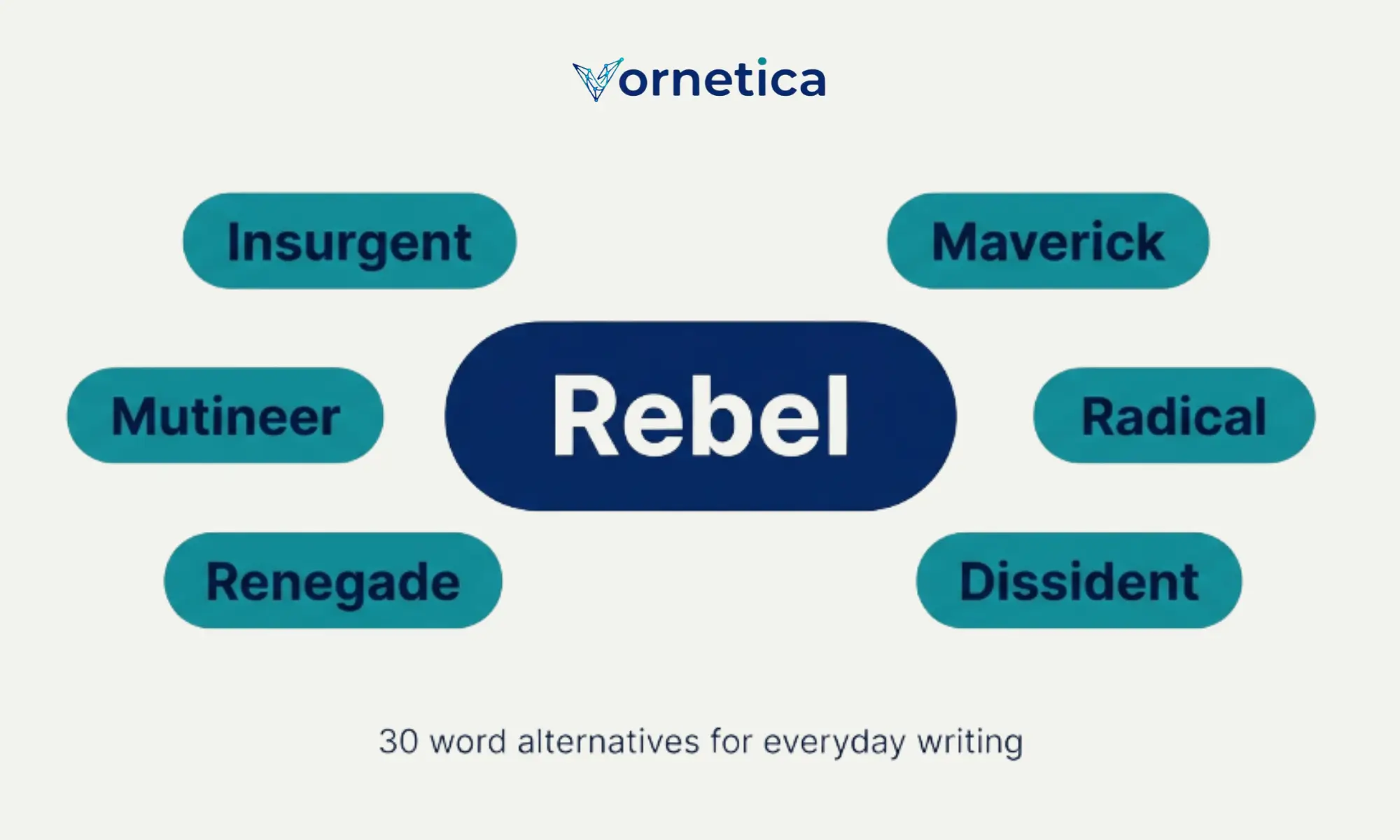
Another word for rebel is a person who resists rules, control, or authority. The most common synonyms include dissenter, protester, nonconformist, insurgent, and revolutionary.
1. Dissenter
Meaning: A dissenter is someone who openly disagrees with an accepted idea, group, or authority.
Examples:
- The dissenter spoke against the new rule.
- She became a strong dissenter during the meeting.
Best Used When: Use it in formal writing about disagreement with an official view.
2. Protester
Meaning: A protester is someone who publicly shows that they disagree with something.
Examples:
- The protester held a sign outside the building.
- Many protesters gathered in the town square.
Best Used When: Use it for public demonstrations and social issues.
3. Nonconformist
Meaning: A nonconformist is someone who does not follow usual rules or ways.
Examples:
- He is a nonconformist who enjoys unusual ideas.
- Her nonconformist style makes her stand out.
Best Used When: Use it for people who choose their own style or way of life.
4. Insurgent
Meaning: An insurgent is someone who fights against an established government or power.
Examples:
- The army moved toward the insurgent group.
- The report discussed the actions of local insurgents.
Best Used When: Use it mainly in political, military, or news writing.
5. Revolutionary
Meaning: A revolutionary is someone who supports or takes part in major political or social change.
Examples:
- The revolutionary wanted to change the old system.
- She became known as a revolutionary thinker.
Best Used When: Use it for major political, social, or cultural change.
6. Mutineer
Meaning: A mutineer is someone who rebels against the leader of a group, especially soldiers or sailors.
Examples:
- The captain tried to stop the mutineers.
- The story was about a group of mutineers on a ship.
Best Used When: Use it in military, naval, or historical contexts.
7. Defiant
Meaning: A defiant person refuses to obey or accept control.
Examples:
- The defiant student refused to leave.
- He gave the teacher a defiant look.
Best Used When: Use it to describe behavior that openly resists authority.
8. Renegade
Meaning: A renegade is someone who leaves a group and acts against it.
Examples:
- The renegade soldier left the army.
- The story follows a renegade who rejects his old group.
Best Used When: Use it in stories, history, politics, or dramatic writing.
9. Maverick
Meaning: A maverick is someone who thinks and acts differently from others.
Examples:
- The maverick manager created a new plan.
- She is a maverick who avoids normal methods.
Best Used When: Use it for independent people with unusual ideas.
10. Dissident
Meaning: A dissident is someone who strongly disagrees with a government or powerful group.
Examples:
- The dissident criticized the government.
- Several dissidents were known for their public speeches.
Best Used When: Use it in formal political and historical writing.
11. Agitator
Meaning: An agitator is someone who encourages people to protest or demand change.
Examples:
- The agitator urged workers to speak up.
- Police watched the political agitator closely.
Best Used When: Use it for someone who creates public support for change.
12. Radical
Meaning: A radical supports ideas that are very different from common views.
Examples:
- He suggested a radical change to the system.
- The young activist had radical ideas.
Best Used When: Use it for strong or extreme ideas about social or political change.
13. Activist
Meaning: An activist works to bring change to a social or political issue.
Examples:
- The activist spoke for clean water.
- She became an activist for better schools.
Best Used When: Use it for peaceful action connected to social or political causes.
14. Insurrectionist
Meaning: An insurrectionist is someone who takes part in an organized rebellion against authority.
Examples:
- The book describes the actions of an insurrectionist.
- The government arrested several insurrectionists.
Best Used When: Use it in formal historical, legal, or political contexts.
15. Conformity-breaker
Meaning: A conformity-breaker is someone who refuses to follow common social patterns.
Examples:
- The artist was a true conformity-breaker.
- Her choices made her a conformity-breaker in the group.
Best Used When: Use it in creative or informal writing about social behavior.
16. Troublemaker
Meaning: A troublemaker is someone who often causes problems or conflict.
Examples:
- The teacher warned the young troublemaker.
- Everyone knew him as a harmless troublemaker.
Best Used When: Use it in casual speech when the person causes trouble.
17. Lawbreaker
Meaning: A lawbreaker is someone who does not obey the law.
Examples:
- The police arrested the lawbreaker.
- A lawbreaker may face serious punishment.
Best Used When: Use it when the rebellion involves breaking laws.
18. Outlaw
Meaning: An outlaw is a person who breaks the law or lives outside accepted rules.
Examples:
- The old story follows a famous outlaw.
- The outlaw hid in the forest.
Best Used When: Use it in historical, legal, or creative writing.
19. Nonconformist Thinker
Meaning: A nonconformist thinker is someone who develops ideas outside normal ways of thinking.
Examples:
- The professor was a nonconformist thinker.
- Her work shows the mind of a nonconformist thinker.
Best Used When: Use it for writers, teachers, artists, and creative thinkers.
20. Free Spirit
Meaning: A free spirit is someone who likes to live by their own choices.
Examples:
- My sister is a free spirit who loves travel.
- He has always been a free spirit.
Best Used When: Use it in casual and positive descriptions of independent people.
21. Individualist
Meaning: An individualist prefers to make their own choices instead of following others.
Examples:
- She is an individualist who values personal freedom.
- The artist is known as an individualist.
Best Used When: Use it for independent people and personal choices.
22. Maverick Leader
Meaning: A maverick leader is a leader who uses unusual methods and ideas.
Examples:
- The maverick leader changed the team’s strategy.
- Many people admired the maverick leader.
Best Used When: Use it in business, leadership, and creative writing.
23. Opposer
Meaning: An opposer is someone who actively disagrees with a person, plan, or idea.
Examples:
- The opposer rejected the proposed rule.
- She became an opposer of the new policy.
Best Used When: Use it when focusing on direct disagreement.
24. Resister
Meaning: A resister is someone who refuses to accept control or pressure.
Examples:
- The resister refused to follow the unfair order.
- He became a resister after the rules changed.
Best Used When: Use it for people who actively resist control or pressure.
25. Defector
Meaning: A defector is someone who leaves a group, country, or organization to join another side.
Examples:
- The defector shared important information.
- The former soldier became a defector.
Best Used When: Use it in political, military, and historical contexts.
26. Rebel Leader
Meaning: A rebel leader is someone who leads people in opposition to authority.
Examples:
- The rebel leader called for major change.
- The army searched for the rebel leader.
Best Used When: Use it in historical, political, military, or fictional writing.
27. Freedom Fighter
Meaning: A freedom fighter is someone who fights for freedom from control or oppression.
Examples:
- The novel tells the story of a freedom fighter.
- Many people saw her as a freedom fighter.
Best Used When: Use it when the rebellion is viewed as a fight for freedom.
28. Insurgent Fighter
Meaning: An insurgent fighter is someone who fights against an established authority.
Examples:
- The report mentioned several insurgent fighters.
- The conflict involved government forces and insurgent fighters.
Best Used When: Use it mainly in military and news contexts.
29. Heretic
Meaning: A heretic is someone whose beliefs strongly disagree with accepted religious ideas.
Examples:
- The old text called him a heretic.
- The writer was accused of being a heretic.
Best Used When: Use it mainly in historical or religious contexts.
30. Maverick Spirit
Meaning: A maverick spirit describes a person who likes independence and avoids strict rules.
Examples:
- Her maverick spirit helped her create new ideas.
- His maverick spirit made him different from the team.
Best Used When: Use it in creative, positive, and descriptive writing.
Comparison Table
| Synonym | Tone (Formal/Neutral/Casual) | Best Used In (writing/speech/technical) |
| Dissenter | Formal | Writing |
| Protester | Neutral | Speech / Writing |
| Nonconformist | Neutral | Writing / Speech |
| Insurgent | Formal | Technical / Writing |
| Revolutionary | Neutral | Writing / Speech |
| Mutineer | Formal | Writing |
| Defiant | Neutral | Speech / Writing |
| Renegade | Neutral | Writing |
| Maverick | Casual | Speech / Writing |
| Dissident | Formal | Writing |
| Agitator | Formal | Writing |
| Radical | Neutral | Speech / Writing |
| Activist | Neutral | Speech / Writing |
| Insurrectionist | Formal | Technical / Writing |
| Troublemaker | Casual | Speech |
| Lawbreaker | Neutral | Writing / Speech |
| Outlaw | Neutral | Writing |
| Individualist | Neutral | Writing / Speech |
| Opposer | Neutral | Writing |
| Resister | Neutral | Writing / Speech |
| Defector | Formal | Technical / Writing |
| Rebel Leader | Neutral | Writing |
| Freedom Fighter | Neutral | Writing / Speech |
| Heretic | Formal | Historical / Writing |
When choosing between related words, context matters. A dissident usually disagrees with a powerful authority, while a maverick may simply prefer a different way of doing things.
For example, someone who does not follow a social trend may be a nonconformist, while someone who publicly fights an unfair policy may be a protester. If you are describing a person who stays alert to possible danger while resisting a threat, words from our list of synonyms for vigilant may also help you describe their behavior.
A person who questions rules may also be wary of authority. If you need more vocabulary for describing careful or doubtful behavior, explore these synonyms for wary.
In character writing, choosing the right word can make a big difference. A maverick often sounds independent and positive, while a troublemaker sounds more negative. This is why it helps to learn the tone of each synonym instead of treating every word as an exact replacement.
For workplace writing, different vocabulary may be useful. If your sentence describes someone who handles numbers and financial records rather than someone who challenges authority, you can find useful alternatives in our guide to synonyms for accountant.
In casual writing, free spirit, maverick, and individualist can sound friendly. In formal writing, dissident, dissenter, insurgent, and insurrectionist may be more suitable.
Your choice should also match the person you are describing. A person who fights for a cause may be called an activist or freedom fighter, while a person who simply refuses to fit in may be called a nonconformist.
Frequently Asked Questions
What is another word for rebel?
Common alternatives include dissenter, protester, nonconformist, insurgent, and revolutionary. The best choice depends on the situation.
What is a positive synonym for rebel?
Maverick, free spirit, and individualist can have a positive meaning. They often describe someone who thinks independently.
What is a formal word for rebel?
Dissident, dissenter, insurgent, and insurrectionist can work in formal writing. The exact word depends on the type of rebellion.
What is the opposite of a rebel?
Words such as follower, conformist, and supporter can be opposites of rebel. The best choice depends on the sentence.
Is rebel a positive or negative word?
Rebel can be positive or negative. It may describe a brave person who fights unfair rules or someone who refuses to obey important rules.
Practice Exercise
Fill in each blank with the best synonym from the list.
- The __________ spoke against the unfair government policy.
- She is a __________ who loves creating her own style.
- The young __________ held a sign during the public march.
- The captain ordered the soldiers to arrest the __________.
- He is a __________ who always chooses his own path.
Answer Key
- dissident
- nonconformist
- protester
- mutineer
- maverick
Key Takeaways
Key Takeaways
- Dissenter is useful for formal disagreement.
- Protester describes someone who publicly objects.
- Maverick often describes an independent person in a positive way.
- Dissident is common in political contexts.
- Insurgent and insurrectionist fit military or political contexts.
- Learn each synonym with its tone and context instead of using every word as an exact replacement.
Before you finish, remember that people can be described in many ways depending on their behavior. Someone who acts aggressively toward others may be called a bully, so our guide to synonyms for bully can help you choose more precise vocabulary. In friendly situations, words such as buddy may be more useful, so you can also explore synonyms for buddy. For respectful character descriptions, our guide to synonyms for gentleman offers more useful choices.
Conclusion
Learning synonyms for rebel helps you write with more detail and speak with greater confidence.
Words like maverick, dissenter, protester, nonconformist, and dissident each carry a slightly different meaning and tone.
Try using these words in emails, essays, blogs, stories, and daily conversations. Practice one new synonym at a time, and soon you will know which word fits each situation.
When you want to improve your vocabulary further, search for another word on the site.