Have you ever made a plan at the last minute and simply decided to go for it? Maybe a friend called and asked you to join them for dinner, and you said yes without planning ahead.
That is spontaneous behavior. The word means doing something naturally, suddenly, or without making a plan first.
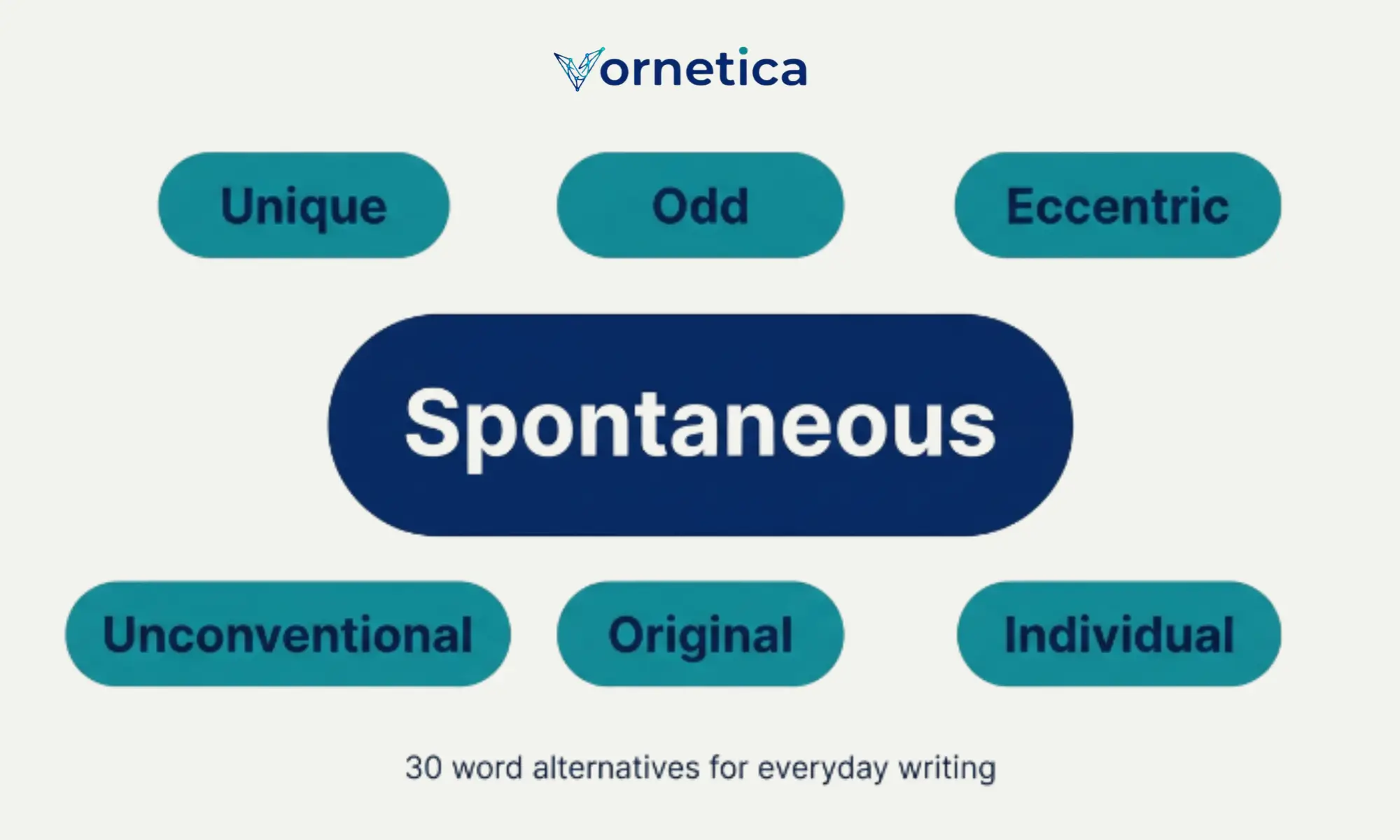
Learning synonyms for spontaneous can help you describe these actions in a more exact way. Some words sound casual, while others work better in formal writing.
Students can use them to improve essays, bloggers can make their writing more interesting, and content writers can avoid repeating the same word.
Daily English users can also choose the right word when talking about quick choices, natural actions, or unplanned events.
Knowing synonyms for spontaneous gives you more ways to express simple ideas clearly.
Quick Answer: Another word for spontaneous can be unplanned, impulsive, impromptu, instinctive, or unprompted.
The best choice depends on whether the action is sudden, natural, or done without preparation.
1. Unplanned
Meaning: Something unplanned happens without being decided before it happens.
Examples:
- We took an unplanned trip to the beach.
- Our unplanned dinner was great.
Best Used When: Talking about events or actions that were not arranged ahead of time.
2. Impromptu
Meaning: Impromptu means done without preparation or planning.
Examples:
- She gave an impromptu speech at the party.
- We had an impromptu meeting after lunch.
Best Used When: Describing speeches, meetings, performances, or events that happen without preparation.
3. Impulsive
Meaning: Impulsive means acting quickly because of a sudden feeling.
Examples:
- Buying that jacket was an impulsive choice.
- He made an impulsive decision to leave.
Best Used When: Describing quick choices made from strong feelings rather than careful thought.
4. Unprompted
Meaning: Unprompted means done without someone asking or telling you to do it.
Examples:
- She gave an unprompted answer.
- He offered help without being asked.
Best Used When: Describing actions, comments, or help given without a request.
5. Instinctive
Meaning: Instinctive means done naturally without stopping to think.
Examples:
- Her instinctive reaction was to smile.
- He made an instinctive move to catch the ball.
Best Used When: Talking about natural reactions or actions that happen without conscious thought.
6. Unpremeditated
Meaning: Unpremeditated means not planned or thought about before it happens.
Examples:
- His answer was completely unpremeditated.
- The comment was unpremeditated.
Best Used When: Formal writing or serious situations where you want to stress that something was not planned.
7. Unrehearsed
Meaning: Unrehearsed means done without practicing it first.
Examples:
- Their unrehearsed performance was fun.
- She gave an unrehearsed speech.
Best Used When: Talking about speeches, performances, interviews, or public actions.
8. Extemporaneous
Meaning: Extemporaneous means spoken or done with little preparation.
Examples:
- He gave an extemporaneous talk.
- Her extemporaneous answer sounded natural.
Best Used When: Formal speaking, presentations, academic writing, or public communication.
9. Offhand
Meaning: Offhand means said or done without much thought or planning.
Examples:
- He made an offhand comment about the weather.
- I cannot give an offhand answer.
Best Used When: Describing casual comments or quick responses.
10. Unplanned-for
Meaning: Unplanned-for describes something that was not expected or prepared for.
Examples:
- We faced an unplanned-for delay.
- The team handled the unplanned-for change well.
Best Used When: Discussing unexpected changes, events, or problems.
11. Natural
Meaning: Natural means happening easily without being forced.
Examples:
- Her smile looked natural.
- Their conversation felt natural.
Best Used When: Describing behavior, speech, reactions, or actions that feel easy and genuine.
12. Uncontrived
Meaning: Uncontrived means natural and not carefully arranged to look a certain way.
Examples:
- The photo captured an uncontrived moment.
- Their conversation seemed uncontrived.
Best Used When: Creative writing, photography, reviews, and descriptions of genuine behavior.
13. Free
Meaning: Free can describe an action done without strict plans or limits.
Examples:
- We spent the afternoon free from plans.
- She likes a free and easy schedule.
Best Used When: Casual speech about flexible plans and relaxed behavior.
14. Freewheeling
Meaning: Freewheeling means relaxed and not controlled by many rules or plans.
Examples:
- We had a freewheeling discussion.
- His freewheeling style makes people comfortable.
Best Used When: Casual or creative writing about relaxed conversations, lifestyles, or activities.
15. Unrestrained
Meaning: Unrestrained means not held back or controlled.
Examples:
- She gave an unrestrained laugh.
- The crowd showed unrestrained joy.
Best Used When: Describing strong emotions, reactions, or behavior without limits.
16. Unscripted
Meaning: Unscripted means not written or planned before it happens.
Examples:
- The interview included an unscripted moment.
- His joke was completely unscripted.
Best Used When: Talking about interviews, videos, speeches, shows, and public conversations.
17. Unrehearsed
Meaning: Unrehearsed means not practiced before a performance or action.
Examples:
- Their unrehearsed dance was funny.
- She gave an unrehearsed reply.
Best Used When: Talking about performances, speeches, replies, and public events.
18. Sudden
Meaning: Sudden means happening quickly and without warning.
Examples:
- We made a sudden change of plans.
- His sudden visit surprised me.
Best Used When: Focusing on how quickly something happens rather than why it happens.
19. Unexpected
Meaning: Unexpected means something happens when you did not think it would.
Examples:
- We had an unexpected guest.
- Her unexpected visit made my day.
Best Used When: Describing surprises, events, results, or situations that were not expected.
20. Unforeseen
Meaning: Unforeseen means something happens that people did not predict or expect.
Examples:
- An unforeseen problem delayed the project.
- We had to deal with unforeseen changes.
Best Used When: Formal writing, business communication, reports, and professional situations.
21. Unplanned-on-the-spot
Meaning: This phrase describes something decided or done immediately without preparation.
Examples:
- We chose a restaurant on the spot.
- She made the plan on the spot.
Best Used When: Casual speech about quick decisions made at the moment.
22. Spur-of-the-moment
Meaning: Spur-of-the-moment means done suddenly because you feel like doing it.
Examples:
- We took a spur-of-the-moment road trip.
- It was a spur-of-the-moment decision.
Best Used When: Casual conversations about sudden plans or choices.
23. Knee-jerk
Meaning: Knee-jerk means reacting quickly without careful thought.
Examples:
- His knee-jerk reaction was to say no.
- Avoid making a knee-jerk decision.
Best Used When: Talking about fast reactions, especially when they may not be wise.
24. Reactive
Meaning: Reactive means responding quickly to something that happens.
Examples:
- The team took a reactive approach.
- His response was very reactive.
Best Used When: Business, technical, or professional writing about responses to events.
25. Automatic
Meaning: Automatic means happening without conscious thought or effort.
Examples:
- Her automatic reaction was to laugh.
- Saying hello became automatic for him.
Best Used When: Describing habits, reactions, or actions that happen almost without thinking.
26. Instinctual
Meaning: Instinctual means based on a natural feeling rather than careful thought.
Examples:
- Her instinctual response was to help.
- He made an instinctual choice.
Best Used When: Describing natural reactions or behavior driven by instinct.
27. Casual
Meaning: Casual means relaxed and not formal or carefully planned.
Examples:
- We had a casual meeting.
- It was a casual decision to stay longer.
Best Used When: Everyday speech, informal writing, relaxed plans, and social situations.
28. Unpremeditatedly
Meaning: Unpremeditatedly means doing something without planning it before.
Examples:
- She spoke unpremeditatedly during the discussion.
- He acted unpremeditatedly and surprised everyone.
Best Used When: Formal or academic writing where you need to describe an action without prior planning.
29. Venturesome
Meaning: Venturesome means willing to try new or risky things.
Examples:
- She has a venturesome spirit.
- His venturesome nature led him to travel alone.
Best Used When: Describing people who enjoy new experiences, risks, or adventures.
30. Adventurous
Meaning: Adventurous means willing to try new and exciting things.
Examples:
- We had an adventurous weekend.
- She is adventurous with her travel plans.
Best Used When: Talking about travel, activities, people, lifestyles, and exciting experiences.
Comparison Table
| Synonym | Tone (Formal/Neutral/Casual) | Best Used In (writing/speech/technical) |
| Unplanned | Neutral | Writing/Speech |
| Impromptu | Formal/Neutral | Writing/Speech |
| Impulsive | Neutral | Writing/Speech |
| Unprompted | Formal/Neutral | Writing |
| Instinctive | Neutral | Writing/Speech |
| Unpremeditated | Formal | Writing |
| Unrehearsed | Neutral | Writing/Speech |
| Extemporaneous | Formal | Writing/Speech |
| Offhand | Casual | Speech/Writing |
| Natural | Neutral | Writing/Speech |
| Uncontrived | Formal | Writing |
| Freewheeling | Casual | Speech/Writing |
| Unrestrained | Formal | Writing |
| Unscripted | Neutral | Writing/Speech |
| Sudden | Neutral | Writing/Speech |
| Unexpected | Neutral | Writing/Speech |
| Unforeseen | Formal | Writing |
| Spur-of-the-moment | Casual | Speech/Writing |
| Knee-jerk | Casual | Speech/Writing |
| Reactive | Formal/Neutral | Technical/Writing |
| Automatic | Neutral | Writing/Speech |
| Instinctual | Neutral | Writing/Speech |
| Casual | Casual | Speech/Writing |
| Venturesome | Formal/Neutral | Writing |
| Adventurous | Neutral | Writing/Speech |
If you are also building your vocabulary around personality and behavior words, you may find these related pages useful: synonyms for quirky, synonyms for sneaky, and synonyms for snarky.
Frequently Asked Questions
What is another word for spontaneous?
Common synonyms include unplanned, impromptu, impulsive, instinctive, and unscripted. The best word depends on the situation.
What is the best synonym for spontaneous?
Unplanned is one of the closest general synonyms. Impromptu works well for events, speeches, and meetings.
Is spontaneous positive or negative?
Spontaneous is usually neutral or positive. It can suggest fun, freedom, and natural action, but some spontaneous choices may also be risky.
What is the difference between spontaneous and impulsive?
Spontaneous usually means doing something without a plan. Impulsive often means acting quickly because of a strong feeling without thinking about the result.
How can I use spontaneous in a sentence?
You can say, “We made a spontaneous trip to the park.” It means the trip was not planned before.
Practice Exercise
Fill in each blank with the best synonym from the list.
- We made a __________ decision to visit the beach after lunch.
- She gave an __________ speech when the main speaker could not come.
- His __________ reaction was to help the child.
- We had an __________ guest at dinner last night.
- The interview included an __________ moment that was not planned.
Answer Key
- spur-of-the-moment
- impromptu
- instinctive
- unexpected
- unscripted
Key Takeaways
Quick Learning Box
- Unplanned is a simple and common synonym for spontaneous.
- Impromptu is useful for speeches, meetings, and events.
- Impulsive describes quick choices driven by feelings.
- Instinctive describes natural actions without much thought.
- Unscripted works well for interviews, videos, and conversations.
- Choose the synonym that matches the exact situation, then practice it in a real sentence.
You can also compare this word with other useful vocabulary terms. For example, learning synonyms for passive can help you describe behavior more clearly, while synonyms for silent gives you more ways to describe quiet situations. For a wider vocabulary, you can also explore synonyms for resilient.
Conclusion
Learning synonyms for spontaneous gives you more ways to express sudden, natural, and unplanned actions.
Words like unplanned, impromptu, impulsive, instinctive, and unscripted can make your writing and speech more precise.
Try using these words in emails, essays, blogs, and daily conversations. Practice one new synonym each day and notice how its meaning changes with the situation.
When you are ready to improve another part of your vocabulary, search for another word on the site.