Have you ever watched someone quietly take the last cookie and act like nothing happened? That person may be sneaky.
The word “sneaky” describes someone who does something secretly, often because they do not want others to notice.
Learning synonyms for sneaky helps you describe this kind of behavior with more detail. Some words sound playful, while others show serious dishonesty. For example, stealthy can describe quiet movement, while deceitful suggests lying or hiding the truth. Students can use these words in essays, bloggers can make their content more varied, and content writers can avoid repeating the same word. Daily English users can also choose a better word for each situation. Understanding synonyms for sneaky makes your writing and speaking clearer, more natural, and more precise.
Quick Answer Box
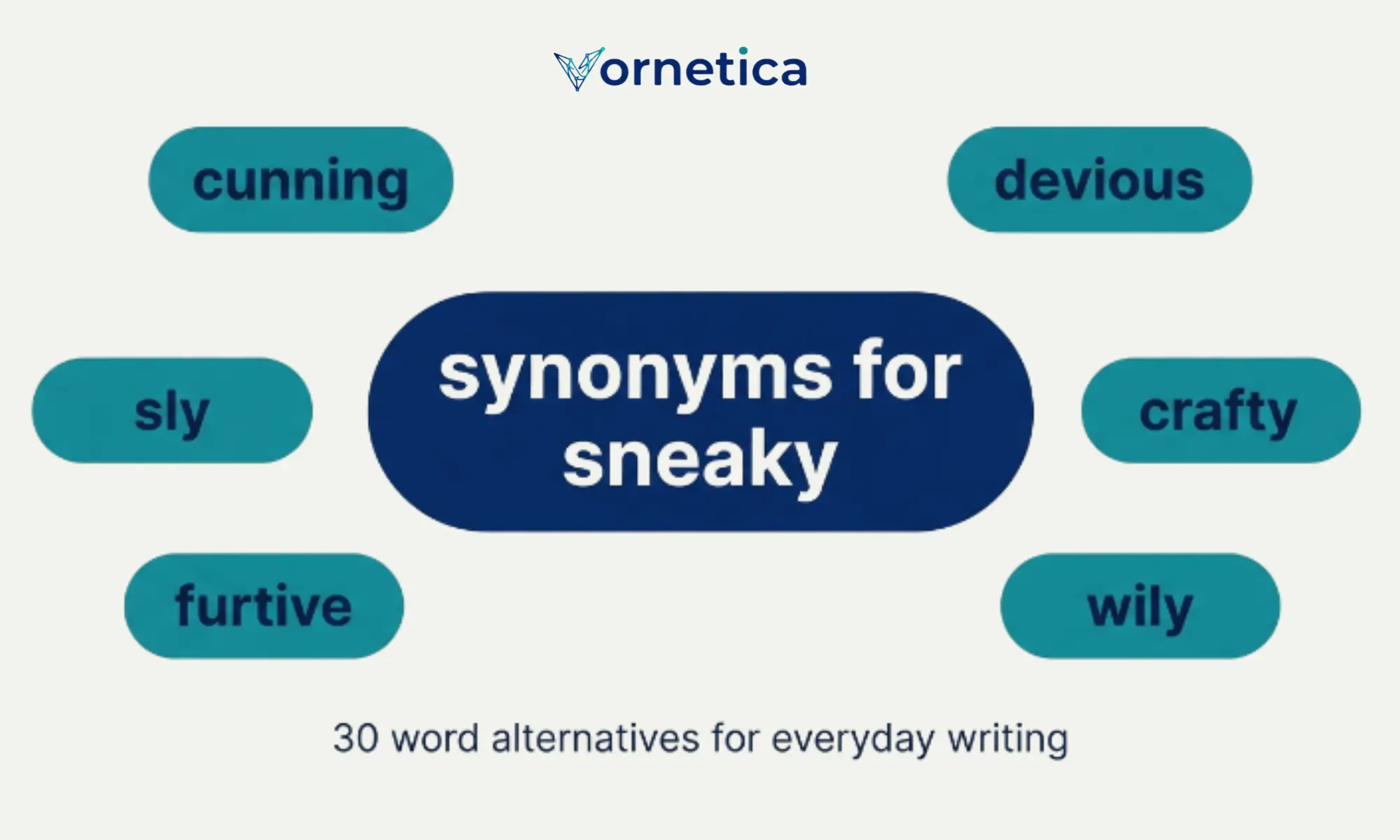
Another word for sneaky is secretive, sly, stealthy, crafty, or underhanded. The best synonym depends on whether you mean quiet behavior, clever tricks, or dishonest actions.
Main Content – 30 Synonyms for Sneaky
1. Secretive
Meaning: Someone who is secretive tries to keep their actions, plans, or thoughts hidden.
Examples:
- Sara was secretive about her weekend plans.
- He gave a secretive smile and left the room.
Best Used When: Use it for people who hide information, feelings, or plans.
2. Sly
Meaning: A sly person is clever and often uses tricks to get what they want.
Examples:
- He gave me a sly smile before taking my seat.
- She made a sly comment about the mistake.
Best Used When: Use it in casual speech or when describing clever behavior.
3. Stealthy
Meaning: Stealthy means moving or acting quietly so that others do not notice.
Examples:
- The cat made a stealthy move toward the bird.
- He made a stealthy exit after the meeting.
Best Used When: Use it for quiet movement, secret actions, games, or stories.
Someone who acts quietly is not always dishonest. This is why stealthy can be a better choice than sneaky in some cases. If you also want to describe quiet behavior, see our guide to synonyms for silent.
4. Cunning
Meaning: A cunning person uses clever plans to get what they want.
Examples:
- The cunning fox escaped from the trap.
- She made a cunning plan to win the game.
Best Used When: Use it when clever thinking includes tricks or hidden plans.
5. Crafty
Meaning: Crafty means clever at using tricks to gain an advantage.
Examples:
- Tom is crafty when he plays cards.
- She used a crafty excuse to leave early.
Best Used When: Use it in casual speech, stories, and descriptions of clever behavior.
6. Devious
Meaning: A devious person uses dishonest or tricky methods to reach a goal.
Examples:
- The thief had a devious plan.
- He found a devious way to avoid the rules.
Best Used When: Use it when the behavior is clearly dishonest or unfair.
7. Underhanded
Meaning: Underhanded means dishonest behavior that is hidden from other people.
Examples:
- His underhanded move upset the team.
- They used an underhanded trick to win.
Best Used When: Use it for unfair, dishonest, or hidden actions.
8. Covert
Meaning: Covert means hidden or secret because people do not want others to know.
Examples:
- The group made a covert plan.
- They held a covert meeting after work.
Best Used When: Use it in formal, serious, business, or technical writing.
9. Deceitful
Meaning: A deceitful person lies or hides the truth to fool others.
Examples:
- His deceitful actions hurt his friends.
- The seller used a deceitful method.
Best Used When: Use it when the behavior involves lying or misleading others.
10. Conniving
Meaning: Conniving means secretly planning something dishonest or unfair.
Examples:
- The conniving worker blamed his teammate.
- She was tired of his conniving behavior.
Best Used When: Use it for people who secretly plan unfair actions.
11. Sneaky
Meaning: Sneaky means doing something secretly because you do not want others to notice.
Examples:
- My brother made a sneaky move and took my chair.
- That was a sneaky way to get extra candy.
Best Used When: Use it in everyday and informal English.
12. Undercover
Meaning: Undercover means hiding your real identity while doing a secret job or investigation.
Examples:
- The officer worked undercover for months.
- She went undercover to learn more about the group.
Best Used When: Use it for police work, investigations, or secret operations.
13. Incognito
Meaning: Incognito means hiding your real identity or name.
Examples:
- The actor went incognito at the busy mall.
- He traveled incognito to avoid attention.
Best Used When: Use it when someone hides their identity.
14. Surreptitious
Meaning: Surreptitious means doing something secretly so that other people do not see it.
Examples:
- He took a surreptitious look at his phone.
- She made a surreptitious exit from the room.
Best Used When: Use it in formal writing or polished descriptions.
15. Wily
Meaning: Wily means clever at using tricks to get what you want.
Examples:
- The wily fox escaped from the trap.
- She was wily enough to avoid the question.
Best Used When: Use it for clever people, animals, and story characters.
16. Tricksy
Meaning: Tricksy means full of tricks or difficult to deal with.
Examples:
- The tricksy child hid my keys.
- That tricksy plan almost worked.
Best Used When: Use it in playful, informal, or creative writing.
17. Machiavellian
Meaning: Machiavellian describes secret and clever actions used to gain power or control.
Examples:
- The leader had a Machiavellian plan.
- His Machiavellian tactics worried the team.
Best Used When: Use it in serious writing about power, politics, or manipulation.
18. Manipulative
Meaning: A manipulative person tries to control others in unfair or hidden ways.
Examples:
- His manipulative words made her feel guilty.
- She noticed his manipulative behavior.
Best Used When: Use it for emotional control or unfair influence.
People sometimes confuse secretive behavior with passive behavior. They are not the same. If you need more words for a person who does not take action or avoids direct action, explore synonyms for passive.
19. Fraudulent
Meaning: Fraudulent means dishonest or fake, usually to gain money or another benefit.
Examples:
- The company was accused of fraudulent activity.
- He used a fraudulent document.
Best Used When: Use it in legal, financial, business, or formal writing.
20. Dishonest
Meaning: Dishonest means not telling the truth or not acting fairly.
Examples:
- It was dishonest to hide the missing money.
- He admitted that his answer was dishonest.
Best Used When: Use it as a simple and clear word for bad behavior.
21. Deceptive
Meaning: Deceptive means something looks true or safe but is meant to mislead you.
Examples:
- The simple question was deceptive.
- The advertisement used deceptive claims.
Best Used When: Use it for people, ads, messages, appearances, or actions that mislead.
22. Duplicitous
Meaning: Duplicitous means pretending to be honest while secretly acting in a dishonest way.
Examples:
- His duplicitous behavior damaged their trust.
- The leader was accused of being duplicitous.
Best Used When: Use it in formal writing about dishonest people or actions.
23. Insidious
Meaning: Insidious describes something harmful that develops quietly and is hard to notice.
Examples:
- The problem had an insidious effect on the team.
- An insidious rumor spread through the office.
Best Used When: Use it for hidden harm, problems, or negative influences.
24. Furtive
Meaning: Furtive means trying to avoid being seen or noticed.
Examples:
- He gave a furtive glance at the clock.
- She made a furtive move toward the door.
Best Used When: Use it for secret looks, movements, or quiet actions.
25. Artful
Meaning: Artful means clever and skillful, sometimes in a way that hides your real purpose.
Examples:
- He gave an artful answer to the question.
- She made an artful excuse for being late.
Best Used When: Use it when clever behavior has a hidden purpose.
26. Scheming
Meaning: Scheming means secretly making plans to get an advantage or cause a result.
Examples:
- The scheming worker wanted his boss’s job.
- They were caught scheming against their rivals.
Best Used When: Use it for secret plans that are often selfish or harmful.
27. Prying
Meaning: Prying means trying to learn private things that are not your business.
Examples:
- Stop prying into my personal life.
- Her prying questions made him uncomfortable.
Best Used When: Use it for people who ask too many private questions.
28. Sneakily
Meaning: Sneakily means doing something in a quiet or secret way.
Examples:
- He sneakily took another piece of cake.
- She sneakily checked the answer.
Best Used When: Use it as an adverb in casual everyday speech.
29. Craftily
Meaning: Craftily means doing something in a clever way that may involve tricks.
Examples:
- He craftily changed the subject.
- She craftily avoided the difficult question.
Best Used When: Use it when describing a clever action or trick.
30. Wily
Meaning: Wily means using clever tricks to get an advantage.
Examples:
- The wily player found a way around the rule.
- The wily fox escaped once again.
Best Used When: Use it for clever people, animals, or fictional characters.
Note: Wily is included because it is a common and useful synonym for sneaky behavior. In everyday writing, you can also use sly or crafty when you want a simpler choice.
If you enjoy learning words that describe unusual or different behavior, you can also explore synonyms for quirky for more useful vocabulary.
Comparison Table
| Synonym | Tone (Formal/Neutral/Casual) | Best Used In (writing/speech/technical) |
| Secretive | Neutral | Writing / Speech |
| Sly | Casual | Speech / Writing |
| Stealthy | Neutral | Writing / Speech |
| Cunning | Neutral | Writing / Speech |
| Crafty | Casual | Speech / Writing |
| Devious | Neutral | Writing / Speech |
| Underhanded | Neutral | Writing / Speech |
| Covert | Formal | Writing / Technical |
| Deceitful | Formal | Writing / Speech |
| Conniving | Formal | Writing / Speech |
| Sneaky | Casual | Speech / Writing |
| Undercover | Neutral | Writing / Technical |
| Incognito | Neutral | Writing / Speech |
| Surreptitious | Formal | Writing |
| Wily | Neutral | Writing / Speech |
| Tricksy | Casual | Creative Writing |
| Machiavellian | Formal | Writing |
| Manipulative | Neutral | Writing / Speech |
| Fraudulent | Formal | Technical / Writing |
| Dishonest | Neutral | Speech / Writing |
| Deceptive | Neutral | Writing / Technical |
| Duplicitous | Formal | Writing |
| Insidious | Formal | Writing |
| Furtive | Formal | Writing |
| Artful | Neutral | Writing / Speech |
| Scheming | Neutral | Writing / Speech |
| Prying | Casual | Speech / Writing |
| Sneakily | Casual | Speech / Writing |
| Craftily | Neutral | Writing / Speech |
| Wily | Neutral | Writing / Speech |
Frequently Asked Questions
What is another word for sneaky?
Common synonyms for sneaky include secretive, sly, stealthy, crafty, and underhanded. The best choice depends on the situation.
What is a positive synonym for sneaky?
Clever can work when the action is smart rather than dishonest. Sly can also sound playful in some situations.
What is a formal word for sneaky?
Surreptitious, covert, furtive, and underhanded are formal alternatives. Choose the word that best matches the meaning.
Is sneaky a negative word?
Usually, yes. Sneaky often suggests that someone is hiding an action because they do not want others to know.
What is the difference between sneaky and stealthy?
Sneaky often suggests secret or dishonest behavior. Stealthy mainly means moving or acting quietly without being noticed.
Practice Exercise
Fill in each blank with the best synonym from the list above.
- The cat made a __________ move toward the sleeping dog.
- She was __________ about her surprise party plans.
- The company was accused of using __________ business practices.
- He gave a __________ look at the teacher’s answer sheet.
- The detective worked __________ to find the truth.
Answer Key
- Stealthy
- Secretive
- Deceptive
- Furtive
- Undercover
Key Takeaways
- Sneaky usually describes secret behavior that may be dishonest.
- Secretive is best for someone who hides information or plans.
- Stealthy focuses on quiet movement or action.
- Sly, crafty, and wily describe clever behavior involving tricks.
- Devious, underhanded, and deceitful are stronger negative choices.
- Choose a synonym based on the tone and situation, not just the basic meaning.
Conclusion
Learning synonyms makes your English clearer and more interesting. Words like sly, stealthy, secretive, crafty, and devious help you describe secret behavior with greater detail.
This is useful for essays, blogs, emails, speaking, and daily conversations. Try using one new word each day and notice how its meaning changes with the situation.
Keep practicing these words in your everyday communication, and search for another word on the site when you want to expand your vocabulary.