Have you ever found an old photo and suddenly remembered a happy day?
You may talk about that day with a friend and smile at the memories. This is when you reminisce.
For example, you might reminisce about your school days when you meet an old classmate.
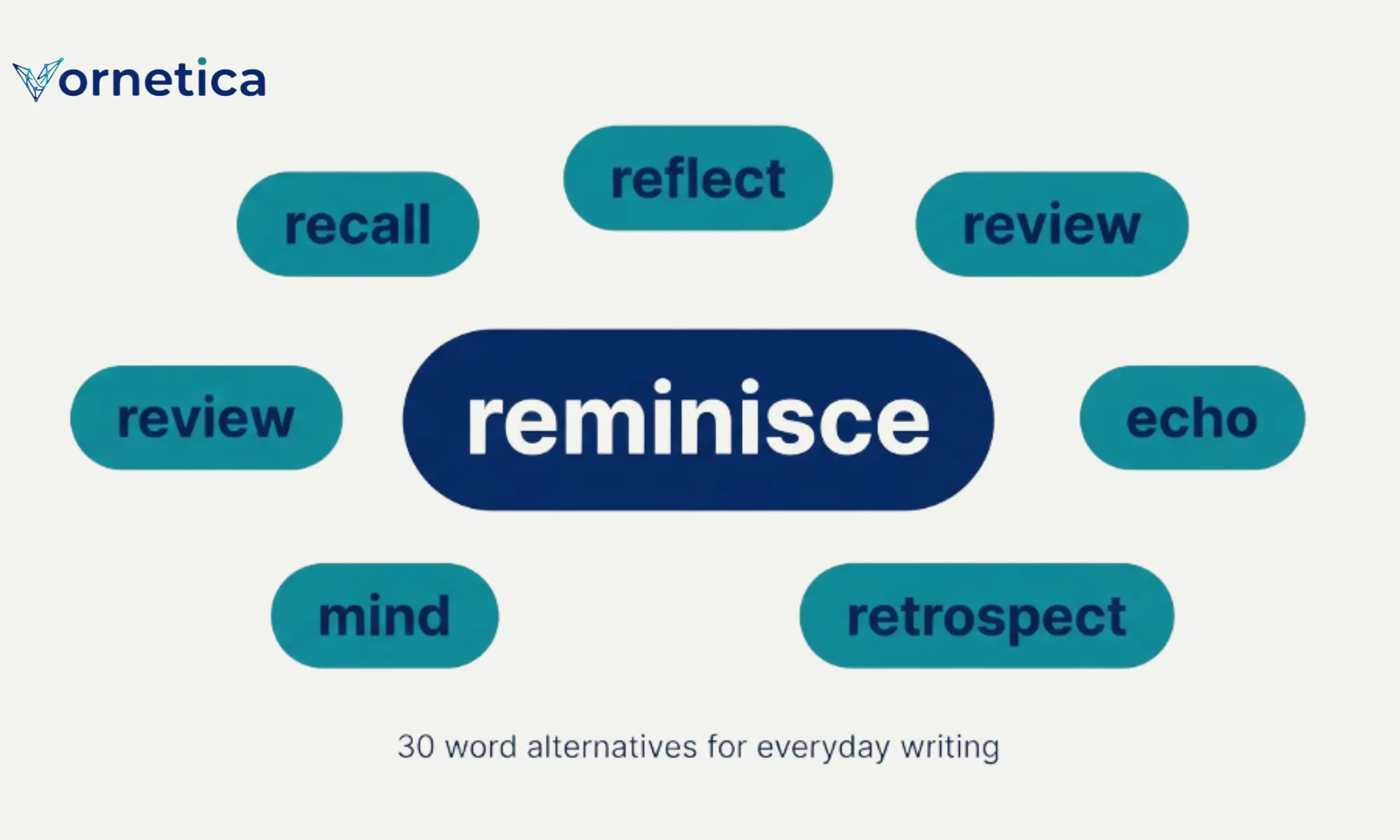
The word reminisce means to think and talk about things that happened in the past.
It is often used for happy, funny, or special memories. Learning the synonyms for reminisce can help you express these feelings in more ways.
Students can use these words in essays. Bloggers and content writers can use them to make stories more engaging.
Daily English users can use them in chats and conversations. Knowing another word for reminisce can also make your writing sound more natural.
Quick Answer Box
What is another word for reminisce? Common synonyms include remember, recall, recollect, reflect, and look back. These words help describe thinking or talking about past events and memories.
30 Synonyms for Reminisce
1. Remember
Meaning: To remember means to keep a past event or person in your mind.
Examples:
- I remember our first school trip.
- She remembers her grandfather very well.
Best Used When: Use it in everyday speech and simple writing.
2. Recall
Meaning: To recall means to bring a past event back to your mind.
Examples:
- I can recall my first day at work.
- He recalled the funny story from college.
Best Used When: Use it in formal or neutral writing and speech.
3. Recollect
Meaning: To recollect means to remember something from the past.
Examples:
- I recollect those quiet summer evenings.
- She recollected her childhood home.
Best Used When: Use it in formal writing or thoughtful speech.
4. Reflect
Meaning: To reflect means to think carefully about something that happened before.
Examples:
- I often reflect on my school years.
- He reflected on his old choices.
Best Used When: Use it when discussing past experiences in a thoughtful way.
5. Look Back
Meaning: To look back means to think about something that happened in the past.
Examples:
- I look back on those days with joy.
- She looked back at her old photos.
Best Used When: Use it in casual conversations and personal writing.
6. Think Back
Meaning: To think back means to remember something from an earlier time.
Examples:
- I think back to our family trips.
- He thought back to his first job.
Best Used When: Use it in casual speech and friendly writing.
7. Recall Memories
Meaning: To recall memories means to bring old experiences back to your mind.
Examples:
- We recalled memories from school.
- They recalled memories of their first home.
Best Used When: Use it when talking about personal or shared memories.
8. Remember Fondly
Meaning: To remember fondly means to think about someone or something with warm feelings.
Examples:
- I remember my teacher fondly.
- She remembers those holidays fondly.
Best Used When: Use it for happy and meaningful memories.
9. Reflect On
Meaning: To reflect on something means to think deeply about it.
Examples:
- He reflected on his childhood.
- I reflected on our old friendship.
Best Used When: Use it in thoughtful, formal, or personal writing.
10. Dwell On
Meaning: To dwell on something means to keep thinking about it for a long time.
Examples:
- She likes to dwell on happy memories.
- He dwells on his childhood often.
Best Used When: Use it when someone spends a lot of time thinking about the past.
11. Revisit
Meaning: To revisit means to think about or return to something from the past.
Examples:
- I revisited my old school memories.
- She revisited the story in her journal.
Best Used When: Use it in creative writing, blogs, and reflective speech.
12. Remind Yourself
Meaning: To remind yourself means to bring something back into your own mind.
Examples:
- I remind myself of our old family trips.
- She reminded herself of her childhood dreams.
Best Used When: Use it in personal and motivational writing.
13. Muse
Meaning: To muse means to think quietly and deeply about something.
Examples:
- He mused about his younger days.
- She mused over an old family story.
Best Used When: Use it in creative or literary writing.
14. Ponder
Meaning: To ponder means to think carefully about something.
Examples:
- He pondered his past choices.
- She pondered the memories of her youth.
Best Used When: Use it in formal or thoughtful writing.
15. Meditate On
Meaning: To meditate on something means to spend quiet time thinking about it.
Examples:
- I meditated on my past experiences.
- She meditated on the lessons of her youth.
Best Used When: Use it in reflective, serious, or spiritual writing.
16. Remembrance
Meaning: Remembrance means the act of keeping someone or something from the past in your mind.
Examples:
- The song brought back a sweet remembrance.
- We shared a remembrance of our old teacher.
Best Used When: Use it in formal, emotional, or memorial writing.
17. Recount
Meaning: To recount means to tell someone about something that happened before.
Examples:
- Grandpa recounted his school days.
- She recounted the story at dinner.
Best Used When: Use it when telling past events in speech or writing.
A clear recount can make an old memory easy for readers to follow. If you are also learning words related to evidence and past claims, you may find this synonyms for proven page useful for building your vocabulary.
18. Retell
Meaning: To retell means to tell a story or event again.
Examples:
- Dad retold his favorite childhood story.
- She retold the funny moment to her friends.
Best Used When: Use it for stories, conversations, and personal memories.
19. Narrate
Meaning: To narrate means to tell a story or describe events.
Examples:
- He narrated his journey to the class.
- She narrated a story from her childhood.
Best Used When: Use it in formal speech, essays, and storytelling.
20. Recount the Past
Meaning: To recount the past means to talk about events that happened before.
Examples:
- They recounted the past over dinner.
- Grandpa loved to recount the past.
Best Used When: Use it when discussing old experiences in detail.
21. Bring Back Memories
Meaning: To bring back memories means to make someone remember something from the past.
Examples:
- This song brings back memories.
- The old house brought back many memories.
Best Used When: Use it in casual speech and emotional writing.
22. Evoke Memories
Meaning: To evoke memories means to make someone remember something from the past.
Examples:
- The smell of bread evoked memories of home.
- That photo evoked memories of school.
Best Used When: Use it in creative, descriptive, or formal writing.
23. Call to Mind
Meaning: To call something to mind means to make yourself remember it.
Examples:
- The letter called my childhood to mind.
- Her song called old memories to mind.
Best Used When: Use it in formal or literary writing.
24. Bring to Mind
Meaning: To bring something to mind means to make you think of it again.
Examples:
- The old song brought my school days to mind.
- His story brought my father to mind.
Best Used When: Use it in neutral speech and descriptive writing.
25. Think About the Past
Meaning: To think about the past means to remember earlier events or experiences.
Examples:
- I like to think about the past sometimes.
- She thought about the past while looking at photos.
Best Used When: Use it in simple everyday English.
26. Cherish Memories
Meaning: To cherish memories means to keep special memories close to your heart.
Examples:
- I cherish memories of my childhood.
- They cherish memories of their old home.
Best Used When: Use it for precious, emotional, or happy memories.
27. Treasure Memories
Meaning: To treasure memories means to value special past experiences.
Examples:
- We treasure memories of our family trips.
- She treasures memories of her grandmother.
Best Used When: Use it in emotional and personal writing.
28. Reminisce About
Meaning: To reminisce about something means to talk or think happily about the past.
Examples:
- We reminisced about our school days.
- They reminisced about their first apartment.
Best Used When: Use it in friendly conversations and personal stories.
When you [reminisce about] the past, you often tell small stories about people, places, or moments that still matter to you. Choosing the right word can make these stories clearer, just as choosing the right word matters when you describe something you have questioned.
29. Reminisce Over
Meaning: To reminisce over something means to spend time remembering it.
Examples:
- We reminisced over old family photos.
- They reminisced over coffee after many years.
Best Used When: Use it in casual speech when people share memories together.
30. Talk About Old Times
Meaning: To talk about old times means to speak about things that happened long ago.
Examples:
- We sat outside and talked about old times.
- The friends talked about old times all night.
Best Used When: Use it in casual conversations and friendly stories.
Comparison Table
| Synonym | Tone | Best Used In |
| Remember | Neutral | Speech, writing |
| Recall | Formal | Writing, speech |
| Recollect | Formal | Writing |
| Reflect | Neutral | Writing, speech |
| Look Back | Casual | Speech, writing |
| Think Back | Casual | Speech |
| Remember Fondly | Neutral | Writing, speech |
| Revisit | Neutral | Writing |
| Muse | Formal | Creative writing |
| Ponder | Formal | Writing |
| Recount | Formal | Writing, speech |
| Retell | Neutral | Speech, writing |
| Narrate | Formal | Writing, speech |
| Bring Back Memories | Casual | Speech |
| Evoke Memories | Formal | Writing |
| Call to Mind | Formal | Writing |
| Bring to Mind | Neutral | Writing, speech |
| Cherish Memories | Neutral | Writing, speech |
| Treasure Memories | Neutral | Writing |
| Reminisce About | Neutral | Speech, writing |
| Reminisce Over | Casual | Speech |
| Talk About Old Times | Casual | Speech |
| Dwell On | Neutral | Writing, speech |
| Meditate On | Formal | Writing |
| Recount the Past | Neutral | Writing, speech |
| Recall Memories | Neutral | Speech, writing |
| Revisit the Past | Neutral | Writing |
| Think About the Past | Neutral | Speech, writing |
| Remembrance | Formal | Writing |
| Remind Yourself | Neutral | Speech, writing |
Frequently Asked Questions
What is another word for reminisce?
Common alternatives include remember, recall, recollect, reflect, and look back.
What does reminisce mean?
Reminisce means to think or talk about things that happened in the past, often with warm feelings.
Is remember the same as reminisce?
They are close, but not always the same. Reminisce often means thinking or talking about past memories in a more thoughtful way.
What is a formal word for reminisce?
Recollect, reflect, and recall can work well in formal writing, depending on the sentence.
What is a casual way to say reminisce?
You can say look back, think back, or talk about old times in casual English.
Practice Exercise
Fill in each blank with the best synonym from the list.
- We sat together and _________ about our school days.
- The old song _________ many happy memories.
- I often _________ on my childhood when I see old photos.
- Grandpa loves to _________ stories from his younger days.
- She _________ her grandmother fondly every day.
Answer Key
- reminisced
- brought back
- reflect
- recount
- remembers
Key Takeaways
- Remember is the easiest everyday synonym for reminisce.
- Recall and recollect work well in formal writing.
- Look back and think back sound natural in casual speech.
- Reflect is useful when thinking deeply about past experiences.
- Recount is best when you tell someone a past story.
- Choose a synonym based on the tone and context, not just the basic meaning.
If you are building a wider vocabulary, related words can make your writing much stronger. For example, you can explore synonyms for received when you need better ways to describe getting something, and synonyms for rejuvenate when writing about fresh energy or renewal.
Conclusion
Learning synonyms for reminisce gives you more ways to talk about memories.
Words like remember, recall, reflect, recount, and look back can make your writing and speech more natural.
Students can use them in essays, while bloggers and content writers can use them in stories.
Daily English users can also use these words in emails and conversations. Practice one new synonym each day, and when you need another word, search for another word on the site and keep learning.