Have you ever met someone new and felt that something was not quite right? You may stay quiet, watch closely, and think before you trust them. You are being wary.
The word wary means careful because you think there may be danger, risk, or trouble. For example, you may be wary of a stranger who asks for personal information. You may also be wary of a deal that seems too good to be true.
Learning synonyms for wary helps you express this idea in different ways. Students can use these words in essays and school work. Bloggers and content writers can avoid using the same word again and again. Daily English users can choose a word that fits the exact situation. This wary synonym list gives you simple choices for careful, doubtful, alert, and cautious situations.
Quick Answer Box
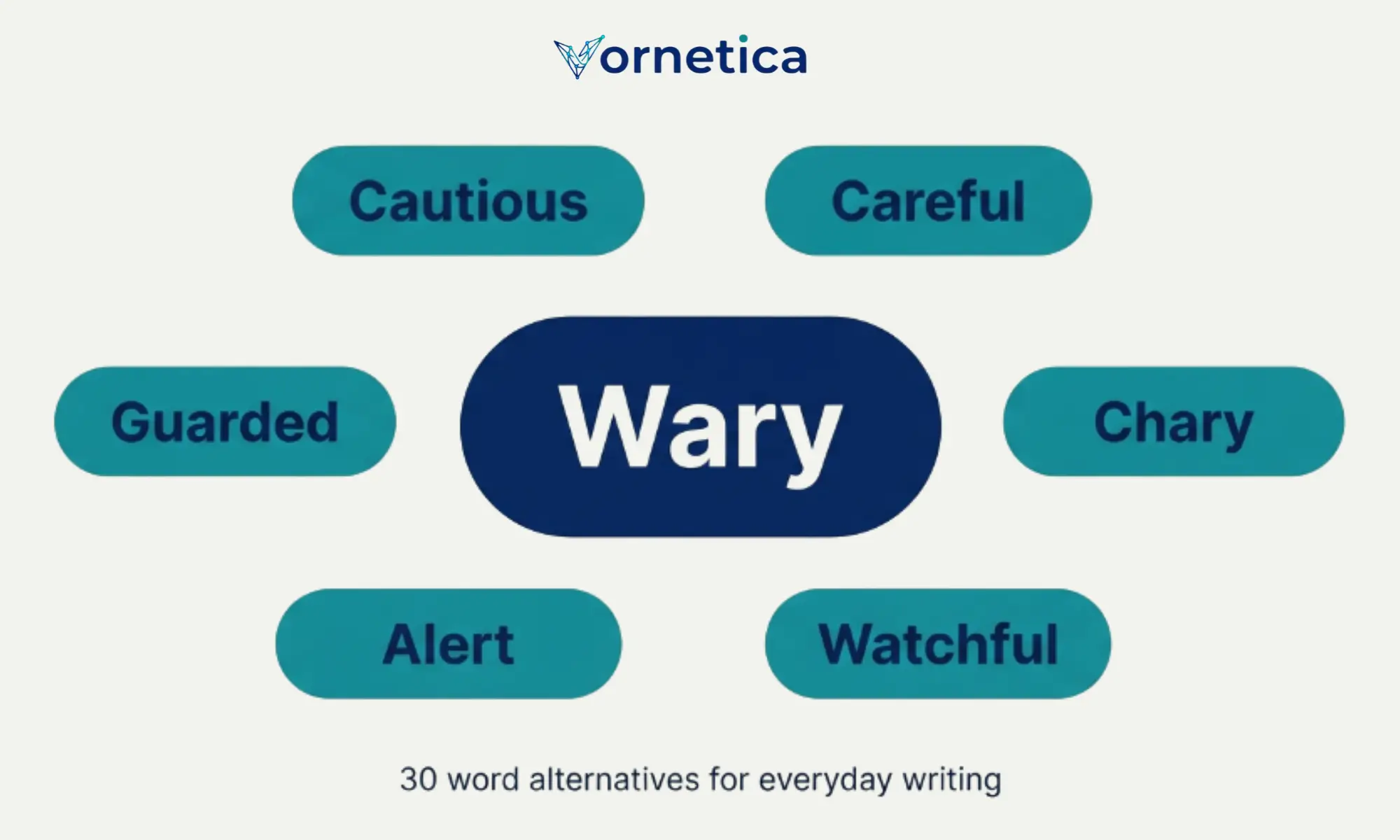
Another word for wary is cautious, careful, watchful, alert, or suspicious. These words describe someone who pays attention because they may expect danger, risk, or a problem.
Synonyms for Wary
1. Cautious
Meaning: Cautious means careful because something may be risky or unsafe.
Examples:
- She was cautious when crossing the busy road.
- Be cautious when sharing your personal details online.
Best Used When: Use it in everyday, school, and formal writing.
2. Careful
Meaning: Careful means taking steps to avoid mistakes, danger, or harm.
Examples:
- Be careful with that glass.
- He was careful when choosing a new car.
Best Used When: Use it in casual speech and general writing.
3. Watchful
Meaning: Watchful means paying close attention to what is happening.
Examples:
- The guard stayed watchful all night.
- She was watchful while her children played outside.
Best Used When: Use it for people who must closely observe a situation.
4. Alert
Meaning: Alert means ready to notice danger or a sudden change.
Examples:
- The driver stayed alert on the dark road.
- Please remain alert during the storm.
Best Used When: Use it for safety, work, travel, and emergency situations.
5. Suspicious
Meaning: Suspicious means feeling that someone or something may be wrong or dishonest.
Examples:
- I became suspicious when he changed his story.
- She was suspicious of the strange email.
Best Used When: Use it when you do not trust a person, action, or situation.
6. Vigilant
Meaning: Vigilant means staying very careful and ready to notice danger.
Examples:
- The security team remained vigilant.
- Parents should stay vigilant near busy streets.
Best Used When: Use it in formal, safety, security, and professional contexts.
7. Guarded
Meaning: Guarded means careful about what you say, do, or trust.
Examples:
- He gave a guarded answer.
- She was guarded when talking to the reporter.
Best Used When: Use it for careful speech, behavior, or personal trust.
8. Circumspect
Meaning: Circumspect means careful to avoid making a bad choice.
Examples:
- The manager was circumspect about the new plan.
- She was circumspect before signing the contract.
Best Used When: Use it mainly in formal or professional writing.
9. Heedful
Meaning: Heedful means paying attention to advice, warnings, or possible danger.
Examples:
- He was heedful of the teacher’s warning.
- Stay heedful of signs near the river.
Best Used When: Use it in formal writing when discussing warnings or advice.
10. Attentive
Meaning: Attentive means giving close attention to people or things.
Examples:
- The nurse was attentive to the patient.
- Stay attentive when the teacher gives instructions.
Best Used When: Use it for school, work, care, and polite everyday speech.
11. Observant
Meaning: Observant means quick to notice small details.
Examples:
- Maya is very observant and noticed the broken lock.
- An observant driver saw the warning sign.
Best Used When: Use it when someone notices details that others may miss.
12. Discerning
Meaning: Discerning means good at judging the difference between good and bad choices.
Examples:
- She is a discerning buyer.
- A discerning reader can spot weak claims.
Best Used When: Use it in formal writing about judgment, taste, or choices.
13. Doubtful
Meaning: Doubtful means not sure that something is true, safe, or likely.
Examples:
- I am doubtful about his promise.
- She was doubtful that the plan would work.
Best Used When: Use it when showing uncertainty or lack of trust.
14. Skeptical
Meaning: Skeptical means not ready to believe something without proof.
Examples:
- He was skeptical of the online review.
- I am skeptical about that amazing claim.
Best Used When: Use it for claims, promises, opinions, and information.
15. Leery
Meaning: Leery means careful because you do not fully trust something.
Examples:
- I am leery of buying from that website.
- She was leery of the unknown dog.
Best Used When: Use it in casual and everyday American English.
16. Suspicious-minded
Meaning: Suspicious-minded means often expecting that people may have bad reasons.
Examples:
- His suspicious-minded nature made him question the offer.
- A suspicious-minded person may check every small detail.
Best Used When: Use it when describing a person who often expects hidden motives.
17. On Guard
Meaning: On guard means ready to protect yourself from possible danger.
Examples:
- The hikers stayed on guard near the wild animals.
- Keep on guard when walking alone at night.
Best Used When: Use it in speech and situations involving possible danger.
18. Prudent
Meaning: Prudent means making a wise and careful choice.
Examples:
- It is prudent to save some money.
- She made a prudent choice before investing.
Best Used When: Use it in formal, financial, business, and professional writing.
19. Foresighted
Meaning: Foresighted means thinking about future problems before they happen.
Examples:
- The foresighted owner saved money for repairs.
- His foresighted plan helped the team later.
Best Used When: Use it when talking about smart planning for the future.
20. Discreet
Meaning: Discreet means careful not to attract attention or share private information.
Examples:
- Please be discreet about the private meeting.
- She was discreet when discussing his problem.
Best Used When: Use it for privacy, sensitive matters, and professional settings.
21. Reserved
Meaning: Reserved means quiet and careful about sharing feelings or opinions.
Examples:
- He was reserved during the first meeting.
- She remained reserved around new people.
Best Used When: Use it when describing quiet or private behavior.
22. Reluctant
Meaning: Reluctant means not willing to do something because you have doubts.
Examples:
- She was reluctant to trust the stranger.
- He was reluctant to sign the paper.
Best Used When: Use it when someone hesitates before taking action.
23. Reticent
Meaning: Reticent means unwilling to speak openly about something.
Examples:
- He was reticent about his family life.
- She remained reticent during the interview.
Best Used When: Use it in formal writing about quiet or private people.
24. Incredulous
Meaning: Incredulous means unable or unwilling to believe something.
Examples:
- She looked incredulous after hearing the news.
- He was incredulous about the strange story.
Best Used When: Use it when someone strongly doubts an unusual claim.
25. Distrustful
Meaning: Distrustful means having little trust in someone or something.
Examples:
- The customer was distrustful of the new seller.
- She became distrustful after several broken promises.
Best Used When: Use it when a lack of trust is the main idea.
26. Untrusting
Meaning: Untrusting means not willing to trust people easily.
Examples:
- The untrusting child stayed close to his mother.
- She is untrusting of strangers who ask personal questions.
Best Used When: Use it in casual descriptions of people and behavior.
27. Prepared
Meaning: Prepared means ready for something that may happen.
Examples:
- The hikers were prepared for heavy rain.
- Keep your phone charged so you are prepared.
Best Used When: Use it when caution leads someone to get ready for a possible problem.
28. Concerned
Meaning: Concerned means worried about a possible problem or danger.
Examples:
- She was concerned about the dark clouds.
- I am concerned about his sudden silence.
Best Used When: Use it when caution comes from worry or care.
29. Fearful
Meaning: Fearful means feeling afraid that something bad may happen.
Examples:
- The child was fearful of the loud noise.
- He felt fearful while walking through the empty street.
Best Used When: Use it when fear is stronger than simple caution.
30. Apprehensive
Meaning: Apprehensive means worried or nervous about what may happen.
Examples:
- She felt apprehensive before the job interview.
- He was apprehensive about moving to a new city.
Best Used When: Use it in formal or neutral writing about future worry.
Comparison Table
| Synonym | Tone (Formal/Neutral/Casual) | Best Used In (writing/speech/technical) |
| Cautious | Neutral | Writing, speech |
| Careful | Neutral | Writing, speech |
| Watchful | Neutral | Writing, speech |
| Alert | Neutral | Writing, speech |
| Suspicious | Neutral | Writing, speech |
| Vigilant | Formal | Writing, technical |
| Guarded | Neutral | Writing, speech |
| Circumspect | Formal | Writing |
| Heedful | Formal | Writing |
| Attentive | Neutral | Writing, speech |
| Observant | Neutral | Writing, speech |
| Discerning | Formal | Writing |
| Doubtful | Neutral | Writing, speech |
| Skeptical | Neutral | Writing, speech |
| Leery | Casual | Speech, casual writing |
| Suspicious-minded | Neutral | Writing, speech |
| On guard | Casual | Speech, writing |
| Prudent | Formal | Writing, business |
| Foresighted | Formal | Writing |
| Discreet | Formal | Writing, speech |
| Reserved | Neutral | Writing, speech |
| Reluctant | Neutral | Writing, speech |
| Reticent | Formal | Writing |
| Incredulous | Formal | Writing, speech |
| Distrustful | Neutral | Writing, speech |
| Untrusting | Neutral | Writing, speech |
| Prepared | Neutral | Writing, speech |
| Concerned | Neutral | Writing, speech |
| Fearful | Neutral | Writing, speech |
| Apprehensive | Formal | Writing, speech |
Frequently Asked Questions
What is another word for wary?
Another word for wary is cautious. Other common choices include careful, alert, watchful, and suspicious.
What is the best synonym for wary?
Cautious is one of the best general synonyms for wary. It works well in both speaking and writing.
Is wary the same as suspicious?
Not exactly. Wary means careful because something may be risky, while suspicious often means believing that someone or something may be dishonest or wrong.
What is a formal word for wary?
Circumspect and vigilant are formal choices. They work well in professional and academic writing.
What is the opposite of wary?
The opposite of wary can be careless, trusting, or confident, depending on the situation.
Practice Exercise
Fill in each blank with the best synonym from the list.
- Please stay ______ when driving on a wet road.
- The guard remained ______ throughout the night.
- I was ______ of the website because it asked for too much personal information.
- She felt ______ before starting her first day at the new job.
- It was ______ to save some money before making the purchase.
Answer Key
- cautious
- vigilant
- suspicious
- apprehensive
- prudent
Key Takeaways Box
- Cautious is the best general synonym for wary.
- Careful is simple and useful in everyday English.
- Vigilant and watchful suggest close attention to danger.
- Suspicious is useful when trust is the main issue.
- Apprehensive focuses more on worry about the future.
- Learn one new synonym at a time and use it in a real sentence.
Conclusion
Learning synonyms for wary gives you more ways to express caution, doubt, concern, and careful thinking.
Words such as cautious, careful, vigilant, suspicious, and apprehensive can make your writing and speech more precise.
Try using these words in emails, essays, blog posts, and daily conversations. Pay attention to the small differences between them.
Regular practice will help you choose the right word with confidence. When you want to improve your vocabulary, search for another word or synonym on the site.